
Walk down almost any residential street in Kensington, Fulham, or Islington, and you will see the same thing. Red brick. White plasterwork. Bay windows. Iron railings. A short flight of steps up to a black front door.
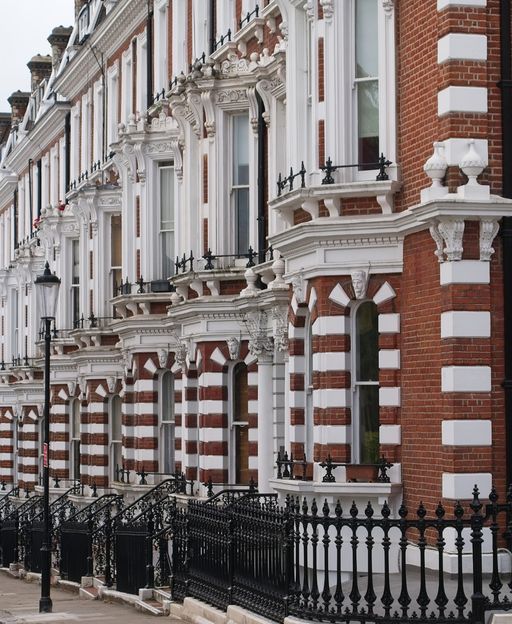
It is one of the most recognisable streetscapes in the world. And almost all of it was built in a single, extraordinary rush — by a group of men most Londoners have never heard of.
Between 1860 and 1900, London added more than a million houses. Whole neighbourhoods appeared within a decade. The streets you walk through today — the ones that look almost timeless in their uniformity — were built faster than almost any city before or since. The men behind most of them were not architects. They were speculative builders.
The Men Who Built Victorian London
A speculative builder did not wait for a client. He borrowed money, bought a leasehold plot of land, built a row of houses, and hoped to sell them before the debt became impossible to bear.
🏙️ Love London?
3,000 London lovers get hidden history, street-level stories, and local secrets every week. Free, forever — no spam, unsubscribe any time.
Subscribe free — enter your email:
Many did very well. Many were ruined. A significant number managed both, in the same lifetime.
They worked from pattern books — standardised designs published cheaply and widely across the trade. A builder in Fulham in 1875 used the same pattern book as a builder in Islington or Battersea. The same cornices, the same pilasters, the same proportions. Different streets, identical bones.
This was not laziness. It was pure economy. By using standard designs, builders could train unskilled workers quickly, negotiate bulk prices for bricks and timber, and move from one terrace to the next with minimum delay. Speed was everything. Debt waited for no one.
Why They All Look the Same
Before the Victorian building boom, London had grown in fits and starts. A great house here, a row of cottages there. A church, a market, a workshop. It grew slowly and organically over centuries, shaped by individual decisions rather than any master plan.
What changed in the 1860s was the railway. Once workers could travel from outer London to the City for a penny a day, whole new suburbs became possible. Demand for modest, respectable housing exploded — and landowners who had held farmland on the edges of London found themselves sitting on a fortune.
Rather than selling the land outright, estate owners divided it into long, narrow strips. A builder would lease a strip, build a terrace of ten or twelve houses, and sell on the leases. The estate owner kept the freehold. The pattern then repeated, strip by strip, until a whole neighbourhood had appeared, seemingly overnight.
The result was streets that match because they were built to match. Not by accident, but by design. One builder, one terrace, one budget, one pattern book. Multiplied hundreds of times across a growing city over forty years.
How to Read a Victorian Terrace
Once you know what to look for, Victorian terraces start to reveal their own story. The details tell you when a house was built, who it was built for, and how the fashions of the day shaped the brickwork.
The grandest houses from the 1850s and 1860s are often all white — stucco-fronted, with sweeping plaster columns and broad front steps. These were built to impress, to suggest a Regency townhouse without the Regency price tag. Look at the streets around Notting Hill and Bayswater for the finest examples.
The red-brick terraces came later, in the 1870s and 1880s, when tastes shifted toward something earthier and more honest. The decorative plasterwork stayed — lintels, keystones, friezes above the windows — but the brick was now left exposed. They were seen as more authentic. More serious.
Look at the ironwork on the railings. Original Victorian ironwork is heavier, with more ornate detail, than the replacements cast after the Second World War. Most of the original iron was melted down for the war effort. What you see on many streets today is post-war replica — serviceable, but not quite the same weight.
Look at the front doors. The wide sash windows, the decorative fanlights, the boot scrapers set into the stone step. These were not decorative afterthoughts. They were practical features of Victorian daily life, built into every house because every house needed them.
The Estates Behind the Streets
London’s great Victorian streets were rarely random. Most were built on land controlled by ancient estates, and those estates shaped the character of entire neighbourhoods for generations.
In Mayfair and Belgravia, the land belonged to the Grosvenor family, Dukes of Westminster. In Chelsea, to the Cadogan family. In Marylebone, to the Howard de Walden estate. These families did not build the houses themselves, but they set the rules — the height, the materials, the style — through the terms of their leases.
This is why Belgravia looks different from Islington. The Grosvenor estate demanded cream stucco and uniform grandeur; older, more mixed land north of the City had no such requirements. The same system, the same era, but different landlords produced very different results. These great London estates still own much of central London today — their rules, imposed a century and a half ago, still shape how the streets look.
The Best Victorian Streets to Walk in London
The most striking Victorian terraces form a broad band stretching from Kensington through Chelsea and into Fulham. Elm Park Gardens in Chelsea. Redcliffe Square, just off the Fulham Road. The long, elegant rows behind Portobello Road in Notting Hill.
Move north and the character shifts. The streets of Islington and Stoke Newington have their own variation — slightly less grand, slightly more worn, but with the same underlying bones. Pemberton Gardens in Islington is a particularly fine example of a whole Victorian street surviving almost intact.
East London offers a different story again. The Victorian terraces of Hackney and Bow were built faster and cheaper, for a different class of tenant. They are less ornamented but no less interesting. The same pattern books, the same system, adapted for different budgets and different lives.
None of it requires a museum ticket or a tour guide. You can walk these streets freely, on a grey Tuesday morning, and have them almost to yourself. If you are planning your first trip to London, building in time to walk a residential Victorian street — rather than just the famous landmarks — is one of the best decisions you can make.
Pick a neighbourhood, step off the main road, and walk. The history is right there, carved into the brickwork.
The City These Builders Left Behind
The speculative builders of Victorian London were not great men in the usual sense. Most were small operators, working on thin margins, often going bust before the terrace was even finished. Their names are mostly forgotten. No plaques commemorate them. No streets are named after them.
But they left something permanent. Every terrace they built is still standing. Every house they copied from a pattern book is still someone’s home.
London grew so fast in those forty years that it is almost impossible to imagine the city without their work. One in three houses in London today was built by a Victorian speculative builder. The streets they created are so familiar that they feel ancient. They are not. They are the result of borrowed money, a pattern book, and a gamble taken in the rain.
Walk down a Victorian terrace today and you are walking through someone’s calculated risk. It just happens to be one of the most beautiful calculated risks in the history of any city.
🇬🇧 25 London Places Most Visitors Miss
From secret riverside walks to hidden Victorian tunnels, centuries-old pubs to rooftop gardens with skyline views — our free guide reveals the London most visitors never discover. Join 3,000+ London lovers who get it free.
Get Your Free 25-Places Guide →Love more? Join 65,000 Ireland lovers → · Join 43,000 Scotland lovers → · Join 30,000 Italy lovers →
Free forever · Unsubscribe anytime