
Walk through the City of London on a Tuesday evening and you might notice something strange. Groups of men and women in formal attire — some carrying ceremonial maces, others in robes trimmed with fur — disappearing through a heavy wooden door in an otherwise unremarkable street. They are not headed to a fancy dress party. They are attending a dinner that has been happening, in some form or another, since the 14th century.
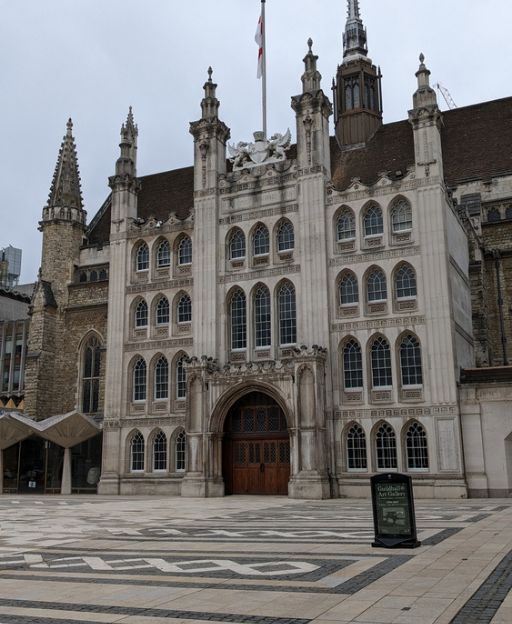
London has 110 livery companies — ancient trade guilds that predate the printing press, the Reformation, and most of the city’s famous landmarks. They were powerful enough to shape medieval trade. They are still powerful enough to choose the Lord Mayor of London today.
Most visitors to London walk past their halls without a second glance. That is precisely the point.
What a Livery Company Actually Is
In medieval London, craftsmen and merchants banded together by trade. Goldsmiths worked near each other, bakers had their own quarter, fishmongers controlled the riverfront. These were not just professional associations. They were the enforcers of quality, the educators of apprentices, and the welfare system for members who fell on hard times.
Each guild adopted a distinctive uniform — their livery — to identify themselves in civic processions. The word stuck, and the associations became known as livery companies.
At their peak in the 15th and 16th centuries, these guilds ran London’s economy. You could not legally trade in most goods without belonging to the relevant company. Apprentices served seven years under a master. Quality checks were rigorous. Rogue traders were publicly punished. The City’s wealth — and its reputation — rested on the companies’ shoulders.
Today, the 110 livery companies of London collectively give away more than £100 million to charity each year. They fund schools, scholarships, almshouses, and skills training. Several still carry out their original professional functions — in ways that affect every person in Britain.
The Guilds That Still Do the Old Jobs
The Worshipful Company of Goldsmiths is not merely ceremonial. It runs the Assay Office — the institution that hallmarks precious metals sold in the United Kingdom. If you have ever bought a piece of gold or silver jewellery in Britain, a Goldsmiths’ assayer checked it first. The lion passant and the leopard’s head on your ring trace directly back to 1300.
The Fishmongers’ Company employs its own water bailiff, who still has authority over fishery laws on the River Thames. Every July, the company sends officials in a flotilla of boats along the Thames in the Swan Upping ceremony — counting, marking, and releasing the river’s mute swans in a tradition that began in the 12th century.
The Vintners’ Company shares ownership of those swans with the Crown and the Dyers’ Company. It also still licenses the wine trade in the City of London — an authority granted by royal charter in 1364.
And the Clockmakers’ Company runs one of the finest horological museums in the world, located at the Guildhall. It is free to visit, and most Londoners have never been.
The Order of Precedence — and Why Two Guilds Have Argued for 500 Years
The 110 companies are ranked in order of precedence — a hierarchy that matters intensely at civic banquets and ceremonial occasions. The top twelve are known as the Great Twelve, and include the Mercers, the Grocers, the Drapers, and the Fishmongers.
The Mercers hold the top spot. Founded in 1394, the Mercers traded in luxury fabrics — silks, velvets, fine wools. Their alumni include Thomas More, Richard Whittington (the real Dick Whittington, who served as Lord Mayor three times), and John Colet, who founded St Paul’s School.
Then there is the famous dispute between the Skinners and the Merchant Taylors. In the 15th century, a row over which company ranked 6th and which ranked 7th grew so bitter that the Lord Mayor of 1484 had to broker a compromise: the two companies would swap places each year. They still do. This arrangement gave the English language the phrase “at sixes and sevens” — meaning in a state of confusion.
That is five hundred years of annual argument, preserved in everyday speech. London does not let go of its traditions easily.
Enjoying this? 3,000+ London lovers get stories like this every week. Subscribe free →
The Newest Members of a Very Old Club
The livery companies have not stood still. While the Great Twelve trace their roots to the 14th century, new companies have been granted livery status in every era. The Marketors received their charter in 1975. The Worshipful Company of Information Technologists was founded in 1992. The World Traders received livery status in 2000. There is now a Worshipful Company of Management Consultants, a Worshipful Company of Actuaries, and — granted in 2022 — the Worshipful Company of Cyber Security Professionals.
A guild of medieval furriers. A guild of cybersecurity professionals. Both exist. Both meet in the City of London. Both participate in the same ancient civic ceremonies. It is a genuinely strange and wonderful thing.
To join a livery company today, you typically need to be presented by an existing member, pay a series of fees, and take the Freedom of the City of London — a ceremony that dates to the 13th century and still involves swearing an oath. The City changes slowly.
How They Still Choose the Lord Mayor
Every November, the City of London elects a new Lord Mayor — not the Mayor of London you see on the news, but the Lord Mayor of the City of London, a separate role with roots going back to 1189. The Lord Mayor represents the world’s oldest continuous local government, and the person who holds the office is chosen entirely by the livery companies.
Only livery members can vote. Only people who are Freemen of the City can stand as candidates. The election takes place at Guildhall, the great medieval hall at the heart of the City, in a ceremony called Common Hall.
The following Saturday, the Lord Mayor’s Show takes place — a procession through the City that has been running since 1215. It is, by most accounts, the oldest civic procession in the world. More than half a million people line the streets each November to watch. The livery companies march in their robes and their traditions, doing exactly what they have always done.
The Lord Mayor’s Show takes place on the second Saturday of November and is free to watch. Our London planning guide has everything you need to time your trip around London’s most spectacular civic tradition.
How to See the Livery Companies When You Visit
The livery halls are scattered across the Square Mile — some tucked into alleys, others behind grand facades on streets most tourists never walk. Many are not open year-round, but several participate in the Open House London weekend each September, when some of the city’s most private buildings unlock their doors for free.
Guildhall itself — the ancient heart of City government, where livery elections take place — is open to visitors most weekdays. The Great Hall is one of the most impressive medieval rooms in England, having survived both the Great Fire of 1666 and the Blitz. Entry is free.
Just a short walk from Guildhall, Smithfield Market has traded in the same location for 800 years — itself a product of the medieval guild economy that the livery companies helped to create. Walking between the two is a ten-minute journey through a thousand years of London commerce.
The Clockmakers’ Museum at Guildhall Library displays 600 clocks and watches spanning five centuries — the finest such collection open to the public anywhere in the world. It is free. It is quiet. And almost nobody goes.
Frequently Asked Questions About London’s Livery Companies
What are the livery companies of London?
The livery companies are 110 ancient trade guilds based in the City of London. They originated as medieval craft and merchant associations and still play an active role in City governance, charity, and professional life. The oldest, the Mercers’ Company, dates to 1394.
Can visitors see the livery companies when visiting London?
Guildhall, where livery elections take place, is open free most weekdays. Some livery halls open during Open House London in September. The Lord Mayor’s Show in November — the world’s oldest civic procession — is free to watch and features the livery companies in ceremonial dress on the second Saturday of November.
What is the Lord Mayor’s Show and how does it connect to the guilds?
The Lord Mayor’s Show is an annual procession through the City of London dating to 1215. It marks the inauguration of the new Lord Mayor, who is elected entirely by livery company members. It is free to watch and one of London’s most spectacular public events.
Do the livery companies still have real roles today?
Yes. The Goldsmiths’ Company still hallmarks all gold and silver sold in the UK. The Fishmongers’ Company employs a water bailiff with Thames fishery authority. The Vintners’ Company still licenses wine traders in the City. Together, the companies give over £100 million to charity each year.
London has no shortage of famous history. But the livery companies are something rarer — a living history, still deciding who runs the oldest city in England, still marking gold with a lion’s paw, still counting swans on a summer river. They have been doing it longer than the Tube, longer than Parliament as we know it, longer than almost anything else that makes London what it is.
They are hiding in plain sight. That is very London of them.
🇬🇧 25 London Places Most Visitors Miss
From secret riverside walks to hidden Victorian tunnels, centuries-old pubs to rooftop gardens with skyline views — our free guide reveals the London most visitors never discover. Join 3,000+ London lovers who get it free.
Get Your Free 25-Places Guide →📲 Know someone who’d love this? Share on WhatsApp →
Love more? Join 65,000 Ireland lovers → · Join 43,000 Scotland lovers → · Join 29,000+ Italy lovers →
Free forever · Unsubscribe anytime
Subscribe Free