
Most visitors to Kew Gardens arrive expecting a lovely afternoon walk. They leave wondering why nobody told them sooner.
Kew Royal Botanic Gardens is not a park in the way that Hyde Park or Regent’s Park is a park. It is something else entirely — one of the most important scientific institutions on the planet, dressed up as a garden. And almost nobody who visits for the first time realises it until they are already deep inside.
More Than a Beautiful Day Out
Kew sits on 326 acres along the Thames in Richmond, southwest London. Founded in 1759 under Princess Augusta, it became a royal botanic garden in 1840. UNESCO added it to the World Heritage List in 2003 — not for its flower beds, but for the knowledge it holds and the science it has produced.
More than 50,000 plant species grow here. That is more kinds of plant in one place than exist on most continents combined. The living collection is backed by a herbarium of seven million dried specimens — pressed plants, seeds, and fossils — that scientists around the world rely on for their research every single day.
If you have ever taken a medicine that came from a plant, or eaten food that grows where it does because of deliberate cultivation history, there is a reasonable chance that Kew had a hand in it somewhere along the way.
That is the quiet fact most visitors carry home with them. Not that the tulips were beautiful — though they are — but that this place helped shape the world as we know it.
The Glasshouses That Changed the World
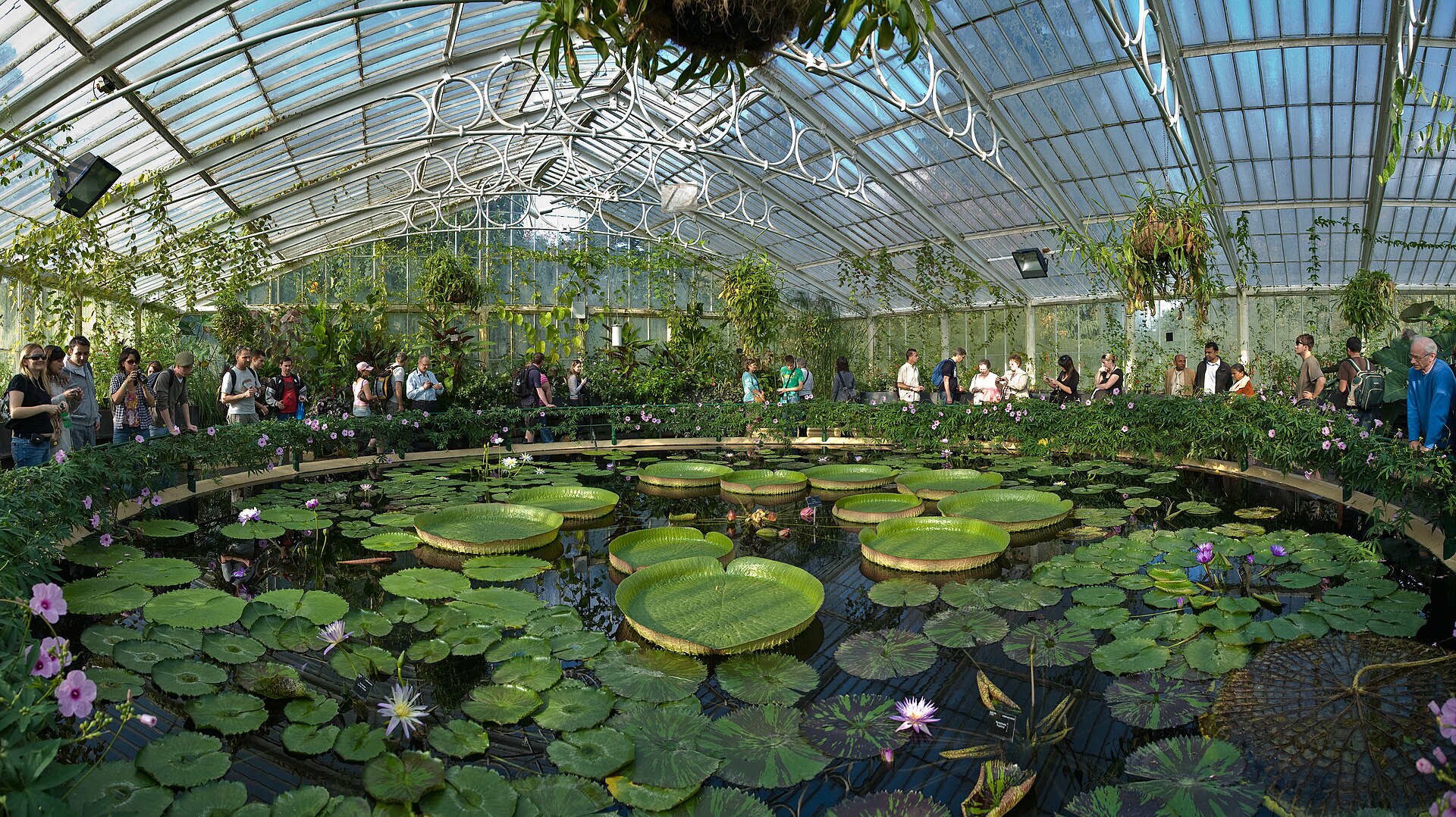
Kew’s most recognisable building is the Palm House, built in 1848. Its sweeping curves of iron and glass were revolutionary for their time — engineers had never built anything quite like it on this scale. Inside, tropical plants from rainforests around the world grow in carefully controlled heat and humidity.
The Palm House was designed to house living specimens from the British Empire’s farthest corners. It still does. Some of the plants inside have been growing there for more than a century, which means they were already ancient when your grandparents were young.
The real showstopper, though, is the Temperate House. Reopened in 2018 after a five-year, £41 million restoration, it is the world’s largest surviving Victorian glasshouse. When you walk inside, the scale catches you off guard. The central nave rises 20 metres. Trees that have grown here for 150 years form a canopy overhead.
One of the rarest plants on Earth lives inside: the St Helena olive tree, now extinct in the wild. Fewer than ten remain anywhere, and all of them are here at Kew.
What Most Visitors Never See
The Treetop Walkway is one of Kew’s stranger experiences. An 18-metre-high walkway winds through the tree canopy in the arboretum, giving you a perspective on the garden that most people never find. On a clear day, you can see for miles across southwest London from up there.
The Japanese landscape area is worth seeking out. The Chokushi-Mon gateway — a four-fifths scale replica of the Karamon gate at Nishi Hongan-ji temple in Kyoto — was built by Japanese craftsmen and brought to Kew in 1910. It sits quietly near the lake, visited by far fewer people than the main glasshouses.
In summer, the Great Broad Walk Borders stretch three kilometres along the main avenue. Thirty thousand plants bloom in a sequence that runs from early spring through to autumn. The planting is designed so that something is always at its peak, whatever month you arrive.
Enjoying this? 3,000+ London lovers get stories like this every week. Subscribe free →
The History the Garden Doesn’t Shout About
Kew’s plant hunters spent two centuries travelling the world to collect specimens. That work had consequences that shaped entire economies.
When Kew cultivated rubber tree seedlings from the Amazon in 1876, seeds were sent to British Malaya. Within decades, the rubber plantation industry had transformed the region. The same process happened with quinine — the anti-malarial drug derived from cinchona bark — and with tea, coffee, and dozens of crop plants that now grow far from where they originated.
It is a history that intertwines wonder with empire. Kew has commissioned an independent review of that legacy and addresses it openly in exhibitions and public talks throughout the year.
Today, Kew is one of the world’s leading centres for plant conservation science. The Millennium Seed Bank in Sussex — a Kew project — holds seeds from 40,000 species, with a long-term goal of banking a quarter of the world’s known plant species. It is, in effect, a backup drive for plant life on Earth.
Planning Your Visit to Kew Gardens
Kew is in Richmond, southwest London. The nearest Underground station is Kew Gardens on the District line, about 30 minutes from central London. Entry costs roughly £22 for adults; children under 17 enter free. The garden opens daily, with closing times that vary by season.
Allow at least three hours. Five is better. Most visitors spend too long in the Palm House and run short of time before reaching the Temperate House — go there first, while you still have energy.
There is also a royal palace inside the grounds. Kew Palace is the smallest of the five royal palaces, with rooms that have barely changed since King George III spent years there during his illness. It has an intimacy that larger palaces can never match.
If you are building a wider London trip, our 3-day London itinerary helps you combine Kew with Richmond Park and the Thames. For another extraordinary free green space, the Regent’s Park rose garden blooms with 12,000 roses in early summer and costs nothing to enter.
What is the best time to visit Kew Gardens?
Spring is the most spectacular season — tulips, cherry blossom, and magnolias peak between March and May. Summer fills the Broad Walk Borders with colour. Kew also runs a popular Christmas light trail from November through January, well worth visiting in its own right.
How long should I spend at Kew Gardens?
Allow at least three hours for a comfortable visit. To cover the main glasshouses, the arboretum, the Treetop Walkway, and the Japanese garden, you need closer to five. The garden is large enough that rushing leaves you feeling you missed most of it.
Is Kew Gardens worth the entrance fee?
Yes. At roughly £22 for adults, it costs less than many London attractions and covers a genuinely full day out. Children under 17 enter free. Annual membership is worth considering if you plan to visit more than twice a year — with seasonal highlights from February through December, two visits feels like too few.
Most people walk into Kew not quite sure what they are looking for. By the time they leave, they understand that they have been somewhere genuinely extraordinary. The world looks different when you know that a single garden helped shape so much of it.
🇬🇧 25 Hidden Gems of London Most Tourists Never Find
From secret riverside walks to hidden Victorian tunnels, centuries-old pubs to rooftop gardens with skyline views — our free guide reveals the London most visitors never discover. Join 3,000+ London lovers who get it free.
Get Your Free London Hidden Gems Guide →📲 Know someone who’d love this? Share on WhatsApp →
Love more? Join 65,000 Ireland lovers → · Join 43,000 Scotland lovers → · Join 29,000+ Italy lovers →
Free forever · Unsubscribe anytime
Subscribe Free