
Before a person can become a barrister in England, they must eat dinner. Not just once. Dozens of times — seated in a centuries-old hall, surrounded by portraits of judges long dead, following rituals unchanged since the 1400s. This isn’t a quirky tradition that has been quietly dropped. It is still happening right now, in the heart of London, a few hundred metres from the Strand.
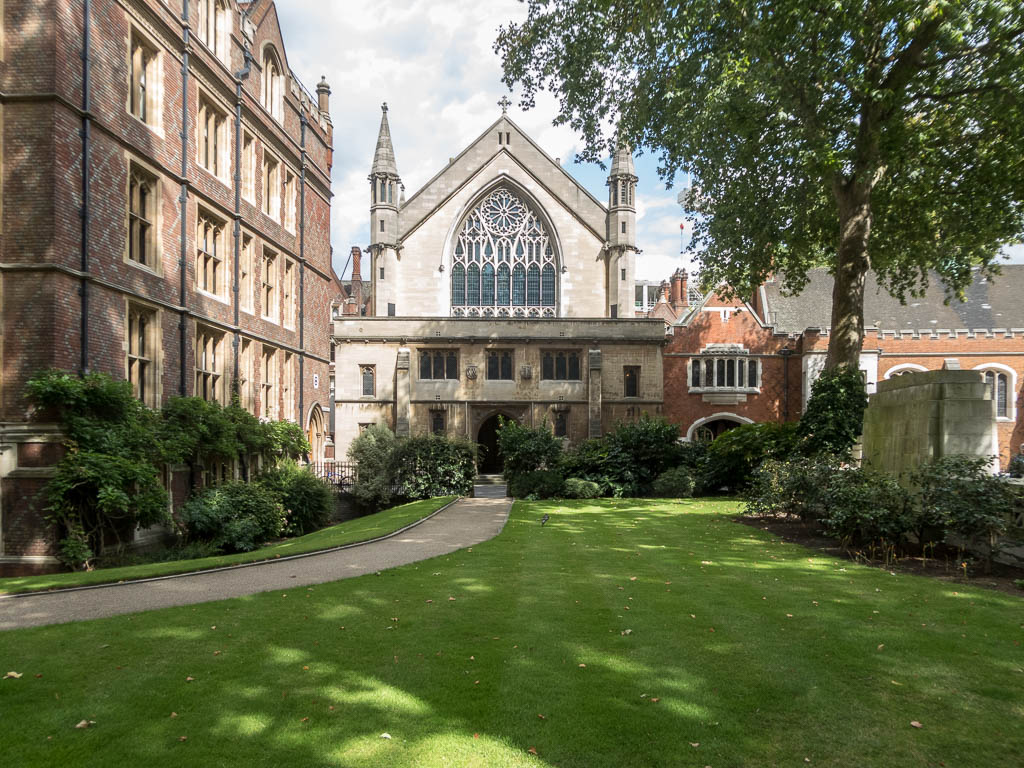
The Hidden Legal Quarter Most Londoners Walk Past Every Day
Tucked between Holborn and the Embankment lies one of London’s most secretive districts. The Inns of Court — Lincoln’s Inn, Gray’s Inn, Middle Temple, and Inner Temple — are a cluster of medieval legal institutions that have operated continuously for over 700 years.
They are technically private, yet their gardens and courtyards are open to visitors. Most people who walk through them have no idea what they are looking at.
Each Inn is essentially a self-contained village: libraries, chapels, gardens, dining halls, and chambers for hundreds of barristers and their clerks. They have their own gardeners, their own porters, their own rules. They sit partly outside normal London jurisdiction. And they operate — still, in 2026 — by customs that predate printing.
The Dinner Requirement That Has Survived 700 Years
To be called to the Bar — to become a barrister in England and Wales — a student must complete a minimum number of qualifying sessions at one of the four Inns. This requirement has existed, in various forms, since the fourteenth century. For most of that time, it literally meant dining in the Great Hall.
The logic was practical. Before textbooks and law schools, the Inns were where the law was taught. Students lived and ate alongside qualified barristers. The dinner table was where you learned who the good advocates were, how to argue a case, what the judges thought. Community was the curriculum.
Today the requirement has been updated. Students complete qualifying sessions rather than simple dinner tallies. But the formal dining tradition continues. Barristers-in-training eat together in the Great Hall, sit at high table with their Inn’s Benchers — the senior members who govern it — and observe traditions that feel, frankly, medieval. Because they are.
Four Inns, Four Hidden Worlds
Each Inn has its own character. Lincoln’s Inn is perhaps the grandest, with a chapel designed partly by Inigo Jones, a vast old hall dating to 1489, and gardens open to the public on weekday lunchtimes. Gray’s Inn is quieter, tucked north of Holborn, with Francis Bacon’s mulberry tree supposedly still standing in its gardens.
Middle Temple staged one of the earliest performances of Shakespeare’s Twelfth Night in its magnificent Elizabethan hall — and that hall is still in regular use today. Inner Temple has a circular Norman church built by the Knights Templar in 1185, which you can visit and which is genuinely extraordinary.
These are not museums. They are working institutions. On any weekday, you will see barristers in suits, legal clerks moving between chambers, and students reading in the gardens. The law is being practised here exactly as it has been for centuries — the paperwork just looks different now.
Enjoying this? 3,000+ London lovers get stories like this every week. Subscribe free →
What You Can Actually Visit (and When)
The Inns are not fully closed to the public, though finding your way in can feel like cracking a code. Most are accessible during weekday working hours. Gardens are generally open to the public for a few hours each day — timings vary by Inn, so always check before visiting.
The Temple Church is separately ticketed and should be on every visitor’s list. Standing inside this circular Norman building, knowing that crusading knights once prayed here, is the kind of experience that makes London feel genuinely old. Not museum-old. Old in the way that stops you mid-step.
For more on planning your time in this part of London, the perfect 3-day London itinerary includes the Holborn and Strand area alongside other central London highlights.
The Wig-Makers Still in Business Around the Corner
Adjacent to the Inns, in streets that have barely changed since the eighteenth century, you will find London’s last legal outfitters. Ede & Ravenscroft on Chancery Lane has been making legal wigs and gowns since 1689. Alongside them are stationers, barristers’ clerks’ offices, and legal bookshops that have been there for generations.
The horsehair wig worn in court today is the same horsehair wig worn in the 1700s. It is not an affectation. For English barristers, it is part of the professional uniform — and there are craftspeople who have spent their entire careers making them, to specifications unchanged in centuries.
If you walk these streets on a weekday morning, you may see barristers carrying their robes in bags, heading toward a court. It is the most incongruous sight: 21st-century professionals, suits and smartphones, walking under the same stone archways that Dickens described in Bleak House. The nearby hidden garden where Dickens found his most famous legal inspiration is a perfect extension of any visit here.
Frequently Asked Questions
Are the Inns of Court open to the public?
The gardens and grounds are generally open on weekday working hours, though specific times vary by Inn. Lincoln’s Inn gardens are usually open midday to 2:30pm. The Temple Church is separately ticketed. Always check the individual Inn’s website before visiting.
Can anyone become a barrister in England without attending an Inn?
No. Membership of one of the four Inns of Court is a legal requirement to be called to the Bar in England and Wales. This has been the case for over 600 years and remains unchanged today.
Where are the Inns of Court and how do I get there?
The Inns are clustered between Holborn and Temple Tube stations, along Chancery Lane and Fleet Street. Most entrances are off Holborn or the Strand. Allow at least two hours to walk through all four and visit the Temple Church.
Is the Temple Church worth visiting and what is the connection to the Knights Templar?
Yes, absolutely. The Temple Church was built in 1185 by the Knights Templar — the military religious order famous from the Crusades. It is one of only a handful of round churches in England. It sits between Middle Temple and Inner Temple and is open to visitors most days except Monday.
There is something quietly remarkable about standing in a Lincoln’s Inn garden on a grey Tuesday, surrounded by barristers and their papers, knowing this scene has essentially repeated itself every weekday for seven centuries. London keeps reinventing itself. The legal quarter simply doesn’t bother. It just carries on.
🇬🇧 25 London Places Most Visitors Miss
From secret riverside walks to hidden Victorian tunnels, centuries-old pubs to rooftop gardens with skyline views — our free guide reveals the London most visitors never discover. Join 3,000+ London lovers who get it free.
Get Your Free 25-Places Guide →📲 Know someone who’d love this? Share on WhatsApp →
Free forever · Unsubscribe anytime
Subscribe Free