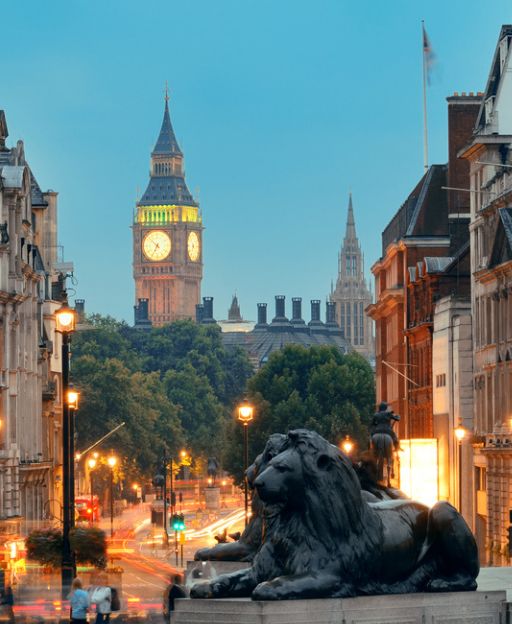
Stand in Trafalgar Square long enough and you start to notice the names. Nelson. Charles. Landseer. Names carved into stone, cast in bronze, etched into the city itself. But look around at the people passing — the tourists snapping photographs, the office workers cutting through to the Strand — and you see another kind of naming. Wilson on a dry-cleaner’s awning. Fletcher above a pub. Cooper on a brass plate outside a solicitor’s office.
These are not random words. They are history compressed into surnames — stories about what your ancestors did, where they came from, what they looked like, and who their fathers were. English surnames are among the richest genealogical records in the world, and nowhere are they more layered than in London, a city that has been pulling people in from every corner of Britain and the world for two thousand years.
If your family name is English — or if you suspect it might be — this guide will help you understand where it came from, what it meant, and how it connects you to the streets, trades, and people of this city’s remarkable past.
The Norman Conquest Changed English Names Forever
Before 1066, most English people had a single name. You were simply Aethelred or Godwin or Edith. Surnames, as a concept, barely existed. Then William the Conqueror crossed the Channel, won the Battle of Hastings, and transformed not just England’s political landscape but its very names.
The Norman nobles who followed William to England brought with them French and Latin naming conventions. Within a generation, the aristocracy had surnames — and those surnames were spreading downward through society. Many of England’s most recognisable family names today are Norman French in origin: Warren (from La Varenne in Normandy), Percy (from Percy-en-Auge), Montgomery (from Montgomeri, Normandy), Clare (from Cleres), and Russell (meaning “red-haired,” from the Norman French roux).
But the Norman influence went deeper than the nobility. Common English words of French origin became surnames too. Beaumont means “beautiful hill.” Savage derives from the Old French sauvage, meaning “wild” — probably a nickname for someone fierce or untamed. Blanche means white. Curtois (later Curtiss or Curtis) meant “courteous.”
The legacy of 1066 is still visible every time someone introduces themselves at a London dinner party. Roughly a quarter of the commonest English surnames have Norman French roots.
When Your Job Became Your Name: Occupational Surnames
Walk through the old lanes of the City of London — Bread Street, Ironmonger Lane, Cheapside — and you are walking through a medieval trade directory. Streets in the medieval city were named after the goods sold there and the crafts practised there. And when ordinary English people began adopting surnames between the 12th and 15th centuries, the most logical thing in the world was to name themselves after what they did.
Smith is the most common surname in England today, and its origins are exactly what you would expect: a metal worker. In medieval London, smiths were essential figures — they made horseshoes, weapons, tools, hinges, and locks. A blacksmith worked with iron; a goldsmith with precious metals. The surname Fletcher comes from the Old French flechier, meaning an arrow-maker — a trade that was literally life or death in the age of the longbow.
Cooper made barrels — an indispensable trade in a city built on the river trade in wine, ale, and salted fish. Weaver and Tucker worked in the cloth trade, which dominated medieval London’s economy. Thatcher repaired roofs. Mason built walls. Carpenter worked with wood. Turner operated a lathe. Slater laid roofing tiles.
Some occupational surnames are less obvious. Chamberlain was the title given to the man who managed a nobleman’s household. Spencer — the surname of Diana, Princess of Wales — originally meant “dispenser,” the person responsible for distributing provisions in a great house. Marshall originally referred to the man responsible for the horses.
If your surname falls into this category, you can sometimes trace which part of England your ancestors practised their trade in by looking at regional variations. Walker (a cloth-worker who “walked” the cloth to clean it) was more common in the north of England; Tucker was the south-west equivalent; Fuller appeared across London and the south-east.
Enjoying this? 3,000 London lovers get stories like this every week. Subscribe free
Named After London’s Streets and Parishes: Locational Surnames
Medieval London was a city of constant movement. Villagers left their home parishes to seek work in the capital. Merchants arrived from the surrounding counties. And when these newcomers needed a way to distinguish themselves from the dozens of other “Johns” and “Williams” in the city, the simplest solution was to name them after where they came from.
This is why many English surnames are simply place names. Lincoln, Kent, Essex, York, Norfolk — these are all surnames that originated as “the man from Lincoln,” “the man from Kent,” and so on. London’s medieval parishes gave rise to their own set of surnames. Holborn, Aldgate, and Greenwich appear as surnames across London records from the 14th and 15th centuries.
Natural landscape features gave rise to some of the most widespread English surnames. Hill, Green, Wood, Brook, Field, Lee (from the Old English leah, meaning a woodland clearing), and Heath all originated with people who lived near or on those features. In a city like medieval London, where the Thames marshes and the great heath of Hampstead were defining landmarks, these names multiplied rapidly.
Church and Cross came from people who lived near these landmarks. Bridge was the person who lived near the river crossing. Tower — uncommon but not unknown as a surname — came from proximity to one of London’s many fortified towers, most famously the Tower of London itself.
Patronymic Surnames: The Son Of
The third great category of English surnames is the patronymic — the name derived from a father’s first name. In England, this typically took the suffix -son: Johnson means “son of John,” Thompson means “son of Thomas,” Robertson means “son of Robert,” and Richardson means “son of Richard.”
Some patronymic surnames dropped the “-son” ending entirely. Jones is simply “John’s” in Welsh, carried across the border as Welsh families settled in London. Evans is the Welsh form of “son of Evan” (a Welsh version of John). Williams is “son of William.” These Welsh surnames are extraordinarily common in London because of the centuries-long migration of Welsh people to the capital — a movement that accelerated dramatically during the Industrial Revolution.
The Fitz- prefix (from the Norman French fils, meaning “son”) was used among the Norman aristocracy and their descendants: Fitzgerald (son of Gerald), Fitzroy (son of the king — often applied to illegitimate royal children). In London’s West End, the district of Fitzrovia takes its name from the Fitzroy family who once owned the land.
Descriptive Surnames: What You Looked Like
Perhaps the most personal category of English surnames is the descriptive — names that arose as nicknames based on appearance, personality, or behaviour. These are the surnames that let you imagine the actual person who first carried the name.
Brown and Black referred to hair or complexion. White and Blanche described pale colouring. Long and Short described stature. Strong referred to physical power. Wise suggested a reputation for good judgement.
Some descriptive surnames are more vivid. Goodfellow was someone known as a reliable companion. Trueman was a person of integrity. Jolly described a cheerful temperament. Moody — rather than meaning unpredictable in the modern sense — came from the Old English modig, meaning “brave.”
These nicknames were originally personal, even affectionate — the kind of label a community gives to one of its own. The fact that they stuck, passing from father to child across generations, is a small miracle of social memory.
How to Trace Your English Ancestry: Where to Start in London
If your family name has triggered a desire to dig deeper — to find the ancestor who gave it its shape — London is one of the best places in the world to start that search. The city’s archive infrastructure is exceptional, and much of it is now accessible online.
The London Metropolitan Archives in Clerkenwell holds an extraordinary collection of parish records, court records, and administrative documents stretching back to the 12th century. If your ancestors lived in London between the 16th and 20th centuries, there is a reasonable chance a record of them survives here. The reading room is open to the public, and many finding aids are available at cityoflondon.gov.uk.
FindMyPast is perhaps the most valuable online resource for English genealogy. It holds English and Welsh census records from 1841 to 1921, parish registers, military records, and court documents — and it has a strong focus on London collections. The General Register Office holds records of births, deaths, and marriages in England and Wales from 1837 onwards. A birth certificate from the mid-19th century can unlock three generations of ancestry in a single document.
For older records — anything before 1837 — parish registers are the primary source. London’s historic parishes each kept their own baptism, marriage, and burial records, and thousands of these have been digitised and indexed. The International Genealogical Index, accessible via FamilySearch.org, is a free resource that covers many of these pre-1837 records.
If you are visiting London specifically to trace your English roots, consider a half-day at the Society of Genealogists in Clerkenwell. Their library holds an enormous collection of surname histories, county histories, and transcribed parish records. Staff can point you in the right direction when the archive records feel overwhelming.
Your English surname — whether it speaks of a Norman baron, a medieval barrel-maker, or a man who lived beside a brook on the edge of the city — is a thread running all the way back to the streets of this extraordinary place. Pull it gently, and you might be surprised how far it leads.
🇬🇧 25 Hidden Gems of London Most Tourists Never Find
From secret riverside walks to hidden Victorian tunnels, centuries-old pubs to rooftop gardens with skyline views — our free guide reveals the London most visitors never discover. Join 3,000+ London lovers who get it free.
Already subscribed? Download your free London guide (PDF)
Love more? Join 64,000 Ireland lovers · Join 43,000 Scotland lovers · Join 30,000 Italy lovers
Free forever · One email per week · Unsubscribe anytime
Subscribe Free