
Walk along almost any residential street in London and you are walking through one of the greatest building projects in human history. The red-brick townhouses with their white cornices, iron railings, and tall sash windows were not simply built. They were the answer to an urgent question: how do you house a city that grew from one million people to six million in a single century?
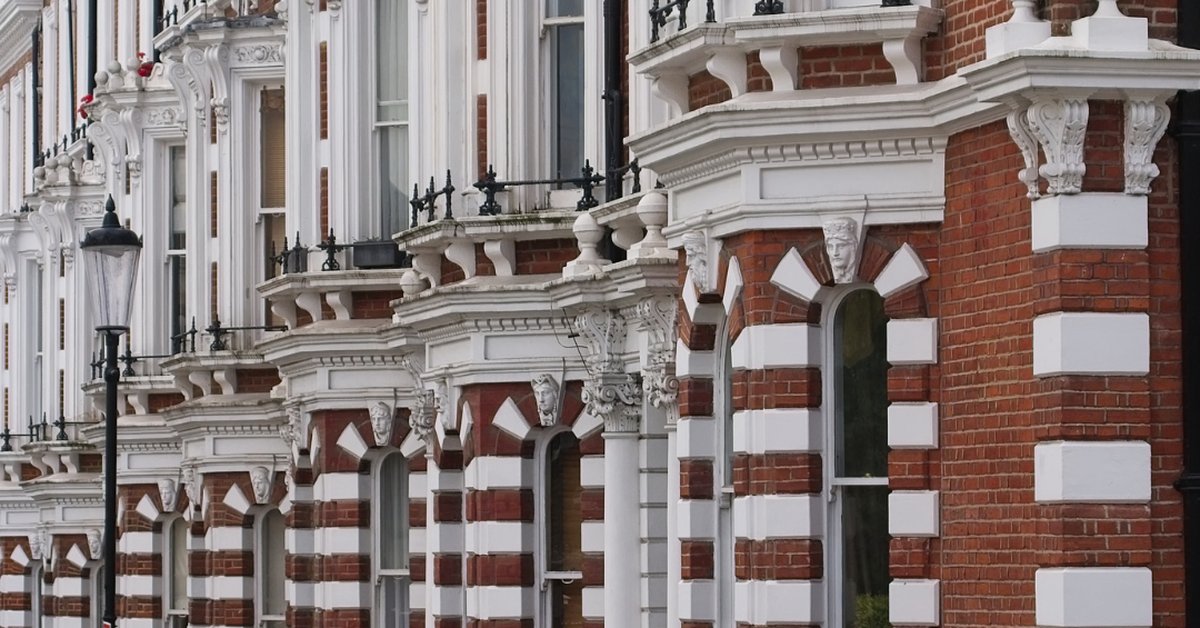
The answer was the Victorian terrace. From the 1840s to 1901, builders laid street after street of these houses across London. Today, they form one of the most distinctive cityscapes in the world — and every one of them has a story to tell about who lived there, how they lived, and what London meant to ordinary people caught up in extraordinary times.
Why London Became a Victorian City
When Queen Victoria came to the throne in 1837, London was already the largest city in the Western world. But it was about to grow at a pace that had never been seen before. The Industrial Revolution brought work. The railways brought people from every corner of Britain and Ireland. By the time Victoria died in 1901, London’s population had grown sixfold.
The old housing stock simply could not cope. Landlords crammed families into rooms meant for storage. Courts and alleys became infamous for overcrowding. The cholera outbreaks of the 1840s and 1850s were the direct result of too many people packed into too small a space with no clean water and no sanitation.
The Victorian terrace was the solution. Builders could construct them quickly, in long rows that maximised land use. A single row of houses provided homes for a dozen families, all sharing a common street frontage. The terraced house was, at its heart, a practical response to a population crisis — and the style in which it was built, from plain brick in working-class Islington to ornate stucco in wealthy Kensington, tells you exactly how much the people inside could afford.
What the Houses Tell You About Who Lived There
Victorian builders were not subtle. They used architecture to communicate social standing as clearly as any uniform. Once you know the code, you can walk any London street and read it like a book.
The grandest houses in areas like Kensington, Belgravia, and parts of Notting Hill were built for the professional classes — doctors, lawyers, merchants, and the minor gentry who had moved into the city from the country. These houses have high ceilings, wide frontages, elaborate plasterwork above the windows, and, crucially, a semi-basement. That basement is one of the most revealing features of a Victorian townhouse. It is where the servants lived and worked.
Move further out to areas like Islington, Hackney, or Battersea, and the houses become smaller and plainer. These were built for clerks, shopkeepers, skilled craftsmen, and railway workers — the Victorian lower-middle class and respectable working class. The window mouldings are simpler. The gardens are smaller. But the basic structure — two or three storeys, a parlour at the front, a kitchen at the back — is remarkably similar. Victorian builders understood that aspiration is universal.
At the bottom of the scale were the back-to-back terraces and court housing of the East End. Many of these have been demolished, but enough survive in places like Whitechapel and Bethnal Green to give you a sense of what life was like for London’s poorest workers and the waves of immigrants — Irish, Jewish, Eastern European — who arrived in the city and built new lives from almost nothing.
The Upstairs-Downstairs World
The grand Victorian townhouse was not a single family home in the modern sense. It was a small economy, with the family occupying the upper floors and a staff of servants — cook, parlour maid, housemaid, lady’s maid — occupying the basement and attic rooms.
If you peer down at any basement window on a Victorian street in Kensington or Chelsea, you are looking at what was once the domain of the cook. The kitchen was always in the basement, close to the coal store and the larder. The family above would rarely venture down. Food came up the back stairs on trays. Coal came up the same route. The front door — that grand entrance with its polished brass knocker — was for the family and their guests only. Servants entered from the side or rear.
This physical separation of the household was one of the defining features of Victorian life. The family and the staff occupied the same building but lived in almost entirely different worlds. Understanding this helps make sense of Victorian literature, Victorian social commentary — and, if your family history connects to this period, Victorian census records.
The 1861 census listed domestic service as the largest single occupation for women in England. If your great-great-grandmother was a young woman in London in the 1860s, the chances are good that she worked in a house exactly like the ones still standing in South Kensington or Pimlico.
Tracing Your Ancestors Through Victorian London
One of the most remarkable things about Victorian London is how thoroughly it was documented. The Victorians believed in record-keeping. The result is an extraordinary archive that allows you to trace a family through a specific address, decade by decade, through the entire Victorian era.
Census records from 1841 to 1911 are now fully available online. Each one lists every person living at every address in London — their name, age, occupation, and birthplace. If you know that a family member lived in London at any point in the Victorian period, there is a very good chance they appear in one of these censuses, listed at a specific address on a specific street.
The addresses themselves are often still there. London’s Victorian housing stock survived the Second World War better than many expected. Walk to the address where your ancestor lived in 1881 and in many cases you will be standing in front of the actual house. The door may be a different colour. The sash windows may have been replaced. But the bones of the building — the brick, the ironwork, the street plan — are almost certainly unchanged.
The Ancestry website, FindMyPast, and the free FamilySearch database all hold digitised Victorian census records. The London Metropolitan Archives in Clerkenwell holds parish baptism, marriage, and burial records going back centuries, and their online catalogue is searchable from anywhere in the world. Ancestry tourism in London is not just possible — it is one of the most powerful heritage experiences the city offers.
🏙️ Enjoying this? 3,000 London lovers get stories like this every week. Subscribe free →
The Best Victorian Heritage Walks in London
London’s Victorian neighbourhoods are best understood on foot. Here are four areas where the heritage is particularly intact and the walking is exceptional.
South Kensington and Albertopolis. The area around the Victoria and Albert Museum, Natural History Museum, and Science Museum was built on the proceeds of the Great Exhibition of 1851. Prince Albert’s vision of a great cultural quarter was realised in the decades after his death, and the ornate red-brick buildings that surround Exhibition Road are among the finest surviving examples of Victorian civic architecture. The residential streets immediately to the south — Onslow Gardens, Harrington Road, Cranley Gardens — are exactly the kind of prosperous professional terrace that defined Victorian ambition.
Notting Hill and Ladbroke Grove. Today one of London’s most expensive postcodes, Notting Hill was originally planned in the 1820s as a speculative development that nearly failed. By the 1850s, the grand white-stucco houses of Pembridge Crescent and Ladbroke Grove were finally attracting the professional families they had been built for. The area offers some of London’s most photogenic Victorian streetscapes.
Barnsbury and Canonbury, Islington. If South Kensington represents wealthy Victorian London, Islington represents the confident Victorian middle class. The streets around Barnsbury Square and Canonbury Square were built in the 1840s and 1850s for a mix of clerks, merchants, and professionals. They are slightly more modest than Kensington but no less beautiful — and they are remarkably intact. George Orwell lived in Canonbury. Joe Orton was born nearby in slightly humbler circumstances. The history here runs deep.
Pimlico. Built at almost the same time as Belgravia but aimed at a less wealthy market, Pimlico’s grid of stucco-fronted streets has a slightly faded grandeur that many visitors find more appealing than its grander neighbour. The houses are tall, white-painted, and densely packed. In Victorian times this was the territory of army officers, civil servants, and the lesser gentry — the kind of people who needed to maintain appearances on a tight budget.
How to Read a Victorian Street
Once you start noticing the architectural details, Victorian streets become much more than pleasant places to walk. They become readable documents.
Look at the window proportions first. Early Victorian windows (1840s-1860s) tend to be taller and more slender, reflecting the influence of the Georgian style. Later Victorian windows (1870s-1900) become more varied — some houses adopt the sash, others experiment with bay windows that project out from the facade and catch more light. The bay window became the defining feature of late Victorian suburban housing.
Look at the materials next. London stock brick — that characteristic yellowish-grey colour — was the standard building material for most of the Victorian period. Red brick, which the image of Victorian London has made famous, became fashionable from the 1870s onwards, partly as a reaction against the drabness of the older stock brick streets. Houses in areas developed after 1870 tend to be redder, more decorative, and more varied in their rooflines.
Finally, look at what has been preserved. Blue plaques mark the homes of notable Victorian residents — Dickens in Bloomsbury, Keats in Hampstead, Darwin in Down. Even without a plaque, every surviving Victorian terrace tells you something about the people who planned it, built it, and lived in it across five or six generations.
Victorian London Today
London has more surviving Victorian buildings than any other city in the world. The Blitz damaged more than 70,000 buildings, but the residential terraces of Kensington, Islington, Pimlico, Hackney, and Battersea largely survived. Today, many of these streets are designated conservation areas, which means that the Victorian character — the materials, the proportions, the ironwork — is protected in law.
Walking these streets today, you are seeing almost exactly what a visitor in 1890 would have seen. The front doors have been repainted. Cars replace horses. But the architecture is unchanged, and with it the sense of a city that reinvented itself in a single extraordinary century and left that reinvention written in brick and stone across every neighbourhood.
That, ultimately, is what makes Victorian London such a powerful destination for anyone interested in heritage, family history, or simply the experience of standing in a place where history is still present, visible, and very much alive.
Frequently Asked Questions
What is the best area in London to see Victorian architecture?
South Kensington, Notting Hill, and Pimlico offer some of the finest intact Victorian residential streets in London. For a mix of Victorian grandeur and fascinating social history, Barnsbury in Islington is also excellent and less visited by tourists.
How do I trace an ancestor who lived in Victorian London?
Start with the UK census records from 1841 to 1911, available on Ancestry.com and FindMyPast. Search by name and birthplace. Once you have an address, you can visit the London Metropolitan Archives in Clerkenwell for parish records, trade directories, and local maps that bring your ancestor’s neighbourhood to life.
Why do so many London houses look Victorian?
London’s population grew from roughly one million in 1800 to over six million by 1900. The building boom required to house this growth happened almost entirely during the Victorian era, from 1837 to 1901. The result is that Victorian terraced housing forms the backbone of London’s residential neighbourhoods. Much of it survived the Second World War intact and is now protected by conservation area designations.
🇬🇧 25 Hidden Gems of London Most Tourists Never Find
From secret riverside walks to hidden Victorian tunnels, centuries-old pubs to rooftop gardens with skyline views — our free guide reveals the London most visitors never discover. Join 3,000+ London lovers who get it free.
Get Your Free London Hidden Gems Guide →Already subscribed? Download your free London guide (PDF)
Love more? Join 64,000 Ireland lovers → · Join 43,000 Scotland lovers → · Join 30,000 Italy lovers →
Free forever · One email per week · Unsubscribe anytime

Subscribe Free