
On the night of 7 September 1940, 348 German bombers flew up the Thames and dropped the first bombs on central London. It was the beginning of the Blitz — 57 consecutive nights of bombing that killed more than 43,000 civilians and left one third of the city in ruins. Yet London did not surrender. If you want to understand Britain in its finest hour, there is no better place to start than the streets, tunnels, and bunkers that survived those terrible nights.
For American visitors, WWII London carries a particular weight. The United States entered the war in December 1941, but American journalists, soldiers, and diplomats had been watching from London long before that. Ed Murrow’s radio broadcasts — “This is London” — brought the sound of the Blitz into sitting rooms across America. Walking these streets today, you are walking through history that shaped the world your grandparents knew.
The Blitz: When London Refused to Break
The Blitz began in September 1940 and continued until May 1941. During those eight months, the Luftwaffe dropped over 30,000 tonnes of explosives on London. The East End bore the worst of it — Whitechapel, Stepney, Poplar, and the docks at Wapping were bombed night after night. More than a million London homes were damaged or destroyed.
What the Nazis did not anticipate was the resolve it would produce. King George VI and Queen Elizabeth famously refused to leave Buckingham Palace, even after it was bombed nine times. The Queen reportedly said she could now look the East End in the face. Churchill toured bombed neighbourhoods and was met with crowds calling out to him. The destruction was real; so was the defiance.
Today you can still find evidence of the Blitz if you know where to look. Bombsite gaps in Victorian terraces. Streets rebuilt in the 1950s functional style because nothing older survived. A memorial plaque here. A rebuilt church wall there. The city carries its wounds quietly, which makes finding them all the more moving.
The Churchill War Rooms: Inside Britain’s Secret Nerve Centre
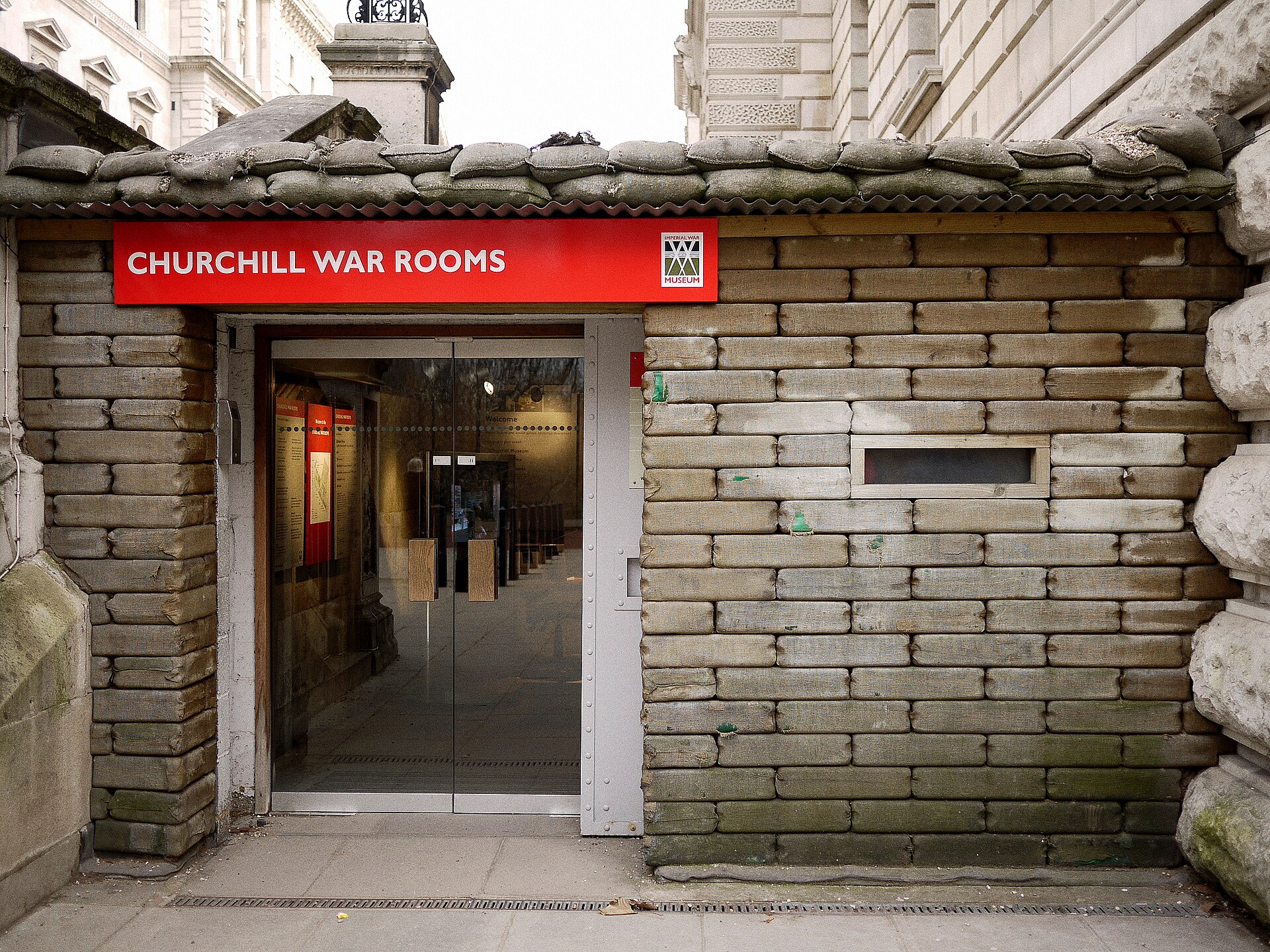
Beneath the streets of Westminster, reached by a nondescript entrance on King Charles Street, lies the best-preserved secret of the Second World War. The Churchill War Rooms — officially the Cabinet War Rooms — were dug into the basement of the government offices in 1938, just before war broke out. When the bombing began, Winston Churchill moved the nerve centre of the British war effort underground.
You can stand in the Map Room, where the latest intelligence was pinned to walls around the clock, and the pins are still there exactly as they were on the day the war ended. You can see Churchill’s bedroom, barely larger than a wardrobe, where the Prime Minister slept on the rare nights he spent underground. There is the Cabinet Room where some of the most consequential decisions of the 20th century were made, and a direct telephone line to President Roosevelt in Washington, disguised — absurdly but effectively — as a lavatory.
The museum contains the Churchill Museum alongside the preserved rooms. This is one of the finest biographical museums in Britain, taking you through Churchill’s extraordinary life from his difficult boyhood at Harrow to his famous wartime broadcasts. Allow two to three hours for a proper visit. Book tickets in advance — queues on summer days can be long.
Practical details: Churchill War Rooms, Clive Steps, King Charles Street, SW1A 2AQ. Open daily 09:30–18:00 (last admission 17:00). Adults £32, children under 15 free. Nearest tube: Westminster. Book in advance at the IWM website.
St Paul’s Cathedral: London’s Symbol of Survival
No image from the Blitz is more famous than the photograph taken on the night of 29 December 1940. London is burning. The City is hidden by smoke. And rising above it all, intact and illuminated by the fires, is the dome of St Paul’s Cathedral. Published around the world, the photograph became a symbol of civilisation’s resistance to barbarism.
The cathedral’s survival was not accidental. A team of volunteers known as the St Paul’s Watch kept vigil every night of the Blitz, extinguishing incendiary bombs by hand before they could take hold. On the night of the great fire, the cathedral was struck 28 times. Each time, the Watch put the fires out. One bomb fell through the dome but failed to explode. Another buried itself deep under the foundations and took three days to safely remove.
Inside the cathedral, there is a small chapel dedicated to the American forces who served in Britain — the American Chapel in the apse behind the high altar. It was created as a memorial to the 28,000 American servicemen and women based in Britain who lost their lives. For American visitors, this is one of the most quietly moving corners of any building in London.
🏙️ Enjoying this? 3,000 London lovers get stories like this every week. Subscribe free →
The Underground That Sheltered a City
When the air raid sirens began, Londoners made for the Underground. The deep Tube stations — particularly on the Northern, Piccadilly, and Central lines — became the most effective air raid shelters in the city. At the peak of the Blitz, more than 177,000 people sheltered in the Underground on a single night. Aldwych station became a repository for treasures from the British Museum and the National Gallery, moved there for safekeeping.
Conditions were not comfortable. Platforms were crowded. Ventilation was poor. There was little sanitation. People brought blankets and food, played cards, sang songs, and tried to sleep to the sound of bombs overhead. A whole subterranean society emerged — wardens, canteens, even travelling libraries. Some families sheltered in the same station every night for months.
You can still see evidence of this on several Tube platforms. Look for the painted line about a metre above the platform floor — this was the height to which bedding was permitted to be piled, to keep the platform half-clear for emergency access. Most passengers walk past without noticing. Now you will know what it means.
Operation Pied Piper: The Children Who Left London
Between September 1939 and 1940, nearly 3.5 million people — most of them children — were evacuated from London and other major British cities. Operation Pied Piper sent children to live with host families in the countryside, often hundreds of miles from home. Many had never been out of London. Some were as young as four years old.
They left from the great London mainline stations — Paddington, Euston, Liverpool Street, Victoria. They wore labels around their necks like luggage, carried small cases and gas masks, and were put on trains by parents who did not know when they would see them again. Some children were away for five years. Some never returned to the same home — their houses had been bombed.
The Imperial War Museum in Lambeth holds a remarkable collection of evacuation letters, diaries, and photographs. Reading them, you encounter children writing home about strange countryside smells, and the peculiar politeness of small Londoners in alien settings. It is impossible to read them without feeling something.
WWII London Today: Where to Walk in Their Footsteps
Beyond the Churchill War Rooms and St Paul’s, London offers a wide range of WWII heritage experiences. The Imperial War Museum in Lambeth is free to enter and houses one of the finest WWII collections in the world, including an authentic V2 rocket, Churchill’s wartime desk, and an unflinching Holocaust exhibition. The RAF Museum at Hendon tells the story of the Battle of Britain through restored aircraft — and it too is free.
For a walking experience, the South Bank between Waterloo Bridge and London Bridge was one of the most heavily bombed areas of the city. The low-rise buildings that replaced the Victorian originals are still evident. Walk it with a wartime map downloaded from the London Metropolitan Archives and you will see the gaps where entire streets once stood.
Bethnal Green in the East End marks the site of one of the war’s most tragic events. On the night of 3 March 1943, a crowd surging into Bethnal Green Tube station caused a crush at the entrance stairs. 173 people were killed, including 62 children. A small memorial garden marks the spot today — an overlooked and sobering place to spend a few quiet minutes.
How to Plan Your WWII Heritage Visit to London
A dedicated WWII heritage visit is best planned over two full days. Day one: start at the Churchill War Rooms in the morning — give it two to three hours — then walk to St Paul’s Cathedral (about 20 minutes on foot) and seek out the American Chapel. Day two: take the Tube south to Lambeth for the Imperial War Museum, then walk along the South Bank towards London Bridge.
If you have additional time, the RAF Museum at Hendon is excellent for those interested in the air war. The National Army Museum in Chelsea covers the broader wartime experience. And if you are in London in September, the anniversary of the Blitz on 7 September brings commemorative events to several sites, including a service at St Paul’s.
Most major WWII sites are free. The Churchill War Rooms at £32 is the significant exception, but it is worth every penny. Book early in summer. The city that endured so much to remain what it is deserves at least one full afternoon of your attention.
Frequently Asked Questions About WWII London Heritage
Is the Churchill War Rooms worth visiting?
Yes — the Churchill War Rooms are among the finest heritage experiences in London. The rooms have been preserved exactly as they were on VE Day, and the accompanying Churchill Museum offers a comprehensive account of his life and wartime leadership. Allow at least two hours and book tickets in advance.
How long did the London Blitz last?
The main Blitz lasted from 7 September 1940 to 10 May 1941 — approximately eight months. London was bombed on 57 consecutive nights during the most intense phase in late 1940. Later in the war, London also suffered the V1 flying bomb campaign in 1944 and V2 rocket attacks from 1944 to 1945, which together killed a further 9,000 Londoners.
What is the best free WWII museum in London?
The Imperial War Museum in Lambeth is free and holds one of the most comprehensive WWII collections in the world. The RAF Museum at Hendon in north London is also free and focuses on the air war, including the Battle of Britain. Both are worth a half-day each.
🇬🇧 25 London Places Most Visitors Miss
From secret riverside walks to hidden Victorian tunnels, centuries-old pubs to rooftop gardens with skyline views — our free guide reveals the London most visitors never discover. Join 3,000+ London lovers who get it free.
Get Your Free 25-Places Guide →Already subscribed? Download your free London guide (PDF)
Free forever · One email per week · Unsubscribe anytime