
Before Mrs Dalloway crossed a London street and felt the city pulse around her, her creator walked those same streets every morning. Virginia Woolf lived and worked in Bloomsbury for much of her adult life, and the neighbourhood she loved left its mark on every book she wrote.
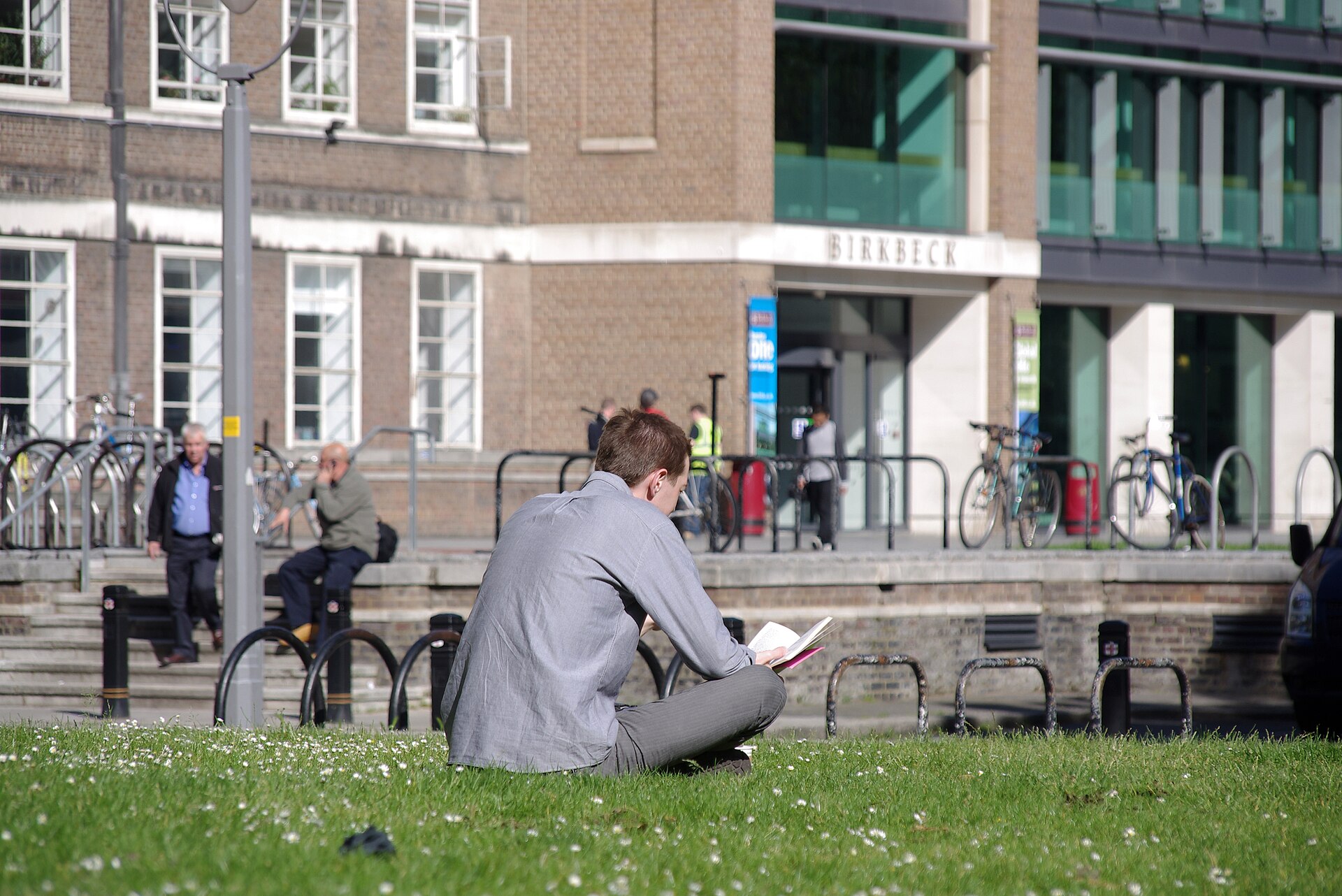
Today, the squares and terraces where the Bloomsbury Group met, debated, and changed English literature are still standing. They are largely unchanged, still carrying the quiet weight that drew some of the 20th century’s sharpest minds to these particular streets.
This is a guide to walking Virginia Woolf’s London.
Who Were the Bloomsbury Group?
The Bloomsbury Group was not a formal society or a club. It was a circle of friends who happened to live near each other, share a set of values, and change the shape of English culture in the process.
They gathered in the squares and flats of Bloomsbury from around 1905, meeting for long evenings of conversation about art, philosophy, economics, and the nature of the good life. Among them were some of the most significant thinkers and artists of the 20th century.
Virginia Woolf was the writer at the centre. Her novels — Mrs Dalloway, To the Lighthouse, Orlando, The Waves — broke with every convention of what a novel should do. She wrote from inside the minds of her characters, tracing the flow of thought and feeling across a single day, a single life.
E.M. Forster wrote A Room with a View and Howards End, both now considered pillars of English literature. John Maynard Keynes became the most influential economist of the 20th century. Lytton Strachey changed the way biography was written. Vanessa Bell, Virginia’s sister, was a painter who helped shape British modernism. Roger Fry introduced the term “Post-Impressionism” to England.
What united them was a belief that life should be lived thoughtfully and honestly — that art and friendship mattered, that the old Victorian certainties needed to be questioned, and that the people doing the questioning should be free to live as they chose.
They met in each other’s homes, in the gardens of Bloomsbury’s squares, and in the great libraries and museums around them. The neighbourhood was their shared world.
Virginia Woolf in Bloomsbury: The Houses She Called Home
Virginia Woolf lived in London at a series of addresses, several of them within a few streets of each other in Bloomsbury. Each house marks a different period of her life and work.
The story begins at 46 Gordon Square, where Virginia and her siblings moved after their father’s death in 1904. It was their first home free of Victorian family pressure, and it quickly became the gathering place for what would become the Bloomsbury Group. A blue heritage plaque on the house marks the site today.
Walk to Gordon Square now and you will find it largely unchanged. The square’s garden is peaceful, and the Georgian terraces around it have kept much of their original character. It is easy to stand here and imagine the evenings that unfolded inside those houses — the conversations that ran late, the ideas that were tested and discarded and refined.
From Gordon Square, Virginia moved to 29 Fitzroy Square, on the western edge of Bloomsbury. Another blue plaque marks the house. George Bernard Shaw had lived in the same building before her — it was that kind of neighbourhood, the kind where one literary generation simply took over from the last.
Her most important Bloomsbury address came later: 52 Tavistock Square, where she lived from 1924 to 1939. This was her most productive period. In that house she wrote Mrs Dalloway, To the Lighthouse, Orlando, The Waves, and much of her most important non-fiction. The Hogarth Press — the small publishing house she ran with her husband Leonard — was also based here, printing editions of their own work and that of T.S. Eliot and Katherine Mansfield.
The house was bombed during the Second World War and no longer stands. But a bronze bust of Virginia Woolf now marks the site in Tavistock Square, and the garden remains one of the quieter green spaces in central London. Sitting there on a weekday morning, you can understand something of what the neighbourhood meant to her.
The British Museum: Woolf’s Great Reading Room
A short walk from any of Woolf’s Bloomsbury addresses stands one of the great buildings in the world.
The British Museum sits at the heart of Bloomsbury, its grand colonnaded façade looking out over Great Russell Street. Behind it, in what was then the museum’s vast domed Reading Room, Virginia Woolf spent hundreds of hours over the course of her life.
The Reading Room appears directly in A Room of One’s Own, one of Woolf’s most important essays. She describes arriving at a fictional Oxbridge library and being turned away because she is a woman — and then contrasting this with the relative openness of the British Museum’s Reading Room, where women could work and study alongside men.
She gathered research there. She read and took notes and watched the other readers. She thought about who got to use knowledge and who did not — questions that run through everything she wrote.
Today the Reading Room has become a public exhibition space. Norman Foster’s glass-roofed Great Court surrounds it, one of the most beautiful public spaces in London. It is still possible to stand in the room where Woolf worked and feel the scale and the quiet of it.
Walking Bloomsbury: A Route Through the Group’s London
The best way to understand the Bloomsbury Group is to walk the squares. This route covers the main sites in under two miles, and allows time for sitting in the gardens and looking at the houses.
Start at Russell Square, the largest of Bloomsbury’s garden squares, just north of the British Museum. Sit in the garden for a moment. This was the heart of literary London for much of the 20th century, and the terraces around it still have the look of serious intellectual work.
Walk south to Tavistock Square. The Virginia Woolf bust is on the north side of the garden. The square also contains a memorial to conscientious objectors — Woolf was a lifelong pacifist, and the setting feels right.
Cross to Woburn Square, then turn north toward Gordon Square. The houses around the square have largely been absorbed into University of London buildings, but the square itself remains open. The blue plaque at number 46 is easy to find.
End at the British Museum. Enter through the main gate on Great Russell Street and walk through to the Great Court. Look up at the glass roof. Then find the Reading Room at the centre and stand for a moment in the space where so much of Bloomsbury’s intellectual work was done.
🏙️ Enjoying this? 3,000 London lovers get stories like this every week. Subscribe free →
Why Virginia Woolf Resonates With American Readers
Virginia Woolf’s work has had a particularly strong following among American readers since the mid-20th century, and for good reason.
Her writing addressed questions that still feel urgent: Who gets to be an intellectual? What does freedom mean for women? How do cities shape the people who live in them? How does a private person move through a public world without losing themselves?
Writers including Sylvia Plath and Susan Sontag credited Woolf as an influence. Her essay A Room of One’s Own has been taught in American universities for decades. Mrs Dalloway appears on syllabuses across the country. Michael Cunningham’s novel The Hours, set partly in Woolf’s life, brought her story to a new generation of readers and filmgoers.
For American visitors with a literary background, walking Woolf’s London is not simply tourism. It is a way of making contact with a mind that still matters.
Poet’s Corner: Where London Remembers Its Writers
A short journey from Bloomsbury, across the river and into Westminster, stands the building that holds more of England’s literary history than anywhere else.
Westminster Abbey is one of the most visited buildings in the world. But tucked into the south transept is a section that belongs, above all, to the writers: Poet’s Corner.
Geoffrey Chaucer was the first writer buried here, in 1400. Since then, the corner has accumulated memorials and graves of England’s greatest literary figures. Shakespeare is commemorated here. So are Tennyson, Browning, Kipling, Thomas Hardy, T.S. Eliot, Dylan Thomas, and dozens of others. Some are buried beneath the floor. Others are marked by plaques or monuments, having died in other places.
Virginia Woolf does not have a memorial in Poet’s Corner. She is buried in the garden of her country house, Monk’s House in Sussex. But to stand in Poet’s Corner is to understand the tradition she was writing within — and sometimes writing against. It is one of the most moving places in London for anyone who cares about books.
Allow a full day in Westminster Abbey if you want to do it properly. The abbey is large and full of history in every direction. But set aside at least thirty minutes for Poet’s Corner alone.
What the Bloomsbury Group Means Today
The members of the Bloomsbury Group are long gone. The last of them — E.M. Forster — died in 1970. The conversations they had in those upstairs rooms are finished.
But the questions they raised have not been answered, and the work they produced has not dated.
Virginia Woolf’s novels are still read because they do something that most novels do not: they make you feel what it is like to be someone else, in a particular moment, on a particular London morning. That is not a small thing. It is almost impossible to do, and she did it repeatedly, at a level nobody has quite matched.
Bloomsbury itself is still there. It is a little louder now, more visited, more absorbed into university buildings and hotels and restaurants. But the squares remain, the houses remain, and the atmosphere of a neighbourhood that took ideas seriously still clings to the streets.
For any visitor who has ever read Virginia Woolf, or Forster, or Keynes, walking those streets is something close to time travel. The city changes around you, but the essentials hold.
Practical Information for Visitors
Getting to Bloomsbury: The nearest Underground stations are Russell Square (Piccadilly line) and Holborn (Central and Piccadilly lines). Both are a short walk from the main sites.
The British Museum is open daily and admission is free. The Great Court is open during museum hours. Allow at least two to three hours for a proper visit, longer if you want to see the collections in depth.
Westminster Abbey charges an admission fee (around £27 for adults in 2026). Poet’s Corner is included in the general admission. Book tickets in advance during busy periods to avoid queuing.
The blue heritage plaques at Gordon Square (number 46) and Fitzroy Square (number 29) can be seen from the pavement at any time without charge. Tavistock Square is a public garden and is open during daylight hours.
Frequently Asked Questions
Where did Virginia Woolf live in London?
Virginia Woolf lived at several Bloomsbury addresses over the years, including 46 Gordon Square, 29 Fitzroy Square, and 52 Tavistock Square. A bronze bust marks the site of her Tavistock Square home, and blue heritage plaques identify the other houses. She also lived for a period in Richmond, south of the Thames, but Bloomsbury was the neighbourhood most central to her life and work.
What is Poet’s Corner in Westminster Abbey?
Poet’s Corner is a section of Westminster Abbey’s south transept where many of England’s greatest writers are buried or commemorated. It includes memorials to Shakespeare, Chaucer, Tennyson, T.S. Eliot, Dickens, Hardy, and many others. It can be visited as part of a general admission ticket to the abbey.
Is there a Virginia Woolf museum in London?
There is no dedicated Virginia Woolf museum in London, though the houses associated with her and the Bloomsbury Group can be seen from outside, and several carry heritage plaques. Monk’s House in Sussex, where Woolf spent much of her later life and is buried, is open to visitors as a National Trust property and is well worth a day trip from London.
How long does a Bloomsbury walking tour take?
A self-guided walking tour of the main Bloomsbury Group sites — Russell Square, Tavistock Square, Gordon Square, and the British Museum — covers under two miles and takes around two hours at a relaxed pace. Adding a visit to Westminster Abbey and Poet’s Corner turns it into a full day out.
Join 3,000+ London Lovers
Every week, get London’s hidden history, heritage walks, and stories from the city’s remarkable past — straight to your inbox.
Subscribe free — enter your email:
Already subscribed? Download your free London guide (PDF)
Love more? Join 64,000 Ireland lovers → · Join 43,000 Scotland lovers → · Join 30,000 Italy lovers →
Free forever · One email per week · Unsubscribe anytime