
If your family has English roots, there is a real chance that someone in your family tree passed through a Victorian workhouse. These institutions housed the poorest people in Britain for more than a century. By understanding what workhouses were, where their records are kept, and which buildings still stand in London today, you can open a remarkable window into your family’s past.
What Was a Victorian Workhouse?
The modern workhouse system began in 1834. The Poor Law Amendment Act required parishes across England to combine into Poor Law Unions, each responsible for building and running a workhouse. Before that, each parish had handled poverty differently. The new law changed everything.
The idea behind the workhouse was simple and deliberately harsh. Conditions inside had to be worse than those of the lowest-paid labourer outside. This was called the “less eligibility” principle. If life inside the workhouse was comfortable, the government feared that too many people would choose it over work.
In practice, this meant long hours of hard labour — breaking stones, picking oakum (unravelling old rope), grinding corn, or doing domestic work. Men, women, children, and the elderly were kept in separate wards. Families were split apart on arrival. Meals were basic. Silence was often required at mealtimes. Residents could not leave without permission.
Charles Dickens described the system powerfully in Oliver Twist, published between 1837 and 1839. Young Oliver’s famous request — “Please, sir, I want some more” — captured what many Victorian Londoners feared: that poverty, illness, or bad luck could land any family in the workhouse.
Who Went to the Workhouse?
It is easy to assume that only the idle or criminal ended up in workhouses. The reality was far more complicated. Workhouses across London received people who had nowhere else to turn.
Many residents were elderly people who could no longer work and had no family to support them. Widows with young children were common. Orphaned children made up a significant portion of the population in many workhouses. Sick and disabled people who could not earn a living ended up there too.
Seasonal unemployment was another major driver. Many Victorian jobs were tied to the weather or the economic cycle. A harsh winter could leave labourers, dockers, and construction workers without income for weeks or months. The workhouse provided food and shelter when nothing else was available.
Irish immigrants arriving in London after the Famine of the 1840s also swelled the numbers in East End workhouses. The Whitechapel workhouse, for instance, saw huge demand during this period. Entering the workhouse was seen as shameful. Many families resisted it until the very last moment. Some left as soon as they could find work again. Others died there.
Why This Matters for Your Family History
🏛️ Free Guide: How to Trace Your English & British Ancestry
Step-by-step: GRO records, census 1841–1921, parish registers, the National Archives (Kew), London Metropolitan Archives, and planning a heritage trip. Completely free.
Get the Free Guide → Subscribe free at the guide page to receive weekly London heritage storiesIf you have ancestors who lived in London between the 1830s and the 1940s, workhouse records are worth searching. These institutions touched an enormous cross-section of the population.
The workhouse system was not abolished overnight. The Local Government Act of 1929 transferred responsibility for workhouses from Poor Law Unions to local councils. Many workhouses were converted to hospitals during the 1930s. When the National Health Service was created in 1948, most of these hospitals transferred to NHS control. Some of London’s major hospitals today occupy sites that were once workhouses.
For Americans and Australians tracing London ancestors, workhouse records can fill gaps that other sources leave empty. Census records show who was in the workhouse on census night. Admission and discharge registers list who came and went, with details about their origins and circumstances. Birth, death, and burial records were kept for events that happened inside the workhouse walls.
These records are not always easy to find, but many have been digitised. When you do find an ancestor in workhouse records, it often unlocks a whole chapter of family history that was previously invisible.
London’s Surviving Workhouse Buildings
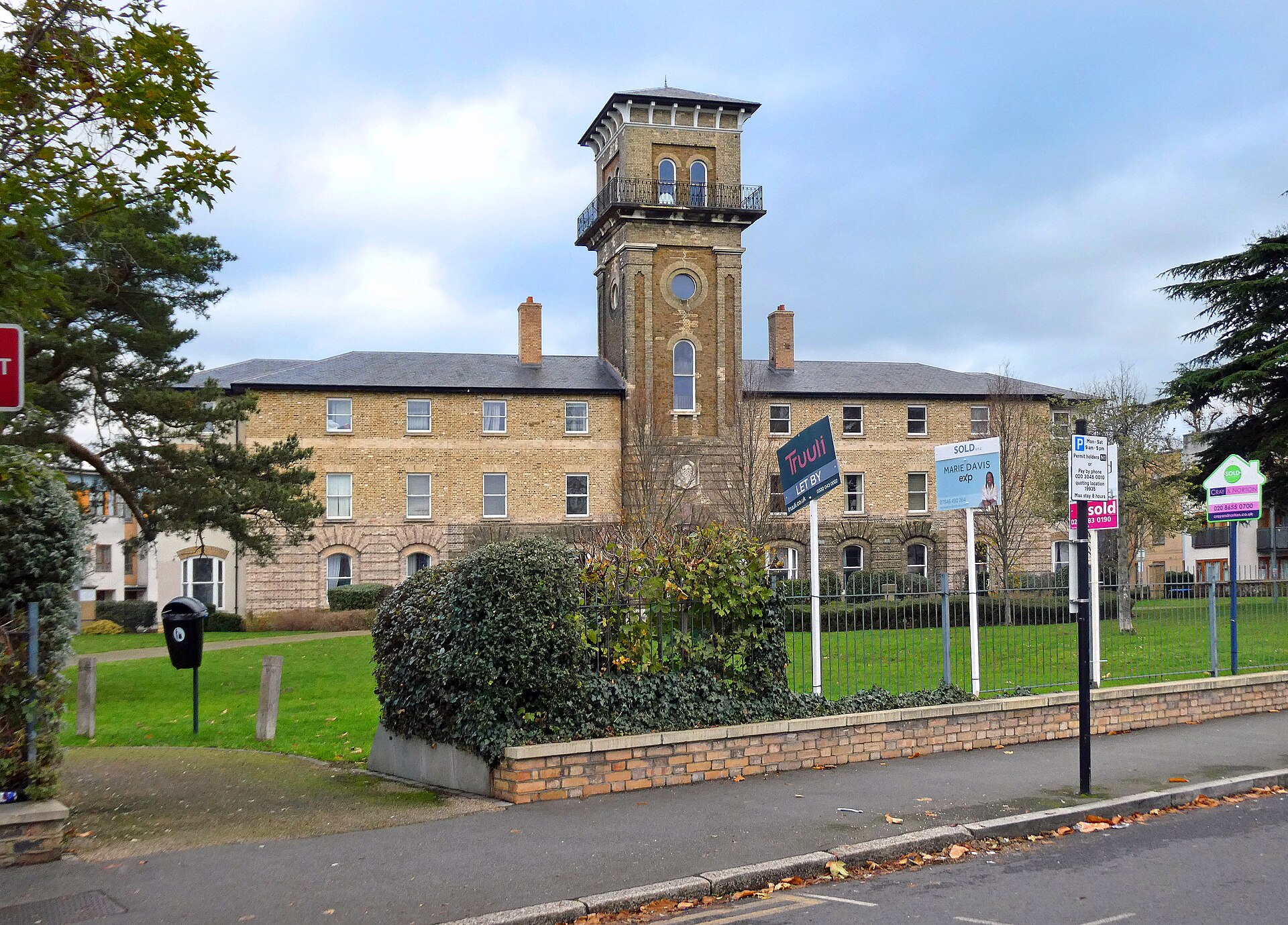
A number of Victorian workhouse buildings survive in London. Most have been converted to other uses, but they still stand and carry their history within their walls.
The Cleveland Street Workhouse, Fitzrovia
This building in W1 is one of the oldest surviving workhouse structures in London. It was built in the 1770s, before the 1834 reforms, and later expanded. It has been used for various purposes over the centuries and is now a private building. Campaigns have long sought to recognise its historical significance. If you walk along Cleveland Street, you can still see the original façade.
St Pancras Workhouse
The St Pancras Union workhouse occupied a site near Pancras Road in King’s Cross. Parts of the Victorian structure survive as the area around King’s Cross has been redeveloped in recent decades. The site once housed thousands of paupers and was one of the largest in London.
The Shoreditch Workhouse
The Shoreditch workhouse, in the East End, was eventually absorbed into what became St Leonard’s Hospital on Kingsland Road in Hackney. The Victorian infirmary block survives as part of this site. Shoreditch was one of the poorest parts of Victorian London, and the workhouse records here are particularly rich.
The Holborn Union Workhouse
This workhouse in Gray’s Inn Road eventually became part of the Royal Free Hospital network. The original Victorian buildings have largely been replaced, but the site remains active in healthcare — a direct descendant of the workhouse’s role in caring for the poor.
🏙️ Enjoying this? 3,000 London lovers get stories like this every week. Subscribe free →
How to Research Workhouse Records
If you want to trace an ancestor through the workhouse system, here are the key sources to check.
The National Archives, Kew
The National Archives holds central government records relating to the Poor Law, including correspondence between the Poor Law Board and individual Poor Law Unions. These records help you understand the specific workhouse your ancestor was associated with and the broader administrative context.
The London Metropolitan Archives
This is the most important single source for London workhouse records. The LMA holds admission and discharge registers, creed registers, medical records, birth and death registers, and board minutes for many London Poor Law Unions. Access is free. You can search their catalogue online before your visit.
FindMyPast and Ancestry
FindMyPast has digitised a large number of English workhouse records, including many from London. You can search by name and narrow results by location. Ancestry also holds a range of Poor Law and workhouse records, particularly for the census years when large numbers of workhouse residents were captured in household schedules. Census records from 1841 to 1921 are available on Ancestry and are fully searchable.
Some London boroughs hold their own collections of workhouse records that have not been transferred to the LMA. It is worth checking with the local studies library for the borough where your ancestor lived. Hackney, Southwark, Lambeth, and Tower Hamlets all have active local history collections.
Visiting Victorian London’s Workhouse Heritage
You do not need to book a formal tour to get a sense of Victorian London’s workhouse history. Walking through the areas associated with these buildings brings the history to life.
The East End — particularly Whitechapel, Bethnal Green, and Shoreditch — was home to several major workhouses and retains much of its Victorian street pattern. Walking along Commercial Street, Brick Lane, and Kingsland Road, you pass through the world that Dickens and his contemporaries described.
The Museum of London Docklands on the Isle of Dogs covers the history of the Thames and East London in depth, including the lives of poor communities in the Victorian era. The Museum of the Home (formerly the Geffrye Museum) in Hoxton offers a window into domestic life across different periods of London history, including the Victorian era.
Frequently Asked Questions
Were workhouses in London different from those in other parts of England?
London workhouses tended to be larger than those in rural areas, simply because London’s population was so vast. The poverty concentrated in areas like the East End and Southwark meant that workhouses there often struggled with overcrowding, particularly during periods of economic hardship. Administratively, London was divided into dozens of Poor Law Unions, each running its own institution.
How do I find out which workhouse served my ancestor’s address?
The Poor Law Union that covered a particular address depended on the parish the address fell within. The GENUKI website lists the parishes and Poor Law Unions for each part of England. Once you know the union, you can identify the corresponding workhouse and then search for records in the relevant archive.
Are workhouse records available online?
Many are. FindMyPast has digitised admission and discharge registers for a number of London workhouses. The London Metropolitan Archives catalogue is searchable online, and staff can assist with postal and email enquiries. Not all records have survived or been digitised, but a significant proportion are accessible without visiting an archive in person.
Join 3,000+ London Lovers
Every week, get London’s hidden history, heritage walks, and stories from the city’s remarkable past — straight to your inbox.
Subscribe free — enter your email:
Already subscribed? Download your free London guide (PDF)
Free forever · One email per week · Unsubscribe anytime