
Kensington is the part of London that stops you mid-step. Royal palaces, world-class museums you can walk into for free, Hyde Park stretching out on your doorstep, and streets lined with white-stucco townhouses that look lifted from a film set. This Kensington London guide covers everything US visitors need to plan a proper day — or two — in one of the capital’s most rewarding areas.
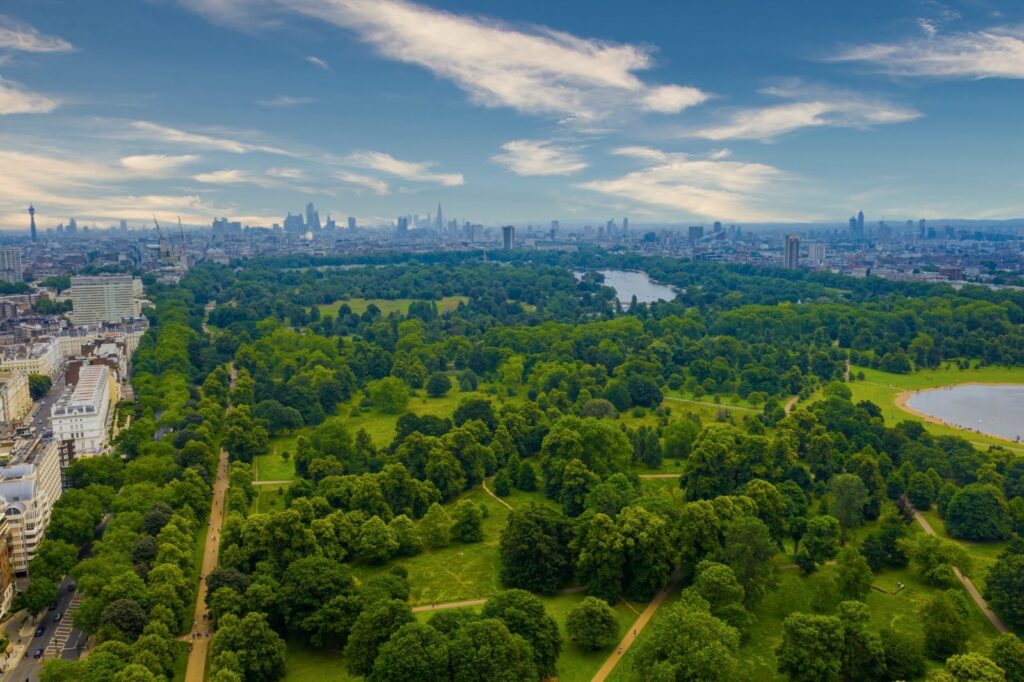
Kensington sits in the Royal Borough of Kensington and Chelsea, in west London. It is roughly a 20-minute Tube ride from central London. Most visitors find it easy to reach on the District or Circle line. The area rewards slow exploration. Spend a morning at the Natural History Museum, walk through Hyde Park in the afternoon, and end the day watching the sun drop behind Kensington Palace. Few London neighbourhoods pack this much into a single square mile.
Kensington Palace: What US Visitors Need to Know
Kensington Palace sits at the western edge of Hyde Park. King William III and Queen Mary II moved here in 1689 because the air at Whitehall, closer to the Thames, worsened William’s asthma. Today the palace is home to several members of the Royal Family, including the Prince and Princess of Wales.
The State Rooms are open to visitors. They include the King’s Staircase, the Cupola Room — scene of Queen Victoria’s baptism in 1819 — and rotating fashion exhibitions from the Royal Collection. The current exhibition, “Crown to Couture,” runs through 2026 and explores how the Royal wardrobe shaped mainstream fashion from the 18th century onwards.
Adult tickets cost around £22 and include audio guides. Historic Royal Palaces membership covers unlimited entry to Kensington Palace, the Tower of London, and Hampton Court, which represents good value if you plan to visit more than one royal site. Book online in advance — queues at the door save no money. Allow two hours to do the palace justice.
The Sunken Garden and Palace Grounds
The Sunken Garden immediately south of the palace is free to enter. Workers completed it in 1908 in the style of a formal Tudor garden, with box hedges, alliums, and seasonal bedding plants arranged around a central pond. Queen Elizabeth II unveiled a white stone statue of Diana, Princess of Wales, here in 2021. Sculptors Ian Rank-Broadley and Pip Morrison created the figure. The garden opens throughout the year and looks its best in late spring when the flower beds fill with colour.
The Free Museums of Kensington: A Genuine Half-Day Each
Three of London’s most famous museums stand within ten minutes’ walk of each other in South Kensington, just south of Hyde Park. All three are free to enter. That is not a promotional claim — there is no ticket barrier at the door. You walk in. This is one of the genuine joys of London for US visitors who expect to pay museum admission.
For a full breakdown of everything across London’s free museum scene, see our guide to the best free museums in London — but the Kensington cluster forms the heart of it.
Natural History Museum
The Natural History Museum on Cromwell Road opened in 1881 with a terracotta Romanesque facade worth seeing before you step inside. The Central Hall holds Hope, a blue whale skeleton 25 metres long, suspended from the ceiling. Very few museums worldwide display blue whale skeletons at this scale. Beyond the Central Hall, the museum covers geology, ecology, dinosaurs, human evolution, and the deep ocean across five floors. The Dinosaur Gallery alone takes most families the better part of an hour. Entry is free. Special exhibitions carry a charge.
Science Museum
The Science Museum on Exhibition Road stands next door. Its ground floor holds Apollo 10’s command module from its 1969 return from the Moon, alongside early steam engines, Stephenson’s Rocket, and Charles Babbage’s Difference Engine prototype. The museum is excellent for families. The Wonderlab interactive galleries cost a small additional fee, but the main floors are free. If you bring children to Kensington, the Science Museum will hold them for at least two hours.
Victoria and Albert Museum
The V&A on Cromwell Road holds the world’s largest collection of decorative arts and design. Its 145 galleries span ceramics, textiles, furniture, fashion, photography, and silver across seven floors. The Raphael Cartoons — seven large painted designs Pope Leo X commissioned in 1515 for tapestries — rank among the most important artworks in Britain. The V&A also runs a strong programme of temporary exhibitions; check the website before visiting because these attract large crowds. Entry to the permanent collection is free.
If you plan a full day around South Kensington museums, arrive when doors open at 10am. The Natural History Museum draws long queues by midday in peak summer. Entry is still free, but the wait at the door can reach 30 minutes or more. Booking a timed entry slot online removes this problem entirely.
Hyde Park: London’s Most Useful Green Space
Hyde Park covers 350 acres in the heart of London. It connects directly to Kensington Gardens, technically a separate royal park but indistinguishable to anyone walking through them. Together they form an unbroken stretch of parkland running from Park Lane in the east to Kensington Palace in the west — about a mile and a half at a relaxed walking pace.
The Serpentine, an artificial lake dating to 1730, runs roughly through the centre of the park. You can hire rowing boats and pedalos between April and October. The Serpentine Lido — an outdoor swimming area on the south bank of the lake — opens to the public and is one of London’s more quietly remarkable facilities. The Serpentine Swimming Club has met at this spot since 1864.
Speakers’ Corner and the Albert Memorial
The northeast corner of Hyde Park near Marble Arch holds Speakers’ Corner. Since 1872, anyone can stand here and address the public on any subject — and people do, every Sunday morning. It ranges from earnest political speeches to the frankly eccentric. Karl Marx spoke here. So did Lenin. It costs nothing and is entirely unpredictable, which makes it worth at least a few minutes.
The Albert Memorial stands in Kensington Gardens, facing south towards the Royal Albert Hall. Queen Victoria commissioned it in 1872 as a monument to her husband, Prince Albert, who died in 1861. The gilded central figure of Albert sits beneath a canopy 54 metres high, holding a catalogue from the Great Exhibition of 1851, which Albert organised. The surrounding sculptures represent the continents, the arts, and the sciences. It is one of the most elaborate public monuments in London and is free to see.
How to Get to Kensington from Central London
The most straightforward routes into Kensington from central London use the Underground. For the museums, take the District or Circle line to South Kensington. The station exits directly onto Exhibition Road, a five-minute walk from the V&A, Natural History Museum, and Science Museum. For Kensington Palace, take the District or Circle line to High Street Kensington or the Central line to Queensway — the palace is a ten-minute walk through Kensington Gardens from either station.
Contactless payment at Tube gates works with US Visa and Mastercard credit and debit cards. You do not need an Oyster card. Tap in and tap out at the yellow readers. For a full breakdown of the Tube, buses, and river services, read our complete guide to getting around London.
If you want to walk, take the Piccadilly line to Hyde Park Corner at the park’s southeastern entrance. From there, a walk across Hyde Park and Kensington Gardens to the palace takes about 30 minutes and is one of the best urban walks in London. You cross grass, pass the Serpentine, and move through the Italian Gardens — not a pavement trudge.
Where to Eat in Kensington
The museum cafes in Kensington are better than average. The V&A’s cafe operates out of the original Victorian refreshment rooms, which count among the most ornate dining spaces in London. The tilework and stained glass predate the collections by several years. A coffee and a slice of cake here is not a tourist trap — it is a genuine piece of Victorian architectural history.
Outside the museums, Kensington High Street has restaurants and cafes across all budgets. The area around Gloucester Road has a number of well-regarded neighbourhood restaurants that serve locals, not just visitors. The closer you get to South Kensington station, the more tourist pricing appears.
If you are in the park, the Serpentine Bar & Kitchen has outdoor seating with views across the lake and serves hot food throughout the day. It is more expensive than eating outside the park, but the setting justifies it on a clear day.
Kensington for Families with Children
Kensington is exceptionally good for families. The Natural History Museum and Science Museum are two of the best free children’s attractions in the country. Hyde Park gives children space to run, climb, and throw things without any adult having to worry about it. The Diana Memorial Playground, at the northern edge of Kensington Gardens, is one of the best free children’s playgrounds in London. It centres on a full-size wooden pirate ship. An adult must accompany children under 12, but entry is free.
For a full London trip with children, our guide to London with kids covers transport, museum strategies, and how to structure days sensibly. The key point for Kensington specifically: do not try to cover all three museums in one day. Pick one. Give it three hours. Children who spend a morning at the Natural History Museum remember it for years. Children dragged through all three remember nothing and are miserable by lunchtime.
What Else Is Near Kensington?
Notting Hill sits immediately north of Kensington Gardens. Portobello Road Market runs on Saturdays and sells antiques, vintage clothing, and street food along a mile-long strip from Notting Hill Gate to Golborne Road. The colourful houses around Portobello Road — which appeared in the 1999 film of the same name — line Lansdowne Crescent and the surrounding streets.
Chelsea is to the south and east. King’s Road served as the centre of 1960s and 1970s fashion, and the neighbourhood still has a strong independent retail scene. The Chelsea Physic Garden on Royal Hospital Road is one of the oldest botanical gardens in Britain, with its roots dating to 1673. Adults pay £15 to enter.
Kensington connects well to a wider London itinerary. If you are building a multi-day trip and want a logical structure, our guide to London’s best neighbourhoods groups areas by walking distance so you avoid doubling back across the city.
Frequently Asked Questions: Kensington London Guide
Is Kensington Palace free to visit?
No. Adult entry to the Kensington Palace State Rooms costs around £22. The palace grounds and the Sunken Garden immediately adjacent are free to enter at all times. The gardens alone are worth a visit, and the Diana statue is visible without a ticket.
How long does it take to see the Natural History Museum in London?
Allow two to three hours for a thorough visit. The Dinosaur Gallery, the blue whale in the Central Hall, and the geology galleries are the standout sections. The museum is large enough to occupy a full morning if you take your time. Entry is free, so there is no pressure to rush.
What is the best Tube station for South Kensington museums?
South Kensington station on the District and Circle lines is the closest stop for the Natural History Museum, Science Museum, and V&A. The station is a five-minute walk from all three. A covered tunnel underpass runs from the station directly to the museum quarter, which is useful in wet weather.
Is Kensington a good base for visiting London?
Kensington makes a comfortable and well-connected base, particularly for visitors who want access to museums and Hyde Park without staying in the busiest tourist zones. The area around High Street Kensington has a good range of hotels at various price points, strong transport links, and quieter streets than central areas like Covent Garden or Westminster. The trade-off is that it sits slightly west of the main tourist corridor, so some journeys east — to the Tower of London, for example — take 30 to 40 minutes by Tube.
Join 3,000+ London Lovers
Every week, get London’s local secrets, little-known places and travel inspiration — the kind you won’t find in any guidebook.
Subscribe free — enter your email:
Free forever · One email per week · Unsubscribe anytime