
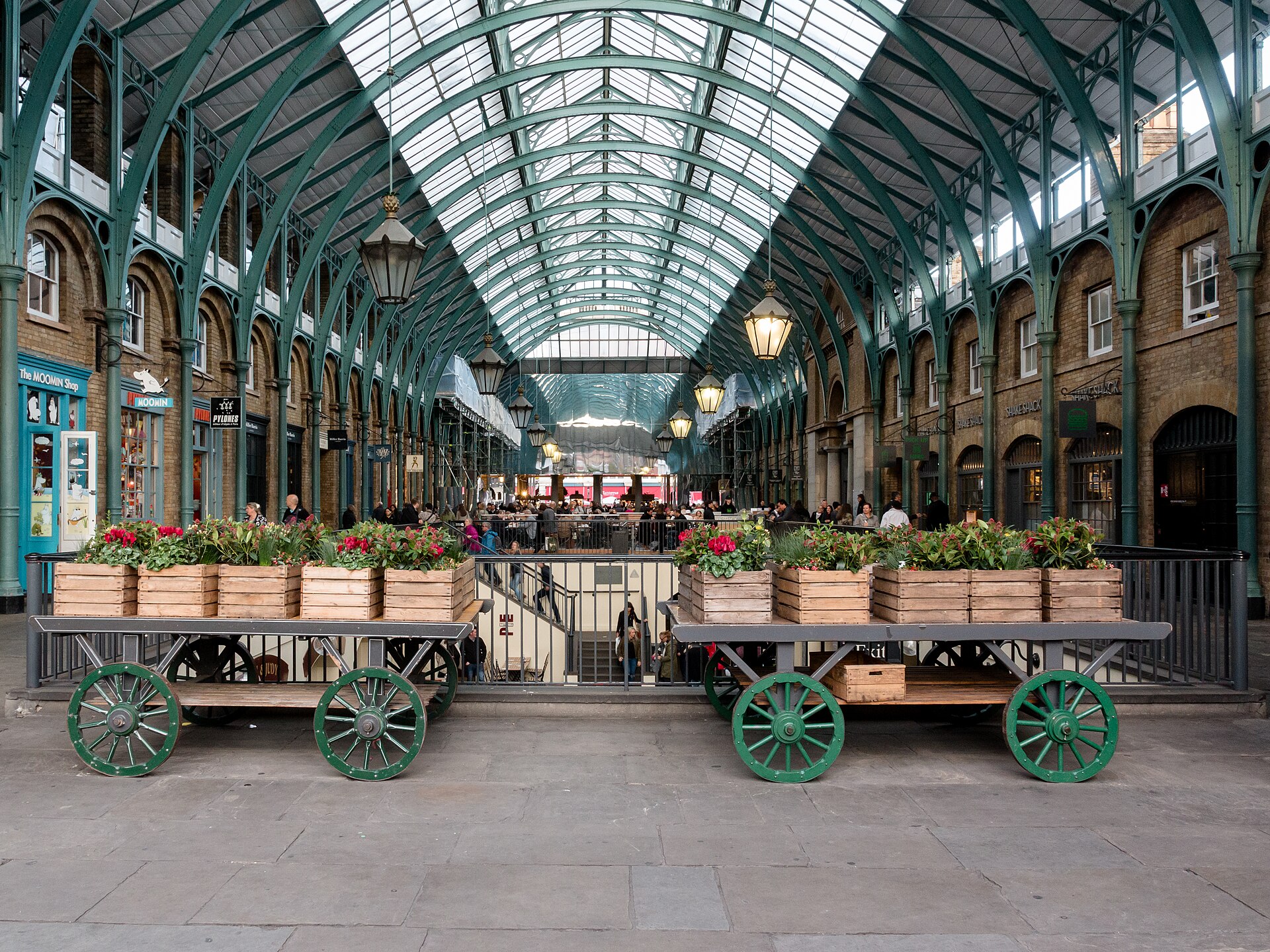
Covent Garden London is one of the city’s most visited destinations — and for good reason. You get a Victorian market, world-class street performers, great restaurants, and the Royal Opera House all within a few minutes’ walk. Whether you have two hours or a whole afternoon, Covent Garden rewards slow exploration. This guide tells you everything you need to know before you arrive.
What Is Covent Garden?
Covent Garden is a neighbourhood and historic market district in the West End of London. It sits roughly between the Strand to the south and Long Acre to the north, with Soho just a short walk to the west.
The area gets its name from a medieval convent garden that once supplied Westminster Abbey with vegetables. By the 17th century it had become London’s main fruit and vegetable market. The market moved to Nine Elms in 1974, and developers transformed the Victorian market building into the piazza and shopping complex you see today.
Today the piazza sits at the heart of the neighbourhood. The original market building still stands, now filled with independent shops, restaurants, and craft stalls. Street performers work the outdoor space throughout the day. The Royal Opera House anchors the north-east corner.
It is one of London’s best places to spend a few hours without spending much money. Entry to the piazza and market building is free. Many of the best things to do — watching performers, exploring Neal’s Yard, walking the back streets — cost nothing at all.
Inside the Market Building
The Apple Market
The Apple Market occupies the upper level of the building. You will find craft stalls selling handmade jewellery, prints, ceramics, and gifts. The selection changes by day — weekdays lean toward antiques and collectables, while weekends bring more artisan crafts.
It is a good place to find something unique to take home. Prices vary widely, and most stall holders are happy to chat about their work. Do not expect rock-bottom prices — this is central London — but quality is generally high.
The Jubilee Market
The Jubilee Market sits on the south side of the piazza in a separate covered hall. It runs daily and offers a more casual mix — general market goods, clothes, and affordable gifts on weekdays, and antiques on Mondays.
For US visitors, the Jubilee Market offers a lower-pressure browsing experience. You are less likely to feel obliged to buy. Go for a look and move on if nothing catches your eye.
Shops and Restaurants at Ground Level
The ground floor of the market building holds a mix of independent retailers and well-known names. You will find the Lego store, Jo Malone, and Boden alongside smaller boutiques. The restaurant row along the western arcade gets busy at lunchtime — arrive before noon or after 2pm to avoid queues.
Street Performers: London’s Best Free Show
Covent Garden has some of the best street performers in Europe. Jugglers, magicians, living statues, opera singers, and comedians all work the piazza throughout the day. The quality is consistently high because performers must audition before they can work the prime spots.
How the Audition System Works
The Covent Garden Estate manages the pitches and requires acts to pass an audition. This filters out low-quality acts. What you see in the central piazza represents performers good enough to pass a formal assessment — many are professional entertainers with years of experience.
Shows happen throughout the day. A typical performance runs 20 to 30 minutes. Crowds gather quickly. If you arrive mid-show, find a spot at the edge and wait — a new show usually starts within 20 minutes of the last one ending.
Tips for Watching Performers
The central piazza has stepped seating on the south side. Grab a spot early if you want a good view. The steps fill up fast for popular shows. Performers work for tips — if you enjoyed the show, a pound or two in the hat is the done thing. Nothing is obligatory, but it keeps the talent coming.
The lower level, under the market building arches, hosts additional performers. Acoustics down there are excellent for musicians. You may hear classical musicians, jazz combos, or solo singers depending on the day.
Where to Eat in Covent Garden
Food options range from quick and cheap to full restaurant experience. The market building itself has several cafés and casual spots. The surrounding streets offer much more variety.
Best Restaurants Near Covent Garden
Balthazar on Russell Street serves French brasserie food in a beautiful New York-inspired space. It is a treat rather than an everyday stop — expect to pay for the experience. Book in advance.
Dishoom on St Martin’s Lane is just a few minutes’ walk away. This Indian restaurant consistently earns rave reviews for its Bombay café-style cooking. Queues are long but move quickly, and the wait is worth it. They do not take reservations for groups of fewer than six.
Flat Iron on St Martin’s Court serves steak at genuinely reasonable prices for central London. The concept is simple — one cut, well cooked. They do not take reservations. It fills up by 7pm, so go early or late.
For a quick lunch, the stalls inside the market building offer sandwiches, crepes, and coffee. Nothing fancy, but fast and convenient if you are on a tighter schedule.
Avoiding Tourist Traps
The restaurants directly facing the piazza tend to be expensive with average food. They sell the view and the location more than the cooking. Walk one or two streets back — Long Acre, Earlham Street, or Neal Street — and you will find better value and better food.
You might also explore nearby Soho for an even wider range of restaurants. It is a five-minute walk from Covent Garden and has some of London’s best eating across all budgets.
Shopping in and Around Covent Garden
Neal Street and Neal’s Yard
Neal Street runs parallel to the market building and is lined with independent shops. You will find specialist retailers for skateboarding, trainers, books, music, and design. It has more character than the branded shops inside the market.
Turn off Neal Street into Shorts Gardens and you will find Neal’s Yard — a small courtyard crammed with colourful buildings, wholefood shops, and a well-known dairy. It is one of the most photographed spots in this part of London. The colours are genuinely striking in person, even for people who have seen it in photos.
Seven Dials
Walk five minutes north from the market and you reach Seven Dials — a junction where seven streets meet at a central sundial column. The streets fanning out from the column hold independent boutiques, vinyl record shops, and small restaurants.
Seven Dials is a good alternative to the piazza if you prefer a quieter atmosphere. It draws a local crowd alongside tourists and has a more genuinely neighbourhood feel than the market area.
Long Acre
Long Acre is the main shopping street through the Covent Garden neighbourhood. It runs east to west along the northern edge of the market area. You will find high street names here — Office shoes, Apple, Oasis — alongside a handful of independent shops. It is useful for practical purchases and less interesting for browsing than Neal Street or Seven Dials.
The Royal Opera House
The Royal Opera House stands on the north-east corner of the piazza. It is home to the Royal Opera and the Royal Ballet. The building dates from 1858, although the site has hosted a theatre since 1732.
Free Access to the Building
You do not need a ticket to enter the Royal Opera House. The public areas — including the Paul Hamlyn Hall, the Amphitheatre Bar, and the rooftop terrace — are free to walk through during the day. The Amphitheatre Bar has some of the best views over the Covent Garden piazza in the whole area.
The ROH also runs a free Explore and Watch programme during certain periods, allowing visitors to watch dancers, musicians, and technical crew at work. Check the official Royal Opera House website for current dates.
Getting Affordable Tickets
Opera and ballet tickets can be expensive, but affordable options exist. The ROH releases day tickets online at 10am on the morning of each performance. These are significantly cheaper than standard prices and sell out fast. The Balcony and Amphi Stalls sections often have the best value seats with perfectly decent views.
Even if you do not plan to see a performance, walking into the building is worthwhile. The Grand Staircase and main entrance hall are genuinely impressive, and it costs nothing to look around the public spaces.
The London Transport Museum
The London Transport Museum sits on the eastern edge of the piazza. It covers 200 years of London’s public transport history — buses, trams, the Underground, and more. The collection spans 200 years and includes original vehicles you can climb aboard.
It is not free — adults pay around £22 — but the museum is genuinely good. It brings the story of how London moves to life with clear displays and hands-on exhibits. Children enjoy it. History fans will find plenty to hold their interest. For US visitors interested in how a city this size manages its transport, it offers real insight.
The museum shop is free to enter and sells a good range of London transport-themed gifts — the kind that feel genuinely specific to this city rather than generic souvenir shop fare.
For more free options across London, take a look at our guide to the best free museums in London.
Getting to Covent Garden
By Tube
Covent Garden station is on the Piccadilly line. It puts you right at the edge of the piazza. However, there is a catch: the station has no escalator, only a lift. Queues for the lift can be long, especially at peak times. The exit queue is often longer than the entrance queue.
An easier option is to get off at Leicester Square (Northern and Piccadilly lines) or Charing Cross (Bakerloo and Northern lines) and walk. Both are about 10 minutes on foot. The walk is straightforward and more pleasant than waiting in the lift queue at Covent Garden station.
By Bus
Several buses stop on the Strand and along Aldwych, which both run along the southern edge of the Covent Garden area. Routes 6, 9, 11, 13, 15, 23, and 77 all pass nearby. Bus travel is slower than the Tube but gives you above-ground views and avoids the Covent Garden station lift issue.
On Foot
Covent Garden is within walking distance of many central London landmarks. The South Bank is about 15 minutes over Waterloo Bridge. Trafalgar Square is 10 minutes south. The British Museum is 10 minutes north. If you are exploring the West End on foot, Covent Garden fits naturally into a day that takes in several areas. See our guide to London’s best neighbourhoods to explore on foot for route ideas.
Tips for US Visitors to Covent Garden
Best Time to Visit
Covent Garden is at its busiest on Saturday and Sunday afternoons. If you want to enjoy the piazza without shoulder-to-shoulder crowds, visit on a weekday morning or early afternoon. By 11am, the stalls are open and performers are starting up, but the crowds have not yet peaked.
Christmas and school holidays bring even larger numbers. Summer weekends in July and August are the busiest of all. That said, the area manages crowds reasonably well — the piazza is large, and the surrounding streets give you room to breathe.
Plan Around Other Nearby Attractions
Covent Garden works best as part of a wider day in the West End. Combine it with a morning at the South Bank and walk back via the Strand and the market. Or pair it with Soho for a full afternoon in the heart of central London.
For full planning help — including how to get around the city — our transport guide for US visitors covers everything you need to know about the Tube, buses, and Oyster cards.
Toilets, Luggage, and Practical Notes
Free public toilets are available on the lower level of the market building. There is also a paid facility option on the south side of the piazza. The free ones are adequate and well maintained.
If you are carrying luggage, consider using a luggage storage service nearby rather than dragging bags through the narrow market aisles. Several services operate within a 10-minute walk of the piazza.
Prices across Covent Garden are central London prices. Coffee runs from £3.50 to £5.50. A sit-down lunch for two will cost £40 to £70 at a mid-range restaurant. Budget extra if you are dining at the Opera House or at Balthazar.
Frequently Asked Questions About Covent Garden London
What is the best time to visit Covent Garden in London?
Weekday mornings between 10am and 1pm offer the best combination of open stalls, active performers, and manageable crowds. Weekends are significantly busier, especially on Saturday afternoons in summer.
Is Covent Garden free to visit?
Yes, entry to the piazza and market building is completely free. The street performers work for tips and there is no charge to watch. The London Transport Museum charges admission, but its shop is free to enter.
How far is Covent Garden from Leicester Square?
Covent Garden is about a 10-minute walk from Leicester Square. They sit in opposite directions from each other via Long Acre or the side streets — close enough to combine in a single afternoon without needing the Tube.
Where do street performers perform in Covent Garden?
The main performances happen in the central piazza, with the best vantage point from the south-facing steps. Additional acts perform in the lower arcade under the market building. Performances run throughout the day, generally from around 10am to 9pm.
Is Covent Garden worth visiting for a first-time visitor to London?
Yes, absolutely. Covent Garden gives you a concentrated dose of what makes London feel distinctive — the mix of history, street life, independent shopping, and world-class performance. It is one of the best free experiences in the city and fits naturally into almost any West End itinerary.
Join 3,000+ London Lovers
Every week, get London’s local secrets, little-known places and travel inspiration — the kind you won’t find in any guidebook.
Subscribe free — enter your email:
Free forever · One email per week · Unsubscribe anytime