
On 22 June 1948, a troopship called HMT Empire Windrush docked at Tilbury in Essex. On board were 492 men and women from Jamaica, Trinidad, Barbados, and other Caribbean islands. They had paid their own fares. They carried British passports. They came at Britain’s invitation, and they came to work.
What followed was one of the most remarkable chapters in London’s history. The Windrush generation — and the hundreds of thousands who came after them across the following decades — did not simply move to London. They built it, staffed it, coloured it with music and food and art, and changed it in ways that still shape the city every single day.
The Ship That Changed Everything
HMT Empire Windrush began life as a German troopship called Monte Rosa. After the Second World War, the British government requisitioned it. In the spring of 1948, the ship sat in Kingston Harbour, Jamaica, with empty berths. An advertisement in a Jamaican newspaper offered passage to Britain for £28 — roughly two months’ wages. Hundreds signed up.
The British Nationality Act of 1948 gave citizens of the British Empire the right to live and work in the United Kingdom. This was not a technicality. Britain had recently fought the most destructive war in its history. The country needed workers desperately — for the newly created NHS, for London Transport, for the factories, the postal service, the railways. The Caribbean was part of the empire. The invitation was real.
When the Windrush docked at Tilbury, reporters crowded the quayside. Some of the passengers were veterans who had fought for Britain during the war. Many had never left the Caribbean before. Reporters asked them what they expected. “I am coming home,” said one man. He had never set foot in England before that morning.
🏛️ Free Guide: How to Trace Your English & British Ancestry
Step-by-step: GRO records, census 1841–1921, parish registers, the National Archives (Kew), London Metropolitan Archives, and planning a heritage trip. Completely free.
Get the Free Guide →
Subscribe free at the guide page to receive weekly London heritage stories
A Cold Welcome to a Familiar Place
Britain had invited these men and women, but it did not always make them feel welcome once they arrived. Many Windrush passengers spent their first nights in a deep air-raid shelter beneath Clapham South Underground station, just a few miles from the Brixton labour exchange where most of them would register for work.
Brixton became the centre of Caribbean life in London. The labour exchange on Coldharbour Lane sent new arrivals to work wherever the city needed them — which was almost everywhere. Within a week of arriving, most Windrush passengers had jobs.
Landlords turned many away. Signs reading “No Coloureds” appeared in windows of boarding houses across London. The newcomers faced hostility in pubs, in queues, in the streets. Yet they stayed. They built communities. In Notting Hill, in Hackney, in Shepherd’s Bush, Caribbean migrants created something extraordinary — a living piece of the Caribbean in the heart of Britain.
What the Windrush Generation Built for London
You cannot understand modern London without understanding what the Windrush generation contributed.
The National Health Service launched on 5 July 1948 — just thirteen days after the Windrush docked. Without Caribbean nurses, doctors, and porters, the NHS would not have survived its first decade. Thousands of Jamaican and Barbadian women trained as nurses and took up posts that hospitals could not fill any other way. Today, around a third of the NHS workforce comes from abroad, following a tradition the Windrush generation established.
London Transport recruited directly in Barbados from 1956 onwards. Barbadian men and women drove the buses and staffed the Underground, keeping a city of millions moving every day. The London bus you catch today traces a direct line back to that recruitment drive.
Then there is the culture. The Notting Hill Carnival began in 1966, born out of the need to celebrate Caribbean heritage openly in a city that had not always welcomed it. Today it draws two million people every August bank holiday weekend, making it the largest street festival in Europe. Calypso, ska, reggae, and jungle music all took root in London, growing into sounds the world now recognises as British.
Caribbean food transformed London’s restaurants and markets. Jerk chicken, rice and peas, ackee and saltfish — these are London foods now, as much as pie and mash or a fish supper. Walk through Brixton Market on any morning and you step into a world of breadfruit, scotch bonnet peppers, and plantain, with vendors calling out in accents that carry Jamaica and Trinidad in every syllable.
The Windrush Scandal: A Betrayal of Trust
In 2018, a story broke that shocked Britain. Thousands of people from the Windrush generation — people who had lived legally in Britain for decades, who had worked here, paid taxes here, and raised children here — received letters telling them they had no right to remain.
The Home Office had destroyed landing cards and immigration records in 2010. Without those documents, elderly people could not prove they had arrived before 1973, the legal cut-off date. Some lost their jobs. Some lost access to NHS treatment they had paid into for fifty years. The government wrongly deported some of them.
The scandal forced a national reckoning. Britain had to confront what it owed to the people who had answered its call in 1948. The government established a compensation scheme and declared 22 June — the anniversary of the Windrush’s arrival — as Windrush Day. Britain observed the first official Windrush Day in 2019.
🏙️ Enjoying this? 3,000 London lovers get stories like this every week. Subscribe free →
Where to Find Windrush History in London Today
London tells the Windrush story in brick and stone and in living memory. These are the places to go.
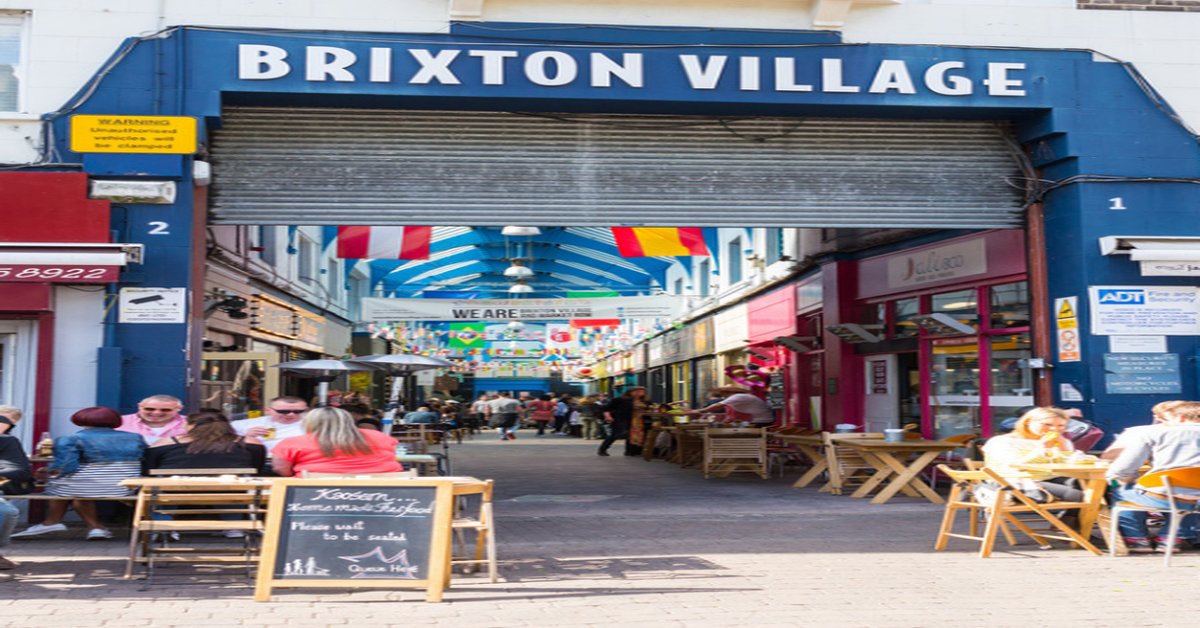
Brixton remains the spiritual home of London’s Caribbean community. Walk down Electric Avenue — the first street in London lit by electricity, now famous from the Eddy Grant song — and you walk through layers of Caribbean London. Brixton Market operates six days a week inside an Edwardian arcade that Jamaican traders transformed in the 1950s. Windrush Square, just outside the Ritzy Cinema, carries a heritage plaque and holds the community’s street life most days. The Black Cultural Archives, at 1 Windrush Square, hold the primary documents of Black British history and run a permanent exhibition on the Windrush generation. Entry to the reading room is free.
Tilbury Docks in Essex — where the ship actually docked — is reachable by train from Fenchurch Street station in about 45 minutes. A heritage plaque marks the exact spot where 492 people stepped onto British soil for the first time in June 1948. Standing at the riverside, you understand the scale of what happened here.
The Migration Museum in Lewisham tells the full story of migration to and from Britain across the centuries. The Windrush generation features prominently. The museum is free to enter and runs changing exhibitions on communities that have shaped British life.
Clapham South Underground station has the deep-level shelter where Windrush passengers spent their first nights in England. Transport for London runs occasional tours of the shelter, which branches off the Northern line beneath the station. Check the TfL website for available dates and booking information.
Tracing Your Caribbean Roots in London
If you have Caribbean heritage and believe a relative came to Britain between 1948 and the 1970s, London holds a wealth of records.
The National Archives at Kew holds passenger lists for ships arriving in Britain throughout the twentieth century. The BT26 series covers arrivals at UK ports, including passengers on HMT Empire Windrush itself. The full Windrush passenger manifest is freely available online through Ancestry.com — search by name to find whether a specific person appears on the 1948 sailing.
The General Register Office holds birth, marriage, and death records from 1837 onwards. Caribbean migrants who settled in Britain registered births and deaths through the same system as everyone else. You can access GRO records through the GRO’s online service and through Ancestry and FindMyPast.
The Black Cultural Archives in Brixton hold oral history collections, photographs, and community records that formal government archives often miss. If your family lived in Brixton or South London, the BCA is an important first stop before moving on to official sources.
For records in the Caribbean itself, the Barbados Museum and Historical Society, the Jamaica Archives and Records Department, and the National Archives of Trinidad and Tobago all hold church records, census records, and civil registration documents going back to the nineteenth century.
Frequently Asked Questions
When did the Windrush generation arrive in Britain?
HMT Empire Windrush docked at Tilbury on 22 June 1948, carrying 492 passengers from the Caribbean. Caribbean migration to Britain continued through the 1950s and into the 1960s, with hundreds of thousands of people making the journey during this period. The Immigration Act of 1971 ended the automatic right of Commonwealth citizens to settle in Britain.
Why is the Windrush generation important to London?
The Windrush generation staffed the NHS, drove London’s buses and ran its Underground, and built communities across the city. They also brought the food, music, and culture that makes London distinctive — the Notting Hill Carnival, which they founded in 1966, is now the largest street festival in Europe. Modern London would be unrecognisable without what the Windrush generation contributed.
What is Windrush Day and when does it take place?
Windrush Day falls on 22 June each year, marking the anniversary of HMT Empire Windrush’s arrival at Tilbury in 1948. The UK government formally recognised Windrush Day in 2018, following the Windrush scandal, which revealed that thousands of long-settled Caribbean migrants had been wrongly denied their legal rights despite living in Britain legally for decades.
London holds the stories of every generation that came to rebuild it, to run it, and to call it home. The Windrush generation’s story ranks among the most important of all — one of resilience, of culture, of belonging earned through decades of work and determination. Walk through Brixton any morning and you feel it still.
Join 3,000+ London Lovers
Every week, get London’s hidden history, heritage walks, and stories from the city’s remarkable past — straight to your inbox.
Subscribe free — enter your email:
Already subscribed? Download your free London guide (PDF)
Love more? Join 64,000 Ireland lovers → · Join 43,000 Scotland lovers → · Join 30,000 Italy lovers →
Free forever · One email per week · Unsubscribe anytime