
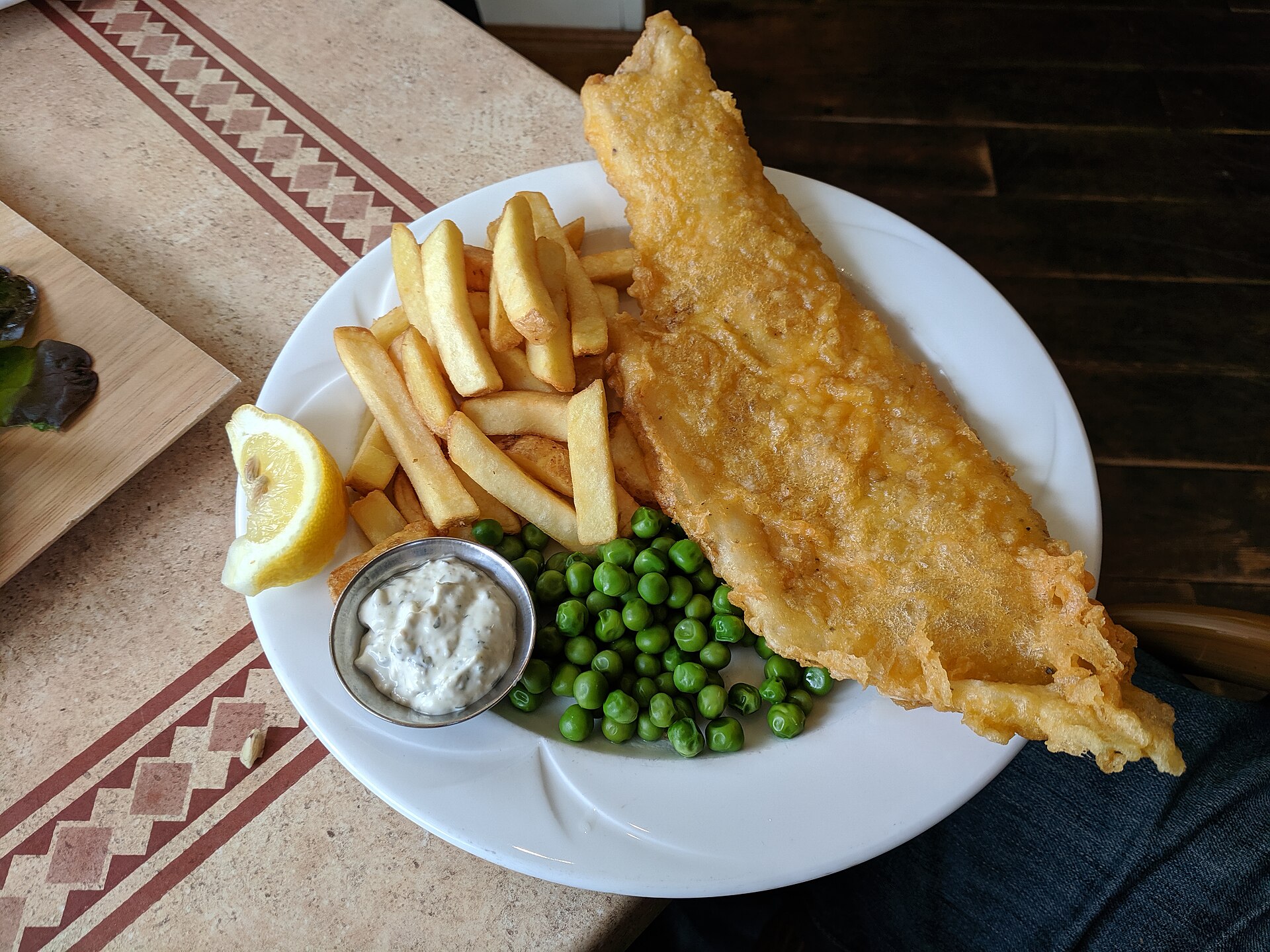
The Love London Guide № 001: Fish and Chips

Sharing is caring!

Fish and Chips — London
Grendelkhan via Wikimedia Commons (CC BY-SA 4.0)

The perfect piece of fried fish depends on a chemical trick: the batter has to set into a crisp shell before the fish inside overcooks, which is why cold batter meets very hot oil. Many London shops still use beef dripping, and the traditional wrapping was yesterday’s newspaper until 1980s food-safety rules ended the practice of letting ink touch the food. This is Guide № 001 in The Love London Guide series.

Get the Full Collectible Guide (Free PDF)

Fish and Chips — in a beautifully designed, printable booklet. The Love London Guide № 001.

Where Fish and Chips Came From

Fried fish and fried potatoes have separate histories that met in Victorian Britain. Fried fish coated in flour was sold by Jewish immigrants in London’s East End well before the two foods were paired, and Charles Dickens mentions a “fried fish warehouse” in Oliver Twist (1838). The combination of fish with chipped potatoes is usually dated to the 1860s. Two shops claim the first: Joseph Malin’s in the East End of London, said to have opened around 1860, and John Lees in Mossley, near Oldham, in the north of England.

The dish spread fast because it fed working people cheaply during the Industrial Revolution, powered by steam trawling that brought large catches to market and railways that moved fish inland quickly. By the outbreak of the First World War there were thousands of shops across the country, and fish and chips was one of the few foods never rationed during both world wars — a decision the government made deliberately to keep morale up.

How a Proper Fry Actually Works

The classic frying fish in Britain are cod and haddock, both firm white fish that flake cleanly. The batter is usually a simple mix of flour and liquid; many shops add a raising agent, and a lot use beer or sparkling water because the bubbles help the coating turn light rather than dense. The oil sits somewhere around 175–190°C. Too cool and the batter soaks up grease; too hot and it browns before the fish cooks.

Chips are a different craft from the thin fries of fast-food chains. They are cut thick, and the best shops fry them twice — once at a lower temperature to cook the potato through, then a second time hotter to crisp the outside. The thick cut means a smaller surface area relative to volume, so they hold more fluffy potato inside and absorb less oil. Maris Piper is a favoured potato variety for the job.

The Condiments and the Regional Rules

In London and the south, the default seasoning is salt and non-brewed condiment — a clear malt-flavoured vinegar substitute that most shops actually pour, though people still call it vinegar. Ketchup, curry sauce, and mushy peas are common sides. Mushy peas are made from dried marrowfat peas soaked and simmered until they collapse, not fresh garden peas.

Regional loyalties are real and worth knowing. In much of the north, “gravy” or curry sauce over chips is normal; in parts of the Midlands you will be offered “scraps” or “bits” — the loose fragments of fried batter — often for free. Ask for “chips and cheese” and you are in different territory again. None of these are wrong; they are just the local grammar of the same dish.

Finding Good Fish and Chips in London

A busy shop is a good sign, because high turnover means the fish and oil are fresh. Look for fish fried to order rather than sitting under a heat lamp, batter that is pale gold rather than dark brown, and a shop that lists the type of fish and, increasingly, its sustainability rating. The Marine Conservation Society’s “Good Fish Guide” rates species, and many reputable shops now favour line-caught or MSC-certified stock.

London has long-running institutions worth seeking out. The Rock and Sole Plaice in Covent Garden traces its site back to the 1870s, and Poppies, the Golden Hind in Marylebone (opened in the 1910s), and Fryer’s Delight in Holborn all have devoted followings. Prices in central London run higher than the national average, so a sit-down portion at a tourist-area shop will cost more than the same food from a neighbourhood chippy.

Myths Worth Retiring

Myth: Fish and chips was always wrapped in newspaper. It was commonly served in newspaper for much of the 20th century, but by the 1980s health regulations required a layer of clean, food-safe paper between the ink and the food. Today most shops use plain paper or lined boxes.

Myth: The dish is purely English in origin. The fried-fish half of the pairing is widely credited to Jewish immigrants who brought the technique of frying fish in batter to Britain, and the two elements only came together in the 1860s. Its roots are more mixed than the “national dish” label suggests.

Myth: “Plaice” in a shop name means they sell plaice. “Rock and Sole Plaice” and similar names are puns. The standard fish on most menus are cod and haddock, with plaice, rock (dogfish), and skate as occasional options.

Frequently Asked Questions

What is the difference between cod and haddock?

Both are white fish with flaky flesh. Cod is milder and its flakes are larger; haddock has a slightly stronger, more distinct flavour and is the traditional preference across much of northern England and Scotland. Many shops charge similar prices for either and let you choose.

Why do some chip shops fry in beef dripping?

Beef dripping — rendered beef fat — is the older traditional frying medium and is prized for the flavour it gives the batter and chips. It is still used in parts of the north and by some London shops, though many have switched to vegetable oil for cost, dietary, and vegetarian reasons. Shops using dripping are generally not suitable for vegetarians.

Is fish and chips expensive in central London?

It costs more in tourist-heavy central areas than in residential neighbourhoods or the rest of the country, especially for a sit-down meal versus a takeaway portion. For better value, we suggest a busy local chippy a little away from the main sights, where the food is often fresher and cheaper.

More Love London Guides

The Love London Guide is a numbered series — one tightly focused subject at a time, each with its own downloadable collectible edition. This is Guide № 001. More editions are on the way.

🇬🇧 Join 3,000+ London Lovers

Every week, get hidden stories, local secrets, and travel inspiration from people who live and love it.

Subscribe free — enter your email:

Loved this? Share it 🇬🇧

Sharing is caring!

Other newsletters you might like

Love Space

Love Space — in your inbox. Space travel, rockets, planets and the cosmos. One cosmic idea a day.

Subscribe

One Two Three AI

One Two Three AI — in your inbox AI news, practical tips and how-to guides. One useful idea a day.

Subscribe

Love Florida

Love Florida — in your inbox Sun-drenched beaches, world-famous theme parks, the Keys, springs and wildlife, and the best places to visit in Florida. One short email, every day.

Subscribe

Love Spain

Love Spain — in your inbox. Iconic cities, hidden pueblos and the best places to visit in Spain. One short email, every day.

Subscribe

Newsletters via the One Two Three Send network.  ·  Want your newsletter featured here? Click here

Leave a Comment

Your email address will not be published. Required fields are marked *

🎁 Free Guide

The London Most Visitors Never Find

Get Hidden Gems of London sent straight to your inbox

↓ Enter your email to get it free ↓

Trusted by 3,000+ London fans • Every Wednesday

Scroll to Top