
Beneath the streets of Westminster, a few minutes’ walk from the Houses of Parliament, lies one of the most remarkable places in modern British history. The Churchill War Rooms — a warren of reinforced basement corridors, spartan offices, and a map room frozen in time — served as the nerve centre of Britain’s war effort from 1939 to 1945.
This is where Winston Churchill slept, ate, broadcast his most defiant radio speeches, and directed a global conflict from a room no bigger than a terraced house kitchen. Today, more than 80 years later, you can walk through those same corridors and stand in the very spots where some of the most consequential decisions of the twentieth century were made.
A Bunker Built in Weeks
When the Cabinet War Rooms opened on 27 August 1939, war had not yet been declared. Germany invaded Poland six days later. The timing was as close as it gets.
The basement of the Treasury building on King Charles Street had housed civil servants for years. In the frantic months before war, engineers reinforced the ceilings with steel and concrete, installed a dedicated telephone exchange, and divided the space into offices, dormitories, and a central map room. The whole thing took shape on the assumption that German bombers would flatten Whitehall — an assumption that turned out to be entirely correct.
The rooms sat just six feet below street level. That was all. A direct hit would have destroyed them. But they survived, and so did the people working inside.
The Map Room: The War’s Living Nerve
Walk into the Map Room today and you see it exactly as officers left it on 16 August 1945 — the day the last staff member turned out the lights and went home. The clocks stopped. The papers stayed. Nobody came back to tidy up.
Every day during the war, a duty officer pinned updated information to the vast maps that covered every wall. The position of Allied ships in the Atlantic. The progress of tank battles in North Africa. The movement of bomber formations over Germany. Twenty-four hours a day, seven days a week, for six years, the Map Room never went dark.
Officers slept in shifts in the corridor outside. They ate sandwiches at their desks. Some of them spent months in this windowless basement without going above ground for more than a few minutes at a time.
🏙️ Enjoying this? 3,000 London lovers get stories like this every week. Subscribe free →
Churchill’s Room: Spartan, Functional, and Entirely Deliberate
Winston Churchill used the War Rooms on 115 recorded occasions. He did not live there — he preferred Downing Street and, later, a more heavily reinforced annexe above ground. But when the bombing was heaviest, or when a long night of work stretched into the early hours, he stayed.
His bedroom is tiny. A metal-framed bed, a single wooden chair, a chamber pot. A small desk holds a BBC microphone where he recorded some of the broadcasts that shaped British morale during the darkest months of the war.
Churchill hated the bunker. He called it a “rabbit hole.” He preferred to walk London’s bombed streets, inspect the damage with his own eyes, and be seen. He understood that his presence above ground — stubborn, cigar in hand, giving the V sign to bomb-damaged crowds — mattered as much as any military strategy.
But he also understood that the work done in these rooms mattered. The planning. The intelligence. The slow, painstaking management of a war fought on every continent.
The People Who Stayed Below
Churchill was never the only one down here. The War Rooms employed hundreds of people at their peak — typists, telephone operators, cipher clerks, military planners, civil servants. Many of them were women in their twenties, recruited in haste and trained quickly in jobs that had never existed before.
Joan Bright Astley worked as a secretary to the Chiefs of Staff throughout the war. She later described the bunker as a place of intense focus and surprising camaraderie. “We had no windows, no daylight, no sense of whether it was morning or night,” she wrote. “What we had was each other, and the absolute certainty that what we were doing mattered.”
The telephone switchboard alone handled thousands of calls each day. Operators connected Churchill directly to Roosevelt in Washington, to Eisenhower in North Africa, to field commanders across Europe. The technology was cutting-edge for its era and constantly in danger of failing.
When it did fail, couriers ran messages through the streets above — sometimes while bombs were falling.
The Transatlantic Telephone: Churchill’s Secret Line to Roosevelt
One of the most extraordinary objects in the War Rooms sits in a small cupboard off a side corridor. It looks unremarkable — a plain wooden door, a few wires, an ordinary-looking telephone.
This was the SIGSALY system, the world’s first fully encrypted transatlantic telephone link. It connected Churchill directly to President Roosevelt in the White House. The technology was so advanced for its time that German intelligence spent the entire war trying to break it and never succeeded.
Churchill and Roosevelt spoke on this line dozens of times during the war. They discussed troop movements, debated strategy, and sometimes — according to those who overheard — argued bitterly about timing and resources. The conversations on this line helped shape D-Day. They settled the question of where the main Allied invasion of Europe would land. They determined when it would happen.
After the War: Sealed, Then Remembered
The War Rooms closed on 16 August 1945. The staff filed out, the lights went off, and the doors locked. For thirty years, the rooms sat untouched beneath Westminster — too sensitive to open, too historically significant to demolish.
In the 1970s, historians began to argue for their preservation. In 1984, the Cabinet War Rooms opened to the public for the first time. Visitors walked in and found the map room exactly as officers had left it — papers on the desks, pins in the maps, clocks showing the time of the last shift.
In 2005, the Imperial War Museum expanded the site significantly, opening a dedicated Churchill Museum alongside the preserved rooms. Today the full complex attracts more than 400,000 visitors every year.
What You’ll See on a Visit
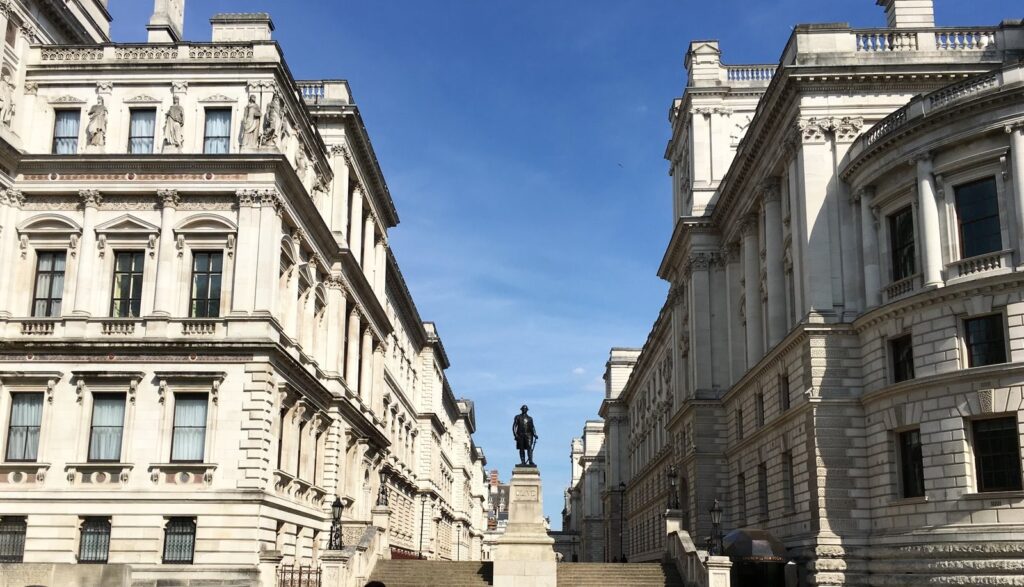
The Churchill War Rooms sit on Clive Steps, off King Charles Street in Westminster. The entrance is discreet — easy to walk past if you don’t know what you’re looking for.
Inside, a self-guided audio tour takes you through the preserved basement. You walk the same corridors that Churchill walked. You stand in the Map Room and look at the same maps. You see the transatlantic telephone, the cipher machines, and the cramped sleeping quarters where exhausted staff grabbed a few hours of sleep between shifts.
The Churchill Museum on the lower level covers his entire life — from his difficult childhood and early military career through his political defeats and his extraordinary wartime leadership. The centrepiece is a long interactive table that lets you explore documents, photographs, and recordings from across his life.
Allow at least two hours. Many people find they need more. Tickets cost around £28 for adults and £14 for children. Book in advance — queues can be long. The site has no natural light, which makes it equally rewarding regardless of London’s variable weather.
A Walk Through Wartime Westminster
If you want to extend the visit into a broader WWII heritage walk, the War Rooms sit in an ideal location. St James’s Park is directly opposite. During the war, workers dug the park up for anti-aircraft gun emplacements and air raid shelters. Buckingham Palace — a ten-minute walk away — took nine bomb hits. The King and Queen refused to leave London throughout the Blitz, a decision that mattered enormously to civilian morale.
The Cenotaph on Whitehall, a ten-minute walk in the other direction, commemorates the dead of both World Wars. The nearby Westminster Abbey contains the grave of the Unknown Warrior — a single unidentified British soldier brought back from the battlefields of France in 1920 and buried among kings.
Why This Place Still Matters
The Churchill War Rooms are not just a museum about a war. They are a record of how people respond when things go badly — when the future looks genuinely uncertain, when the outcome hangs in the balance, when the stakes could not be higher.
The people who worked in those basement rooms did not know how the war would end. They knew Germany had overrun most of Europe. They knew the bombing of London killed civilians every night. They knew Britain stood largely alone for much of 1940 and 1941.
They kept working.
There is something clarifying about standing in those low-ceilinged corridors, seeing the physical reality of what a wartime command centre looked like — not the Hollywood version, but the actual thing, with its bare lightbulbs and its folding chairs and its hand-drawn maps. It makes the decisions made here feel real in a way that reading about them never quite does.
Did you know? Britain’s Cabinet War Rooms handled more than 100,000 telephone calls during the six years of the Second World War — all routed through a switchboard the size of a wardrobe, staffed entirely by hand.
Join 3,000+ London Lovers
Every week, get London’s hidden history, heritage walks, and stories from the city’s remarkable past — straight to your inbox.
Subscribe free — enter your email:
Already subscribed? Download your free London guide (PDF)
Free forever · One email per week · Unsubscribe anytime