
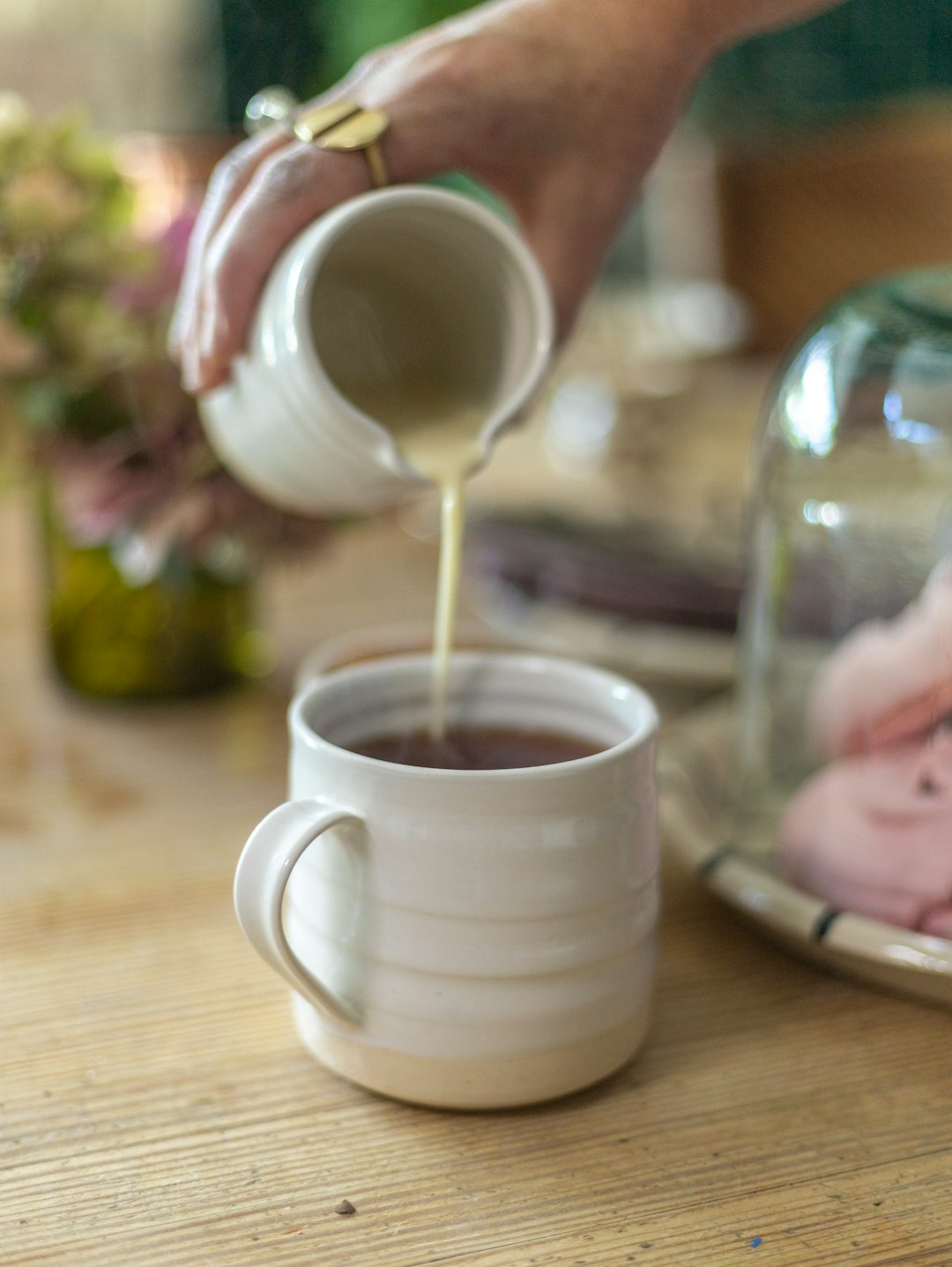
Britain drinks its tea with milk largely by accident of chemistry and thrift: adding milk first once protected delicate porcelain cups from cracking under boiling water, and the habit stuck long after bone china grew tougher. Today the country gets through roughly 100 million cups a day, most of it a brisk blend of black teas rather than a single leaf. This is Guide № 004 in The Love London Guide series.
Get the Full Collectible Guide (Free PDF)
English Breakfast Tea — in a beautifully designed, printable booklet. The Love London Guide № 004.
What “English Breakfast” Actually Is
English Breakfast is a blend, not a variety of plant. It is built from black teas — commonly Assam, Ceylon (Sri Lankan) and Kenyan leaves — combined to give a full-bodied, brisk cup that stands up well to milk. Assam supplies the malty strength and deep colour, Ceylon adds brightness, and Kenyan tea brings briskness and a reliable punch. Each brand guards its own recipe, which is why two “English Breakfast” boxes can taste noticeably different.
The name is a Victorian-era marketing success rather than an ancient tradition. The blend is designed to be robust enough to accompany a cooked breakfast and to be drunk strong, hot and sweetened or milked to taste. There is no legal definition of the blend, so the term describes a style — strong, dark, everyday black tea — more than a fixed formula.
A Short History of the Blend
Tea reached England in the mid-1600s as a luxury, and its popularity is often linked to Catherine of Braganza, the Portuguese wife of Charles II, who helped make tea-drinking fashionable at court. For a long time the leaf was heavily taxed and sometimes adulterated, which is part of why the 1773 Boston Tea Party and later the Commutation Act of 1784 — which slashed tea duty — loom so large in tea’s history.
The specific “Breakfast” blend is usually traced to the 19th century. A frequently repeated account credits a Scottish tea master, Robert Drysdale, with selling a “Breakfast Tea” in Edinburgh in the 1840s, after which the “English” prefix was added as it spread south. It is often said that Queen Victoria took a liking to the blend after tasting it in Scotland, helping popularise it — a story worth treating as tradition rather than documented fact.
How to Brew It Properly
Black tea likes water that is genuinely boiling, around 100°C, which is what makes it different from green or white teas that scald at that heat. Use one teabag or roughly one teaspoon of loose leaf per cup, pour on freshly boiled water, and let it steep for three to five minutes — longer draws out more tannin and briskness, shorter keeps it lighter. Squeezing the bag hard against the cup releases extra tannins and can make the cup bitter.
Milk is added to taste, and the order remains one of Britain’s gentle running arguments. Loose leaf brewed in a warmed pot generally gives a rounder result than a bag in a mug, because the leaves have room to move and infuse fully. If you take sugar, add it while the tea is hot so it dissolves cleanly.
Milk First or Tea First?
The debate over whether milk goes in before or after the tea is genuinely old and once carried class overtones — pouring milk first was associated with cheaper cups that needed protecting from thermal shock, while tea-first was seen as a mark of confidence in your porcelain. George Orwell weighed in firmly on the tea-first side in his 1946 essay “A Nice Cup of Tea.”
There is a scientific wrinkle: some researchers argue that adding tea to cold milk heats the milk gradually and avoids scalding its proteins, which can slightly affect taste. In practice, for a strong breakfast blend the difference is small, and most people simply do what they grew up with.
Where to Drink It in London
A proper “afternoon tea” — the tiered stand of sandwiches, scones and cakes — is a different institution from the everyday breakfast cuppa, but London is where the two worlds meet. Grand hotels such as The Ritz, Claridge’s, Brown’s and The Savoy serve formal afternoon tea with English Breakfast among the options, usually with a dress code and advance booking. For an everyday version, ordinary cafés, greasy-spoon breakfasts and museum tearooms across the city pour it by default.
If you want to buy leaf to take home, historic merchants including Fortnum & Mason on Piccadilly and Twinings on the Strand — whose shopfront has traded on the same site since 1706 — sell their own house blends. Both are working shops as well as landmarks, so you can taste and compare before choosing.
Myths Worth Retiring
Myth: English Breakfast is a single type of tea. It is a blend of several black teas, and every brand mixes its own, so there is no one authentic recipe.
Myth: You should pour boiling water off the boil to protect the leaves. Black tea actually needs fully boiling water to extract properly; it is green and white teas that prefer cooler water.
Myth: Afternoon tea and “high tea” are posh synonyms. Historically “high tea” was a substantial early-evening working-class meal eaten at a high dining table, while the dainty afternoon tea was the leisured-class ritual — the names are often muddled today.
Frequently Asked Questions
Is English Breakfast tea high in caffeine?
It is a fully caffeinated black tea, typically containing less caffeine than a similar-sized cup of brewed coffee. The exact amount depends on the blend, how much leaf you use and how long you steep it — a longer brew pulls out more caffeine.
What is the difference between English Breakfast and Irish Breakfast tea?
Both are strong black blends, but Irish Breakfast usually contains a higher proportion of malty Assam, giving it a deeper, more robust flavour and colour. English Breakfast tends to be a touch lighter and more balanced by comparison.
Do I have to add milk?
Not at all. Milk is traditional in Britain and suits the blend’s strength, but the tea is perfectly good taken black, with or without a slice of lemon and a little sugar to taste.
More The Love London Guides
The Love London Guide is a numbered series — one tightly focused subject at a time, each with its own downloadable collectible edition. Guide № 001 is Fish and Chips, Guide № 002 is Trooping the Colour, Guide № 003 is The Red Telephone Box, This is Guide № 004. More editions are on the way.
🇬🇧 Join 3,000+ London Lovers
Every week, get hidden stories, local secrets, and travel inspiration from people who live and love it.
Subscribe free — enter your email:
