
Smithfield Market is the Victorian iron hall that Sir Horace Jones built for the City of London in 1868, and it still trades meat near Farringdon today. It stands on a patch of open ground where Londoners have bought and sold livestock for centuries. The site has also hosted a great fair, public executions and some of Charles Dickens’s grimmest scenes. This guide tells that story and shows what to look for in the ironwork.
A Smooth Field Outside the City Wall
The name Smithfield began as “smooth field”. In the Middle Ages this was open grassland just outside the City wall, close to the River Fleet. Drovers walked cattle, sheep and pigs here from farms across England. Horse traders gathered here too. A market that sat outside the wall could grow without squeezing the narrow streets inside it.
The field served as more than a market. Crowds came here for jousts, public gatherings and executions. The Scottish leader William Wallace died at Smithfield in 1305, and many others met the same end on the same ground. Visitors who walk the area today will find plaques and street names that hint at this older, rougher past.
Bartholomew Fair: Seven Centuries of Noise
In 1133 a royal charter set up the Bartholomew Fair beside the priory of St Bartholomew. It began as a cloth fair and grew into one of London’s great summer events. Over the centuries it added puppet shows, wild animal exhibits, food stalls, acrobats and fairground rides. Londoners from every rank crowded the stalls, and the fair drew visitors from far beyond the City.
By the nineteenth century the fair had a reputation for drunkenness and petty crime. The City authorities cut it back and ended it in 1855. That is the same year the live cattle market left Smithfield, so the field lost both of its old purposes in a single year.
Dickens Walks Through the Mud
Charles Dickens knew Smithfield well and disliked what he saw. In Oliver Twist, Bill Sikes drags young Oliver through the market on a market morning. Dickens describes deep filth underfoot, steam rising from crowded animals and drovers shouting through the din. In Great Expectations, Pip walks through the same ground and finds it as foul as ever.
Dickens did more than describe the scene. He wrote articles that criticised the live cattle trade in the middle of a crowded city. Many Londoners shared his view. Animals walked through narrow streets, and the trade left blood and waste behind it. By 1855 the City had moved live trading to a new Metropolitan Cattle Market in Islington.
🏙️ Enjoying this? 3,000 London lovers get stories like this every week. Subscribe free →
Sir Horace Jones Builds a Cathedral of Meat
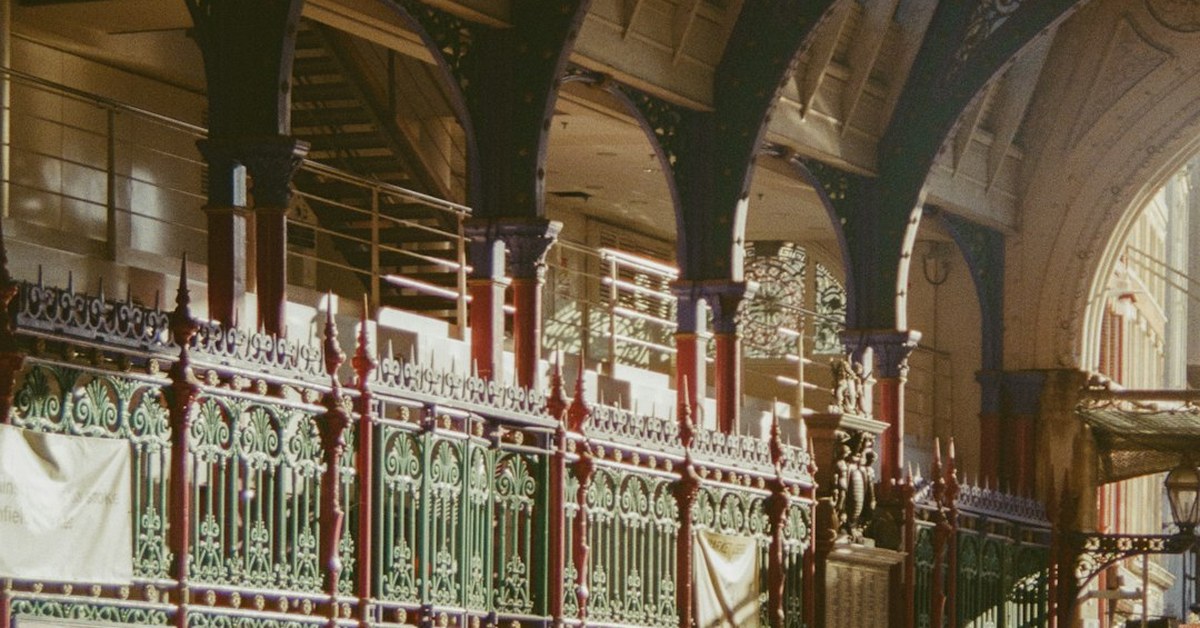
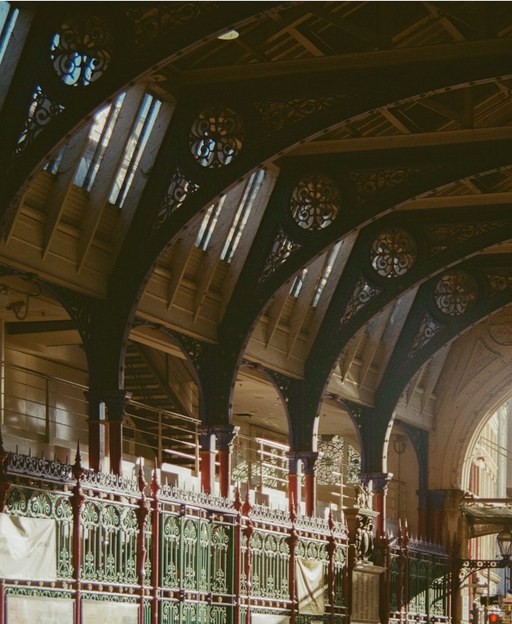
With live animals gone, the City needed a clean, modern place to sell dead meat. It chose Sir Horace Jones, the City Architect, to design it. The City opened Jones’s Central Market in 1868. He used cast iron and glass, the great materials of Victorian engineering, to build a long hall with a roof that let in daylight and fresh air.
Jones also designed Billingsgate and Leadenhall markets, and he drew the original design for Tower Bridge. Smithfield shows his taste for decoration. Look for the painted ironwork in red and green, the round pierced panels in the arches and the carved details on the corner entrances. A market could have been a plain shed, but the City wanted it to look like a civic building.
The Railway Under the Floor
The designers solved a hard problem: how to bring tonnes of meat into the middle of London every day. They built a railway depot below the market. Trains from the countryside ran beneath the hall and unloaded there, and lifts raised the meat to the trading floor above. This kept carts off the crowded streets and kept the meat cooler on its way in.
The system shows how Victorian engineers treated a market as a piece of infrastructure. The railways that brought food to London changed what Londoners ate, how far it travelled and how fresh it arrived.
Fire, Change and a Working Market
A fire destroyed the old Poultry Market in 1958, and the City replaced it with a new building in the early 1960s. The surviving Victorian halls stayed in use, and the trade carried on. Traders have long worked through the night so that butchers and restaurants can collect their orders before the city wakes. That habit gives Smithfield an odd rhythm that most London markets lack.
The trade has its own language too. Smithfield people use the word “bummaree” for the independent middlemen who buy meat in bulk and sell it on. The word has a long history in London’s meat and fish markets, and you will not hear it in an ordinary shop. Small details like this show that a market is a living workplace with its own habits, and not only a historic building.
Before you go, check the City of London Corporation’s official pages for what is open to the public, because access to a working market differs from access to a museum.
Why the Ironwork Matters
Victorian engineers learned to treat iron and glass as a way to make large, bright, open buildings. Joseph Paxton’s Crystal Palace had shown the idea at the Great Exhibition in 1851, and you can read how that event shaped South Kensington in our Great Exhibition guide. Smithfield applied the same thinking to food. The tall roof let daylight into the hall and moved air through it, which suited a trade that needed to stay cool and clean.
The market also belongs to a wider Victorian drive to clean up London. The same decades produced the sewers that ended the Great Stink, a story we tell in our guide to the Great Stink of 1858. If Dickens’s grim London interests you, our Dickens walk follows more of his streets.
What to Look For on a Visit
Smithfield suits a short walk rather than a long visit. Start at Farringdon station, which is a few minutes’ walk from the market, and approach along Charterhouse Street. Look up at the arched roof and the pierced iron panels. Then notice the painted railings and the carved stone details at street level.
Several other old landmarks stand close by. St Bartholomew’s Hospital has stood on its site since the twelfth century, and its gatehouse faces the old fairground. The priory church of St Bartholomew the Great is also within a short walk. Together they show how much London history fits into one small corner of the City.
Frequently Asked Questions
Who built Smithfield Market?
Sir Horace Jones, the City of London’s architect, designed the Victorian Central Market, and it opened in 1868. He also designed Billingsgate and Leadenhall markets.
When did Smithfield stop selling live animals?
The City moved the live cattle trade to Islington in 1855. The same year, authorities ended the Bartholomew Fair.
Which Dickens books feature Smithfield?
Smithfield appears in Oliver Twist and Great Expectations. Dickens also criticised the live cattle market in his journalism.
How do I get to Smithfield Market?
Farringdon station is the nearest station, and the market lies a short walk away along Charterhouse Street. Check the City of London Corporation’s website for visitor access before you travel.
Join 3,000+ London Lovers
Every week, get London’s hidden history, heritage walks, and stories from the city’s remarkable past — straight to your inbox.
Subscribe free — enter your email:
Already subscribed? Download your free London guide (PDF)
Free forever · One email per week · Unsubscribe anytime