
The Natural History Museum London is one of the great free attractions in the city, and it is a building worth visiting before you even step inside. This guide helps US visitors plan the day, from getting there to what to see first and where to take a break.
The museum sits in South Kensington, a short walk from the V&A and the Science Museum. Most visitors spend two to four hours here. Families with children often stay longer, and dinosaur fans rarely want to leave.
What Is the Natural History Museum London?
The Natural History Museum is a national museum devoted to life on Earth and the planet itself. Its collections hold tens of millions of specimens, from tiny insects to huge fossils. Scientists still work here, so the museum is a research centre as well as a visitor attraction.
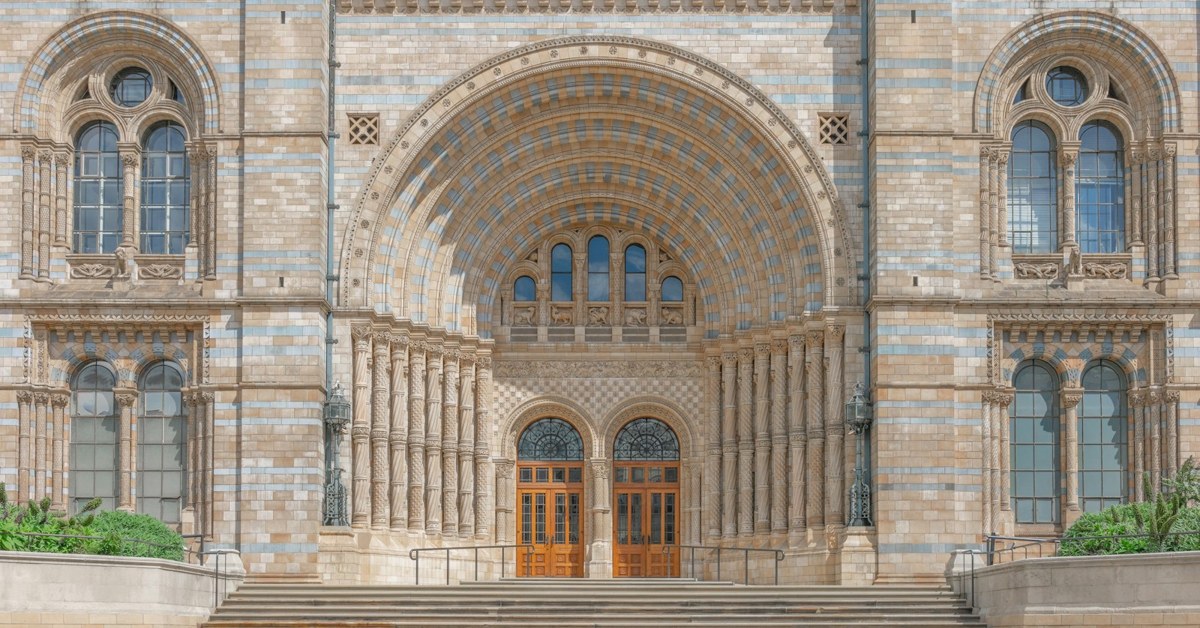
The collections began inside the British Museum. In the 1800s the naturalist Richard Owen argued that the specimens needed a home of their own. The new building in South Kensington opened in 1881. Architect Alfred Waterhouse designed it in a Romanesque style, with arches, towers and carved detail across the front.
The terracotta building
Look closely at the walls. Waterhouse covered them in terracotta tiles in cream and blue-grey bands. Tile is easier to clean than stone in a smoky city, and it also suits the museum’s theme. Carved animals and plants climb the arches and columns. Some creatures are living species, and others are extinct.
The main entrance faces Cromwell Road, and the great arch there makes a fine photograph. Early on a quiet morning, you can take your time before the queue builds.
What to See at the Natural History Museum London
The museum is large, so a plan helps. Pick two or three highlights and enjoy the rest as you pass.
Hintze Hall and the blue whale
Most visits start in Hintze Hall, the vast central hall. A blue whale skeleton named Hope hangs above the stairs, set in a diving pose. The museum installed Hope in 2017. For decades before that, a cast of a Diplodocus called Dippy greeted visitors in the same space.
Stand at the foot of the stairs and look up. Then climb to the first-floor balcony for a closer view of the skull and ribs. The carved ceiling panels are worth a look too, because they show plants from around the world.
The dinosaurs
The dinosaur gallery is the busiest part of the building. Walkways lead you above and around the skeletons, and a large animated Tyrannosaurus rex draws the crowds. Go early or late in the day if you want more space. Younger children often love this gallery most, so plan for extra time.
Earth Hall and the Treasures gallery
An escalator carries you into a huge turning globe in Earth Hall. The displays explain volcanoes, earthquakes and how the planet formed. Nearby, the Treasures gallery holds some of the museum’s most remarkable objects. They include rare minerals, meteorites and items linked to early scientists. Charles Darwin and his ideas about evolution form a key part of the museum’s story.
Rocks, gems and the Wildlife Garden
Fans of gems and crystals should visit the minerals galleries, where specimens glitter under the lights. When the weather is good, step outside to the Wildlife Garden. It shows habitats from British woodland and meadow, in the middle of a busy city. Check the official site for opening details, because the garden depends on the season.
Love London, every week
Hidden corners, history and local tips in one free weekly email.
How to Plan Your Natural History Museum London Visit
A little planning makes the day smoother. Here are the main points.
Tickets and entry
The museum’s permanent galleries are free to explore. When we checked the official visit page in October 2026, it offered free entry tickets, and it noted that tickets are sometimes needed at busy times. Special exhibitions usually cost extra. Read the official page before you go, because rules and prices can change.
Pick the right time
Weekday mornings are usually calmer. Weekends and school holidays bring large crowds, and the queue can stretch along the front of the building. Arrive at opening time and head straight for the dinosaurs, then work your way back through the quieter galleries.
Allow enough time
Two hours covers the highlights. Three or four hours lets you explore at a relaxed pace. If you plan to see the V&A as well, give each museum its own half day. Our V&A planning guide shows how to fit it in.
Bring the family
Children enjoy the museum, and many galleries suit all ages. Strollers can use the lifts, and the building has plenty of seating. For wider ideas, see our London with kids guide.
How to Get to the Natural History Museum
South Kensington is the closest Tube station. It is on the Piccadilly, District and Circle lines. From the station, a long pedestrian subway leads towards the museums, so you can walk most of the way under cover. The walk takes about five minutes.
Buses also stop close by along Cromwell Road and Exhibition Road. Check the route on the Transport for London site before you travel. Our guide to getting around London explains contactless payment and how the Tube works.
The museum has more than one entrance. The Cromwell Road entrance gives you the grand view of Hintze Hall. The Exhibition Road entrance is often less busy, and it opens near the Science Museum and the V&A.
Where to Eat and What to Do Nearby
The museum has cafes and picnic areas inside, but queues form at lunchtime. Many visitors prefer to eat in South Kensington. The streets around the station have bakeries, cafes and restaurants for all budgets.
The area is also one of the best in London for museum fans. The Science Museum and the V&A sit within a few minutes’ walk. The story of how this district grew goes back to the 1851 fair in Hyde Park. Read about it in our Great Exhibition guide. Hyde Park and Kensington Gardens lie to the north, and they make a pleasant walk once you have had enough indoors.
If you want other ideas for a rainy day, our guide to London museums worth a full day lists more options. Budget travellers can also read our free things to do in London.
Natural History Museum London: Frequently Asked Questions
Is the Natural History Museum London free?
Yes, the permanent galleries are free to explore. Special exhibitions usually have a charge, and free tickets may be needed at busy times, so check the official page first.
How long do you need at the Natural History Museum?
Plan on two to four hours. Two hours covers Hintze Hall, the dinosaurs and one more gallery, while a longer visit lets you see the rest at an easy pace.
Where is the Natural History Museum in London?
It stands on Cromwell Road in South Kensington, in west London. The nearest Tube station is South Kensington, about a five-minute walk away.
What is the blue whale at the Natural History Museum called?
The skeleton is named Hope. It hangs in Hintze Hall, the main entrance hall, and it replaced the Diplodocus cast known as Dippy in 2017.
Is the Natural History Museum good for children?
Yes, children love it. The dinosaur gallery and the whale are the biggest draws, and the museum has lifts and space for strollers.
Join 3,000+ London Lovers
Every week, get London’s lesser-known corners, local stories and secrets, straight to your inbox.
Subscribe free — enter your email:
Join the Love London newsletter →
Free forever · One email per week · Unsubscribe anytime