
Walk five minutes from St Paul’s Cathedral and you will find a garden most Londoners have never visited. Postman’s Park sits quietly in the City of London, tucked behind office blocks and ancient church walls. It catches most visitors by surprise — not because of its flowers or its fountain, but because of a covered shelter along one wall, lined with small ceramic tiles.
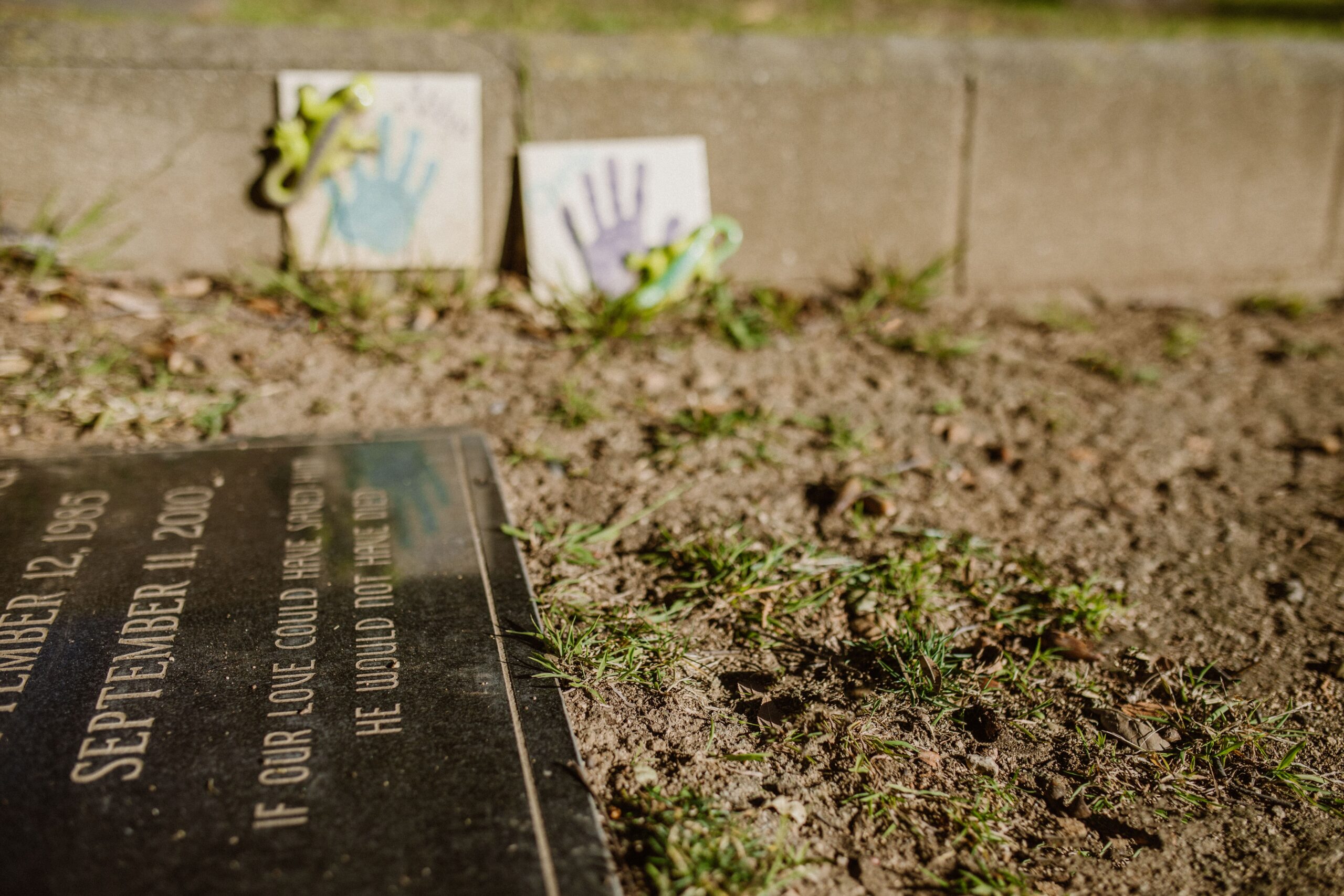
Each tile tells the story of an ordinary person who died saving someone else’s life.
This is the Memorial to Heroic Self-Sacrifice. Victorian artist George Frederic Watts created it in 1887, driven by one simple conviction: the greatest heroes in history are often the ones nobody remembers. He believed London had been ignoring them for centuries. He decided to fix that.
How a Park Gets Named After a Postman
The park’s name has nothing to do with any particular postman. It owes its name to geography. From the mid-1800s onwards, postal workers from the nearby General Post Office used this small enclosed garden as a lunchtime retreat. It became their park, and the name stuck even after the post office moved and the workers stopped coming.
Before the park existed, this ground held three Victorian-era churchyards — St Botolph’s Aldersgate, Christ Church Greyfriars, and St Leonard’s Foster Lane. In 1880, the Metropolitan Public Gardens Association transformed the old burial ground into a public garden. London had a long habit of building new things on top of old ones, and Postman’s Park follows that tradition.
The garden sits near what was once the heart of the Roman city of Londinium. The surrounding streets held markets, guildhalls, and trade workshops for nearly two thousand years before Watts chose this quiet corner for his memorial.
The Victorian Artist Who Wanted to Change How London Remembered People
George Frederic Watts was one of the most celebrated British painters of the Victorian era. He painted portraits of the famous — Tennyson, Carlyle, Gladstone — and became successful enough to choose his own causes. In 1887, he chose this one.
Watts announced his plan publicly. He wanted to create a memorial not to kings or generals, but to ordinary men, women, and children who had given their lives to save someone else. He proposed it as a contribution to mark Queen Victoria’s Golden Jubilee. The City of London Corporation agreed and offered him the sheltered wall in Postman’s Park.
The memorial opened in 1900. Watts and his wife Mary designed and installed the first plaques together. Watts died in 1904, but Mary continued the project. Today, the shelter holds 54 ceramic plaques, each one hand-painted on Doulton faience tiles. The tiles show a name, an age, a date, and a brief account of how each person died in the act of saving another’s life.
Most of these people lived quietly. None of them expected anyone to remember them at all.
🏙️ Enjoying this? 3,000 London lovers get stories like this every week. Subscribe free →
Reading the Plaques
You read slowly when you stand in front of this memorial. The tiles force you to slow down.
One plaque reads: Frederick Alfred Croft, inspector, aged 31, saved a lunatic woman from suicide at Woolwich Arsenal station but was himself run over by the train. January 11, 1878.
Another: Solomon Galaman, aged 11, died of injuries September 6, 1901, after saving his little brother from being run over in Commercial Street. “Mother, I saved him but I could not save myself.”
A third: Sarah Smith, pantomime artiste at Prince’s Theatre, died of terrible injuries received when attempting in her inflammable dress to extinguish the flames which had engulfed her companion.
These people held no famous names. They left behind no statues in Trafalgar Square and no portraits in the National Gallery. They worked as theatre performers, railway inspectors, labourers, and children playing in the street. Each made one extraordinary decision and paid for it with their lives.
What strikes visitors most is the specificity. These tiles do not say “a young woman died heroically.” They record exactly who, where, when, and how — and in several cases, the person’s final words. Watts understood that the details make heroism real. Without them, it disappears into abstraction.
A Different Kind of Memorial
Most memorials in London honour soldiers. The people in Postman’s Park died in accidents, fires, railway incidents, and drownings. They died in the city’s ordinary disasters — the kind of disaster that strikes every generation, in every city, without warning.
The Victorian era produced countless monuments to military achievement. Watts pushed back against that habit. He argued that dying to save a stranger deserves just as much recognition as dying in battle. The memorial reflects a genuinely democratic understanding of courage: it belongs to anyone willing to act, regardless of rank, class, or income.
For American visitors in particular, the plaques carry an extra resonance. Many of the people commemorated here could easily have been the ancestors of today’s British-American or London-descended diaspora. These were the city’s working people — the ones who built London from the ground up, and who, in one decisive moment, showed exactly what they were made of.
The Park in Modern Culture
The memorial found a new generation of admirers in 2007 when it appeared in the film Atonement, based on Ian McEwan’s novel. Director Joe Wright filmed a pivotal scene at the memorial, with Keira Knightley and James McAvoy’s characters standing before the tiles. For many viewers, that scene revealed that the park was real — and worth finding.
New plaques have been added since Watts’s death, continuing his original intention. Each addition goes through a formal nomination process. The memorial continues, quietly, to do its work.
How to Visit Postman’s Park
Postman’s Park sits on Little Britain, off Aldersgate Street, in the City of London, EC1A 4JJ. The nearest Underground stations are St Paul’s (Central line) and Barbican (Circle and Metropolitan lines). The walk from St Paul’s Cathedral takes about five minutes.
The park opens daily and admission is free. The shelter and its plaques line the north side of the garden, protected from rain and wind.
Try to visit on a weekday. The City of London empties at the weekend, and the garden grows very quiet — you may have the tiles almost to yourself. Take your time with each one. Read them fully. You will likely find yourself unexpectedly moved.
Combine the visit with nearby sites: the ruins of Christ Church Greyfriars are a short walk away, and the Museum of London (now relocated to West Smithfield, just round the corner) traces the city’s full story from Roman settlement to the present day.
Why This Place Matters
London has hundreds of official heritage sites — palaces, cathedrals, royal parks, and world-famous museums. Postman’s Park belongs to a different tradition. It records the people the city might otherwise have forgotten: the ones who acted with courage in an ordinary moment and asked nothing in return, not even to be remembered.
Watts feared that ordinary heroism would vanish from history. He feared it would disappear behind the noise of imperial memorials and grand official monuments. In a garden the size of half a tennis court, tucked quietly between the office buildings of the City, he made sure it did not.
If you have time for only one hidden London experience, this might be it.
Join 3,000+ London Lovers
Every week, get London’s hidden history, heritage walks, and stories from the city’s remarkable past — straight to your inbox.
Subscribe free — enter your email:
Already subscribed? Download your free London guide (PDF)
Love more? Join 64,000 Ireland lovers → · Join 43,000 Scotland lovers → · Join 30,000 Italy lovers →
Free forever · One email per week · Unsubscribe anytime