
William Shakespeare arrived in London as a young man from Warwickshire sometime in the late 1580s. He was probably in his mid-twenties, and the city he stepped into was nothing like the polished capital tourists visit today. It was loud, crowded, and dangerous. It smelled of the river. Actors were barely a step above vagabonds in the social order. And yet London turned this provincial glover’s son into the most celebrated writer in the English language.
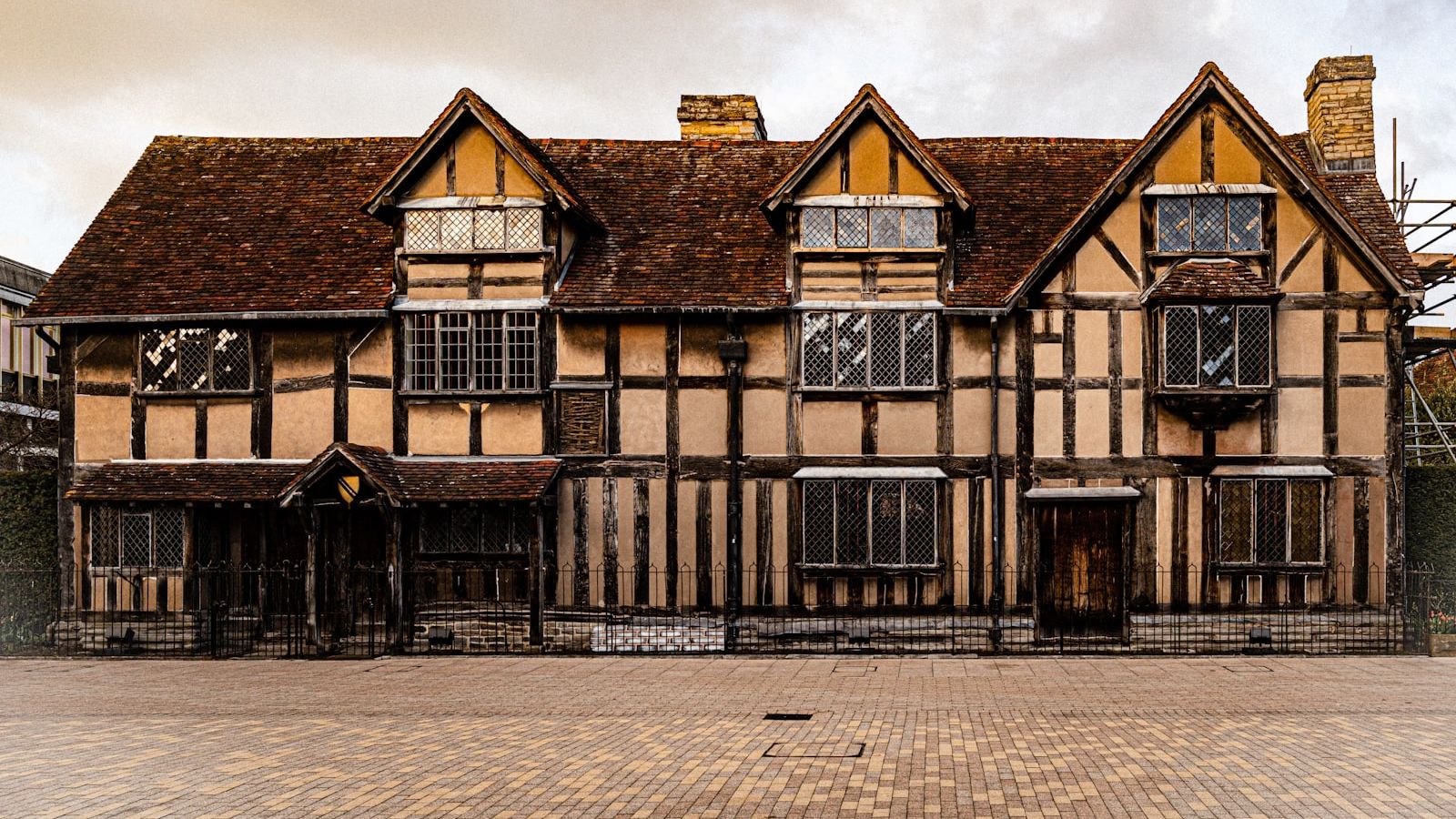
Most visitors to London walk past the places Shakespeare knew without realising it. The Thames he crossed every day. The streets of Bankside where he lived and worked. The theatre he helped build. If you want to understand the man behind the plays, you need to walk the south bank of the river.
How Shakespeare Ended Up in London
Shakespeare was born in Stratford-upon-Avon in 1564. He married Anne Hathaway at 18 and had three children by the time he was 21. Then, at some point in the 1580s, he left. Nobody knows exactly when or why. This gap in his biography — what scholars call the “lost years” — has fuelled centuries of speculation.
What we know is that by 1592, he was already a recognised presence in London’s theatre world. A rival playwright named Robert Greene wrote a jealous attack on him that year, calling him “an upstart Crow.” That backhanded insult is one of the earliest records we have of Shakespeare as a working professional in the capital.
London in the 1590s had a population of around 200,000 people. It was the largest city in England by far, and it was expanding rapidly. The City of London itself — the old walled medieval district — was governed by strict Puritan aldermen who disapproved of public entertainments. Theatres, bear-baiting rings, and brothels were all banned within the city walls.
So they all moved south, across the Thames to Southwark. That is where Shakespeare spent the most productive years of his life.
Southwark and Bankside: Shakespeare’s Neighbourhood
Bankside, the stretch of riverfront in Southwark, was Elizabethan London’s entertainment district. It was where ordinary Londoners came to escape the pressures of city life. The Rose Theatre opened here in 1587. The Swan followed. There were taverns, inns, and bear gardens. The whole area had an energy that you can almost still feel today if you stand with your back to the modern office blocks and look out at the river.
Shakespeare and his fellow shareholders in the Lord Chamberlain’s Men — the acting company he belonged to — built their own theatre on Bankside in 1599. They called it the Globe.
The timber they used to build it had been recycled from an earlier theatre north of the river, which the company had literally dismantled and carried across the Thames after a dispute with their landlord. It was a bold move, and it paid off. The Globe became the most celebrated theatre in England.
Shakespeare held a 12.5 percent share in the Globe. It made him a wealthy man. He could afford a coat of arms. He bought one of the largest houses in Stratford. But through it all, from roughly 1599 to 1613, his working life was here on Bankside.
Enjoying this? 3,000 London lovers get stories like this every week. Subscribe free
The Globe Theatre Then and Now
The original Globe Theatre burned down in 1613. A cannon fired during a performance of Henry VIII ignited the thatched roof. The entire building went up in flames in under two hours. Nobody died, though one man reportedly had to have his breeches doused with ale to stop them catching fire.
A second Globe was built on the same site the following year, this time with a tiled roof. It survived until 1644, when the Puritans, who had finally come to power, had it demolished.
For over 350 years, there was nothing left. Then an American director named Sam Wanamaker came to London in 1949, looking for the site of the original Globe. He found a plaque on a brewery wall. That was not good enough for him. He spent the next four decades campaigning for a full reconstruction, and the result — Shakespeare’s Globe, built about 230 metres from the original site — opened in 1997, three years after Wanamaker’s death.
The current Globe is as close to the original as modern scholarship and building regulations allow. It is open-air, with a thatched roof — the only thatched building permitted in central London since the Great Fire of 1666. The yard in front of the stage, where groundlings once stood for a penny, still has standing room. From April to October, you can watch Shakespeare performed exactly as his original audiences experienced it: outdoors, in the daylight, on a thrust stage that brings the action close to everyone in the crowd.
Even if you do not see a performance, the Globe is worth visiting for its exhibition and guided tour. The exhibition covers the history of Elizabethan theatre, what life was like for a playwright and actor in Shakespeare’s time, and how the modern reconstruction was built. It is one of the best museum experiences in London for anyone with even a passing interest in history.
Walking Bankside Today
The walk along the South Bank from Tower Bridge to Tate Modern is one of the finest river walks in London. If you start at London Bridge and head west toward Blackfriars, you will cover the heart of Shakespeare’s world in about 45 minutes.
Begin at Borough Market, which has operated on or near this site since at least the 12th century. Shakespeare would have known it well — it was one of the great food markets of medieval and Tudor London. Today it is famous for artisan produce and street food, but the bones of the old market are still visible in the iron vaulting and narrow lanes.
From Borough Market, walk west along Bankside toward the Globe. Just before you reach it, look for Cardinal’s Cap Alley, one of the oldest surviving lanes in Southwark. The buildings have changed, but the alleyway itself dates to the Elizabethan era. Walk through it and you are following in footsteps Shakespeare may well have taken himself.
The Globe is the centrepiece of any Bankside walk. Even from the outside, the white-painted timber and golden thatch are striking against the modern cityscape. The view across the river to St Paul’s Cathedral from here is one of the most photographed in London — and it is a view that would have been familiar to Shakespeare too, though the cathedral he knew burned in 1666.
A little further west brings you to the Tate Modern, housed in the former Bankside Power Station. Beyond it is the Millennium Bridge, the pedestrian crossing that takes you straight to the steps of St Paul’s. It is a ten-minute walk from the heart of Shakespeare’s theatrical world to the heart of the old City of London.
Southwark Cathedral: Where Shakespeare’s Family Rests
Just east of Borough Market stands Southwark Cathedral, one of the oldest Gothic buildings in London. Parts of it date to the 12th century. It became a cathedral only in 1905; in Shakespeare’s time it was the priory church of St Mary Overie, the parish church for the people of Bankside.
Shakespeare worshipped here. His younger brother Edmund, also an actor, was buried here in 1607. The burial cost far more than a standard grave — Edmund was given the honour of a bell toll at the morning service — and it is generally assumed that William, who was then wealthy and successful, paid for it.
Inside the cathedral, you will find a memorial to Shakespeare installed in 1912. It shows him reclining with a carved stone relief of Southwark behind him. Nearby, a stained-glass window depicts characters from his plays: Hamlet, Lady Macbeth, Falstaff, King Lear’s Fool. It is a serene place, and it connects the physical London Shakespeare inhabited to the work he left behind.
Admission to the cathedral is free. Allow 20 to 30 minutes. The Harvard Chapel inside commemorates John Harvard, who was baptised here in 1607 and later founded Harvard University in Massachusetts — a reminder of how closely connected these streets once were to the story of America.
The George Inn: London’s Last Galleried Coaching Inn
A short walk from Southwark Cathedral, tucked in off Borough High Street, is The George Inn. It is the only surviving galleried coaching inn in London, and its history stretches back to at least the 15th century. The current building dates mainly to 1677, after a fire destroyed the earlier structure, but the site and layout — a courtyard surrounded by wooden galleries — is medieval in origin.
There is a long tradition that Shakespeare drank here, and that travelling companies of actors performed in the courtyard. This was common practise; galleried inn courtyards were the precursors to formal theatres. The shape of the Globe itself — a circular building with tiered galleries surrounding a central performance space — borrowed directly from inn courtyard design.
The George now belongs to the National Trust and operates as a working pub. You can have a drink in the courtyard and look up at the wooden galleries, imagining what it looked like when it was a coaching inn full of travellers arriving from Kent along the Old Kent Road. It is one of the most atmospheric places in London, and one of the easiest to walk past without noticing.
Planning Your Shakespeare Day in London
You can cover the essential Shakespeare sites in a single day without rushing. Here is a practical order:
- Morning: Start at Borough Market for breakfast or coffee. It opens at 10am Thursday to Saturday, and 8am on Saturdays. Midweek is quieter and less crowded.
- Late morning: Walk through Cardinal’s Cap Alley to the Globe. Take the guided tour or join a performance. Book ahead for performances from April to October.
- Lunch: The Globe has a riverside restaurant and a casual cafe. Alternatively, pick up food from Borough Market and eat on the riverbank.
- Afternoon: Walk back east to Southwark Cathedral. Allow 30 minutes inside. Then head to The George Inn for a drink in the courtyard.
- Late afternoon: Walk north across London Bridge for views back over Southwark, then catch the Tube from Monument or Bank.
Globe Theatre tour tickets cost around £25 for adults. Southwark Cathedral is free. The George Inn is a working pub with standard London prices. Borough Market has everything from a couple of pounds for a coffee to a full sit-down meal.
If you are visiting with children, Shakespeare’s Globe has an excellent family programme during performance season, and the riverside walk from London Bridge to Tate Modern is straightforward for most ages.
🇬🇧 25 London Places Most Visitors Miss
From secret riverside walks to hidden Victorian tunnels, centuries-old pubs to rooftop gardens with skyline views — our free guide reveals the London most visitors never discover. Join 3,000+ London lovers who get it free.
Already subscribed? Download your free London guide (PDF)
Free forever · One email per week · Unsubscribe anytime
Subscribe Free