
Welcome to Shoreditch: London’s Creative Heartbeat
If you’ve heard that London has a cool, artsy, slightly edgy neighbourhood where street art covers every spare wall, vinyl records spill out onto the pavement, and you can eat world-class curry at midnight — that neighbourhood is Shoreditch. Tucked into the inner East End, roughly a ten-minute walk from Liverpool Street station, Shoreditch sits at the junction of the City of London’s gleaming financial district and a patchwork of Victorian terraces, railway arches, and repurposed warehouses. It is, in the very best sense of the phrase, a place that doesn’t quite know the rules — and doesn’t particularly want to.
For American visitors, Shoreditch can feel like Brooklyn and Williamsburg rolled into one and then sprinkled with a distinctly London irreverence. It’s the neighbourhood where a former textile warehouse becomes a rooftop bar, where Sunday morning means flowers and bagels rather than brunch queues, and where every corner seems to be auditioning for a photography exhibition. This guide covers everything you need to know before you arrive.
Where Exactly Is Shoreditch?
Shoreditch sits in the London Borough of Hackney, bordering the City of London to the south and Bethnal Green to the east. Its spiritual centre is Old Street Roundabout — colloquially known as Silicon Roundabout — and the web of streets stretching down through Shoreditch High Street towards Brick Lane and Spitalfields. The area bleeds into neighbouring Hoxton to the north and Bethnal Green to the east, so don’t be surprised if you wander across a borough boundary without noticing.
Geographically, it’s beautifully positioned for exploration. From Liverpool Street station you can walk into the heart of it within ten minutes. From Old Street it’s even closer. This proximity to central London makes Shoreditch one of the easiest “off the beaten path” areas to visit without venturing far at all.
From Rough East End to Silicon Roundabout: A Brief History
Shoreditch has always been a neighbourhood in flux. In the Victorian era and well into the twentieth century, the broader East End was one of London’s most impoverished districts — home to waves of immigrant communities, notably the Huguenots, Irish, Jewish, and later Bangladeshi settlers, each leaving their mark on the streets, buildings, and food culture that you’ll encounter today.
By the 1990s, Shoreditch’s cheap rents and abandoned warehouse spaces attracted artists, designers, and musicians. The White Cube Gallery — one of the most influential contemporary art galleries in Britain — opened a space on Hoxton Square in 1993, and with it came the YBA (Young British Artists) movement, including names like Damien Hirst and Tracey Emin. The neighbourhood became synonymous with a kind of gritty creative energy that drew in galleries, studios, and independent businesses.
Then came the tech companies. In the late 2000s and early 2010s, the area around Old Street Roundabout became known globally as Silicon Roundabout, a cluster of technology startups, digital agencies, and creative studios that rivalled — at least in ambition — California’s Silicon Valley. Companies including Lastminute.com and Dopplr were among the early tenants, and the moniker stuck. Today, Shoreditch is one of Europe’s most important technology and creative hubs, though the gritty charm remains stubbornly, gloriously intact.
Street Art: An Outdoor Gallery That Never Closes
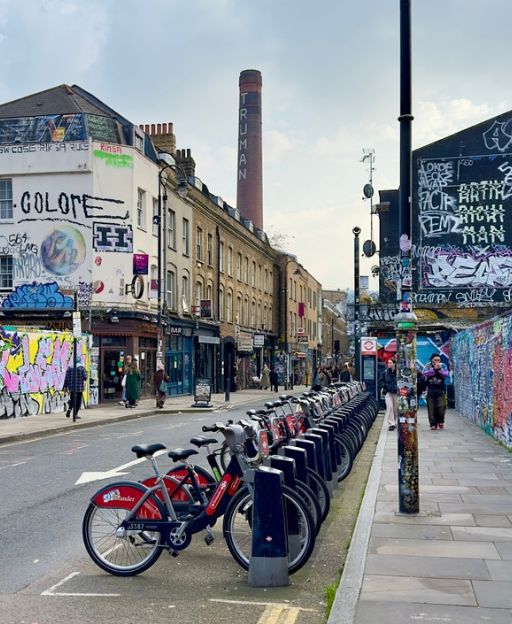
Shoreditch’s streets are one of the world’s great open-air galleries, and the good news for visitors is that admission is entirely free. The Brick Lane corridor — particularly the streets running off it, including Sclater Street, Hanbury Street, and Redchurch Street — is saturated with murals, paste-ups, stencils, and large-scale commissions from artists both local and international.
The work changes constantly; a mural you photograph on Tuesday may be painted over by Friday. That impermanence is part of the culture rather than a bug in the system. Artists whose work regularly appears in this area have included ROA, the Belgian artist famous for his enormous black-and-white animal murals, and work by internationally recognised names has graced the walls of Rivington Street and Shoreditch High Street itself.
If you want a structured introduction, there are walking tours specifically dedicated to the street art scene that depart regularly from the area — a local guide will give you context that you’d otherwise miss entirely. Alternatively, simply walk slowly and look up. You’ll rarely be disappointed.
Markets: Where Shoreditch Really Comes Alive
Markets are the social heartbeat of this part of London, and Shoreditch has some of the very best in the city.
Brick Lane Sunday Market
Brick Lane on a Sunday is a near-religious experience for lovers of vintage clothing, second-hand books, handmade jewellery, and street food. The market spreads across multiple sites including the Backyard Market and Boiler House Food Hall inside the Old Truman Brewery complex. Stalls run from around 10am to 5pm, and the entire street takes on a carnival atmosphere. Come hungry and come early — it gets wonderfully, maddeningly busy by midday.
Old Spitalfields Market
Located on Commercial Street just south of Shoreditch proper, Old Spitalfields Market is one of London’s finest covered markets. The Victorian market hall has been trading since 1638 in various forms, and today it hosts independent designers, vintage traders, artisan food producers, and antique dealers. It’s open throughout the week, though Thursdays and weekends see the fullest range of stalls. It’s the kind of place where you might find a beautifully made leather bag, a record you’ve been hunting for years, and an outstanding bánh mì, all within a twenty-minute wander.
Columbia Road Flower Market
Every Sunday morning, Columbia Road in nearby Bethnal Green transforms into an explosion of colour and scent. The Columbia Road Flower Market — which runs roughly from 8am to 3pm — is one of London’s most beloved traditions. Flower sellers bellow prices in proper East End market-trader style, and the narrow Victorian street becomes almost impassably, joyfully packed. Even if you can’t carry flowers home on a plane, it’s absolutely worth the short walk or bus ride from Shoreditch for the atmosphere alone. The independent shops lining the street sell ceramics, vintage homewares, and plants, and several excellent cafés open early to serve the Sunday morning crowd.
Boxpark Shoreditch
Opened in 2011 and built from repurposed shipping containers, Boxpark Shoreditch on Bethnal Green Road was the world’s first pop-up mall. It houses independent retailers, food traders, and event spaces, and it’s a good reference point for the neighbourhood’s creative, entrepreneurial energy. It’s particularly lively in the evenings, when it becomes a social hub with live music and sports screenings.
Food & Drink: Eating Brilliantly in Shoreditch
You will not go hungry in Shoreditch. You will also not go thirsty. The food scene here is one of the most diverse, exciting, and accessible in London.
Brick Lane Curry Houses
Brick Lane’s Bangladeshi curry houses are a London institution. The street is lined with restaurants — some better than others — serving rich, aromatic curries that reflect the neighbourhood’s large Bangladeshi community. Be prepared for touts outside restaurants offering deals; this is perfectly normal and entirely safe. Go for a classic chicken tikka masala, a lamb rogan josh, or the house special wherever takes your fancy. Prices are reasonable by London standards, and portions are generous.
Beigel Bake
At 159 Brick Lane sits one of London’s most iconic food institutions: Beigel Bake. It is open 24 hours a day, seven days a week, and it has been feeding East Londoners salt-beef bagels, cream cheese bagels, and freshly baked plaited loaves since 1974. A salt-beef bagel with mustard costs just a couple of pounds and is one of the finest things you will eat in this city. There is always a queue. It always moves quickly. Go at 2am after a night out for the full experience.
Dishoom
Dishoom has branches across London, but its Shoreditch location on Boundary Street captures the brand’s soul particularly well. Modelled on the Iranian cafés of old Bombay, Dishoom serves extraordinary breakfast bacon naan rolls, black dal that has been slow-cooked for 24 hours, and cocktails that are genuinely excellent. Book in advance — this place is perennially popular — or queue for a walk-in spot and enjoy a complimentary chai while you wait.
Street Food and Beyond
Beyond the landmarks, Redchurch Street has become one of Shoreditch’s most interesting dining strips, with independent restaurants and cafés that change regularly as the neighbourhood evolves. The food halls within the Old Truman Brewery on Brick Lane offer everything from Korean fried chicken to Ethiopian injera on weekends. Shoreditch rewards wandering and following your nose.
Nightlife: Bars, Clubs, and Late Nights
Shoreditch’s nightlife reputation is thoroughly deserved. The neighbourhood has been a hub for London nightlife since the 1990s and shows no signs of slowing down. Hoxton Square is a classic starting point, with the bars surrounding the square filling up from Thursday through to Sunday. The Hoxton hotel’s ground floor bar is a reliable and welcoming spot for cocktails without the attitude.
Cargo, a live music and club venue built into a series of railway arches on Rivington Street, has hosted everyone from emerging acts to established international names and remains one of Shoreditch’s most beloved venues. XOYO on Cowper Street is one of London’s most respected club nights, with a serious programme of electronic music. Rooftop bars come and go with the seasons, and Boxpark Shoreditch often hosts evening events worth checking out in advance.
One thing worth knowing: Shoreditch bars and clubs can be very busy on Friday and Saturday nights, and some venues operate door policies. Dressing reasonably well and arriving before midnight generally helps.
Getting There: Transport Options
- Shoreditch High Street Station — On the London Overground network, this is the most convenient station for the heart of the neighbourhood. It sits right on Shoreditch High Street, steps from Boxpark and a short walk from Brick Lane.
- Hoxton Station — Also on the Overground, one stop north of Shoreditch High Street, useful for Hoxton Square and the northern part of the neighbourhood.
- Old Street Station — Served by the Northern line Tube, this is the best Underground option and puts you right at Silicon Roundabout. A ten-to-fifteen-minute walk brings you into the thick of things.
- Liverpool Street Station — Served by the Central, Hammersmith & City, Circle, and Metropolitan Tube lines, as well as National Rail services. A pleasant ten-to-fifteen-minute walk up Bishopsgate and into Shoreditch High Street from here.
Oyster cards and contactless bank cards (including American cards with contactless functionality) are accepted on all public transport in London and will always give you the best fare. Tapping in and out correctly is important — do not forget to tap out at the end of your journey.
Practical Tips for US Visitors
- Best time to visit: Shoreditch is lively year-round, but Sunday mornings from spring through to early autumn are magical — Columbia Road is in bloom, Brick Lane is buzzing, and the weather is usually cooperative. Avoid arriving at peak weekend lunchtime if you dislike crowds.
- Safety: Shoreditch is a safe area for visitors. As with any busy urban neighbourhood, keep an eye on your belongings in crowded market areas and late at night. The area is well-policed and well-lit.
- How long to spend: A full day comfortably covers the main highlights. Two days allows you to take your time, explore further into Hoxton and Bethnal Green, and enjoy the nightlife without rushing.
- What it costs: Shoreditch spans the full spectrum. A salt-beef bagel from Beigel Bake costs a couple of pounds; a cocktail in a rooftop bar might cost £12–£15. Markets are free to browse. Budget roughly £50–£80 for a full day of food, drinks, and transport at a comfortable pace.
- Cash vs. card: The vast majority of businesses accept cards, including American Visa and Mastercard. Some smaller market stalls may prefer cash, so carrying a small amount is sensible.
- Tipping: Service charges are often added to restaurant bills in London — check before you tip on top. For exceptional service at a restaurant, 10–12.5% is standard. At bars, tipping is not expected but always appreciated.
Frequently Asked Questions
Is Shoreditch safe for tourists?
Yes, Shoreditch is generally very safe for visitors. Like any busy urban area, petty theft can occur in crowded spaces, so keep your phone in your pocket and your bag zipped in markets. The neighbourhood is well-trafficked throughout the day and into the night, and you are unlikely to have any trouble.
What is the best day to visit Shoreditch?
Sunday is widely considered the best day, as both the Brick Lane Sunday Market and Columbia Road Flower Market are in full swing. Old Spitalfields Market is also well-stocked on Sundays. That said, the area has energy every day of the week, and weekday visits are far less crowded.
How far is Shoreditch from central London attractions?
Shoreditch is very close to central London. From Liverpool Street — itself a major hub — you can walk into the heart of the neighbourhood in around ten minutes. From London Bridge it’s around fifteen minutes by Overground. It’s genuinely one of the easiest “alternative” neighbourhoods to visit from a central base.
Do I need to book restaurants in Shoreditch in advance?
For popular spots like Dishoom, advance booking is strongly recommended, particularly for dinner at weekends. Many of the curry houses on Brick Lane accept walk-ins readily. Street food and market vendors are entirely walk-up, of course.
What should I not miss in Shoreditch?
At minimum: a slow walk along Brick Lane and its surrounding streets to take in the street art; a salt-beef bagel from Beigel Bake; at least one browse through Old Spitalfields Market or the Brick Lane Sunday Market; and a drink as the evening draws in somewhere that catches your eye. Shoreditch rewards curiosity — let yourself wander.
🇬🇧 25 Hidden Gems of London Most Tourists Never Find
From secret riverside walks to hidden Victorian tunnels, centuries-old pubs to rooftop gardens with skyline views — our free guide reveals the London most visitors never discover. Join 3,000+ London lovers who get it free.
Get Your Free London Hidden Gems Guide →