
Walk through Spitalfields on a quiet morning and you are treading on three centuries of hidden history. The elegant Georgian terraces lining Fournier Street, the weaving rooms built into old townhouse attics, the grand Christ Church rising above the market — all of it tells the story of people who arrived in London with nothing but their skills, their faith, and their determination to survive.
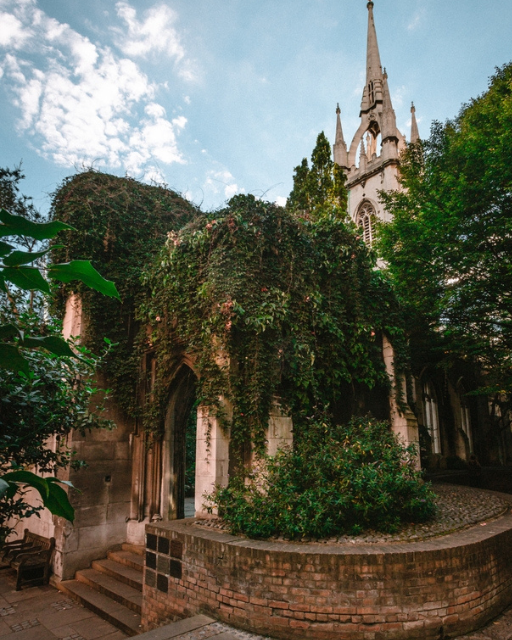
The Huguenots — French Protestant refugees who flooded into London from 1685 onwards — transformed East London in ways that still shape the area today. Their legacy runs through the architecture, the street names, the surnames of families who may not even know their ancestors crossed the Channel to escape persecution. If you have ever wondered about your family’s English or French roots, Spitalfields is a good place to start looking.
Who Were the Huguenots?
The Huguenots were French Protestants who followed the Calvinist branch of the Reformation. For much of the sixteenth and seventeenth centuries, they lived in an uneasy truce with the Catholic majority in France. The Edict of Nantes, signed by King Henry IV in 1598, granted them the right to worship freely and protected their civil liberties.
That protection lasted less than a century. In 1685, King Louis XIV signed the Edict of Fontainebleau, revoking the Edict of Nantes. Overnight, Protestantism became illegal in France. Huguenot churches were demolished, their pastors were imprisoned, and families faced the choice of converting to Catholicism or fleeing the country.
An estimated 200,000 Huguenots left France in the years that followed. Around 50,000 settled in Britain — in Canterbury, Southampton, Norwich, and above all in London. They were welcomed, cautiously, as skilled craftspeople at a time when England needed them. Many were silk weavers, goldsmiths, watchmakers, paper-makers, and glassblowers. They brought knowledge and technique that would shape British industry for generations.
Fleeing France — The Journey to London
The journey was dangerous. Fleeing France was illegal under Louis XIV, and those caught trying to escape faced imprisonment or forced labour in the galleys. Families disguised themselves, bribed border guards, and hid in the homes of sympathisers. They crossed the Channel in fishing boats, often leaving behind property, businesses, and relatives who had chosen conversion over exile.
Those who made it to England arrived in a country that was Protestant but hardly uniformly welcoming. The English had their own anxieties about foreign workers undercutting local labour. There were riots against Huguenot weavers in the 1690s in Spitalfields, when English silk workers feared losing their trade to the newcomers. Yet the Huguenots persisted, establishing communities that would endure for generations.
London received the largest share of the refugees. They settled in neighbourhoods just outside the old City walls — Spitalfields, Soho, Bermondsey, and Wandsworth. In Spitalfields, they built or rented houses along what are now Fournier Street, Elder Street, and Wilkes Street. Many of those houses still stand, and their architecture — elegant brick terraces with long weaving-room windows designed to flood workshops with natural light — tells you exactly what their first occupants did for a living.
🏛️ Free Guide: How to Trace Your English & British Ancestry
Step-by-step: GRO records, census 1841–1921, parish registers, the National Archives (Kew), London Metropolitan Archives, and planning a heritage trip. Completely free.
Get the Free Guide → Subscribe free at the guide page to receive weekly London heritage storiesSettling in Spitalfields — Building a New Community
The Huguenots were not simply scattered across London. They formed tight-knit communities, establishing their own churches, schools, and mutual aid societies. French became the language of commerce and worship in Spitalfields, and the neighbourhood acquired a distinct character that would last well into the eighteenth century.
Their churches were central to Huguenot life. They called them temples rather than churches, a Calvinist term that signalled their rejection of Catholic ecclesiastical hierarchy. Dozens of Huguenot temples operated in London at the peak of the community’s presence. One of the most significant stood on the corner of Fournier Street and Brick Lane — a building that has since served as a Methodist chapel, a Jewish synagogue, and today the Jamme Masjid mosque. It is one of the most quietly remarkable buildings in London: a single structure that has ministered to successive waves of immigrants across three centuries.
Christ Church Spitalfields, completed in 1729 to a design by Nicholas Hawksmoor, was not a Huguenot building — it was built by the Church of England — but it dominated the Huguenot neighbourhood and became intertwined with its story. The church has been beautifully restored and is well worth a visit for anyone exploring the area’s heritage.
The Silk Weavers of Spitalfields
The Huguenots transformed Britain’s silk industry. France had long been the dominant producer of luxury silk in Europe, and many of the refugee families who arrived in Spitalfields were master weavers from Lyon and Tours, the centres of French silk production. They brought their looms, their pattern books, and their knowledge of weaving techniques that could produce the elaborate brocades and damasks fashionable in courts across Europe.
The Spitalfields silk industry grew rapidly under Huguenot leadership. By the early eighteenth century, it employed thousands of workers and produced fabrics worn by English royalty and aristocracy. The attic weaving rooms of the Fournier Street houses were purpose-built — tall, narrow windows running the full width of the upper storey provided the even, indirect light that silk weaving required.
The silk trade also brought social tensions. Spitalfields weavers, both Huguenot and English, faced periodic crises as imported French silks undercut their prices. In the 1760s, a series of violent protests known as the Spitalfields Riots saw weavers attacking the looms of those who broke price agreements. The government responded with the Spitalfields Acts of 1773, which regulated wages in the trade — the first time the British government had intervened to set wages in any industry. It was a direct result of the Huguenot weaving community’s political organisation and persistence.
🏙️ Enjoying this? 3,000 London lovers get stories like this every week. Subscribe free →
Huguenot Surnames — Do You Have French Refugee Ancestry?
One of the most fascinating aspects of the Huguenot story is how deeply their descendants blended into English life. Within two or three generations, most Huguenot families were thoroughly assimilated — speaking English, attending Church of England services, and often bearing surnames that had been anglicised to sound less conspicuously French.
Some Huguenot surnames survived in their original French form: Bosanquet, Courtauld, Papillon, Minet, Dupré, Lefèvre, Perrin, Garrard, Castaing. Others were anglicised in ways that can now be difficult to trace: Beauchamp became Beecham, Beaumont remained Beaumont but was pronounced in an English way, and many names were simply translated or adapted to sound more familiar to English ears.
If you have English ancestry and your family tree includes any of the following surnames — or variations on them — there is a reasonable chance of Huguenot descent: Olive, Dupont, Renaud (Rennell or Rennold), Pascal, Caron, Martin (very common, but frequently Huguenot in London records), Laurent (Lawrence), Fontaine, Blanc (White or Blanche), and many more. The Huguenot Society of Great Britain and Ireland maintains detailed records and can help trace specific family lines.
In America, Huguenot ancestry is surprisingly common, particularly in the South and Mid-Atlantic states. Huguenot refugees settled in Virginia, South Carolina, New York, and Massachusetts in the late seventeenth and early eighteenth centuries. Families named Revere (Paul Revere’s grandfather was Apollos Rivoire, a Huguenot goldsmith), Bowdoin, Jay, and Faneuil all trace their American origins to French Protestant refugees. If your American family history leads back to these states in the colonial period, a visit to Spitalfields is more than sightseeing — it may be a homecoming.
Where to Trace Huguenot Heritage in London Today
Spitalfields is the obvious starting point. Walking the streets between Brick Lane and Bishopsgate, you encounter layer upon layer of immigrant history, with the Huguenot story at the foundation. The Dennis Severs’ House at 18 Folgate Street is an extraordinary experience — a preserved Georgian townhouse furnished as if its Huguenot silk-weaving occupants had just stepped out, created by the American artist Dennis Severs as an act of historical imagination. It opens for candlelit evening tours and is unlike anything else in London.
The Huguenot Museum opened in Rochester, Kent, in 2023 — the first museum in Britain dedicated entirely to the Huguenot story. It holds thousands of documents, objects, and family records. For London-based research, the Huguenot Society of Great Britain and Ireland holds its library at University College London, and its published records — transcriptions of Huguenot church registers — are an invaluable resource for family historians.
The French Protestant Church of London still holds services in Soho Square, the direct descendant of the original Huguenot congregations. It is one of the oldest French Protestant congregations outside France, and its archives contain baptismal, marriage, and burial records going back to the 1560s. For anyone with Huguenot ancestry, these records can be revelatory.
The Geffrye Museum — now the Museum of the Home — in Hoxton sits in almshouses built in 1714 for the poor of the Ironmongers’ Company, many of whom were Huguenot craftspeople. The building itself is a reminder of how quickly the Huguenots became woven into the fabric of London life and charity.
The Huguenot Legacy in London
The Huguenots did not simply survive in London — they thrived. Within a generation, families who had arrived penniless were producing goldsmiths who worked for the Crown, bankers who helped finance Britain’s wars, and textile manufacturers whose names became synonymous with quality. The Courtauld family, Huguenot silk merchants, eventually founded the Courtauld Institute of Art. The Garrard family became Crown Jewellers. Paul de Lamerie, son of a Huguenot refugee, became the finest silversmith working in eighteenth-century London.
Their contribution to the English language was quieter but real. Words like refugee itself entered English from French in the wake of the Revocation — before 1685, the word barely existed in English. Filigree, denim (originally serge de Nîmes), and various textile terms entered everyday use through the Huguenot weaving trade.
The Spitalfields they built is still, recognisably, the neighbourhood they created — though today it is Bangladeshi restaurants and vintage clothing shops rather than silk looms and French-speaking weavers. The bones of the Huguenot city are still there in the streets and the buildings, waiting for those who know how to read them.
Their story is, ultimately, about what happens when people are given the chance to rebuild after catastrophic loss. Persecuted and dispossessed, the Huguenots arrived in London with their skills and their faith and made something extraordinary. It is a story that London has told many times since, with different protagonists, and one that is still unfolding today.
Join 3,000+ London Lovers
Every week, get London’s hidden history, heritage walks, and stories from the city’s remarkable past — straight to your inbox.
Subscribe free — enter your email:
Already subscribed? Download your free London guide (PDF)
Love more? Join 64,000 Ireland lovers → · Join 43,000 Scotland lovers → · Join 30,000 Italy lovers →
Free forever · One email per week · Unsubscribe anytime