
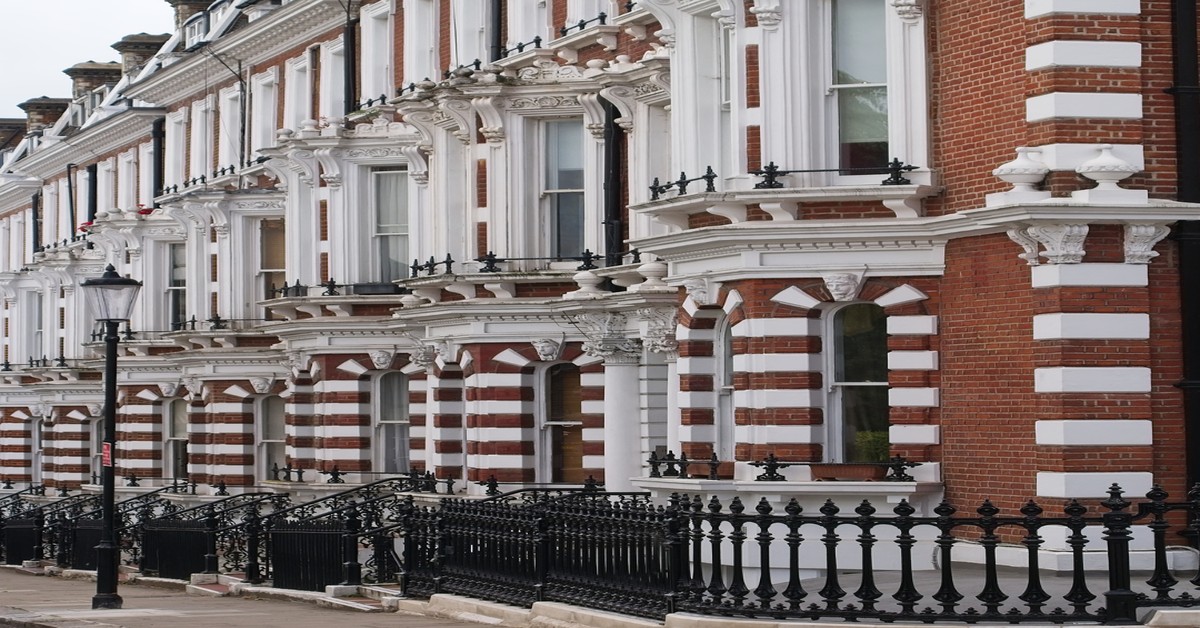
Walk down Fournier Street in Spitalfields today and something feels different. The Georgian terraced houses stand tall and symmetrical, their red brick and white stone worn smooth by three centuries of London air. The narrow lanes feel purposeful — built not by the City of London, but by people who needed to rebuild their lives from nothing.
They came from France. They came fleeing persecution. And they brought with them a skill so valuable that it transformed the East End of London for ever.
The story of the Huguenots of Spitalfields is one of the most extraordinary in London’s long history. It’s a story of faith, fear, and flight — and of what happens when skilled, determined people are given a place to plant roots.
Who Were the Huguenots?
The Huguenots were French Protestants — followers of the Reformed Christian faith established by John Calvin in the sixteenth century. In a fiercely Catholic France, they were a religious minority, and for much of the 1500s and 1600s, they faced violence, legal discrimination, and suspicion.
In 1598, King Henry IV of France issued the Edict of Nantes, granting Huguenots a degree of religious tolerance. For nearly a century, they lived in an uneasy peace — allowed to practise their faith, own property, and build their communities. Many became skilled artisans, merchants, and craftspeople. Their most celebrated trade was silk weaving, and French Huguenot silk was among the finest in Europe.
But the tolerance would not last. In 1685, King Louis XIV revoked the Edict of Nantes entirely. Protestantism was now illegal in France. Huguenots faced a stark choice: convert to Catholicism, go into hiding, or flee. An estimated 200,000 to 400,000 Huguenots left France in what became known as the Great Diaspora. They scattered across Protestant Europe — to the Dutch Republic, Prussia, Switzerland, and England.
🏛️ Free Guide: How to Trace Your English & British Ancestry
Step-by-step: GRO records, census 1841–1921, parish registers, the National Archives (Kew), London Metropolitan Archives, and planning a heritage trip. Completely free.
Get the Free Guide →
Subscribe free at the guide page to receive weekly London heritage stories
The Revocation That Changed Everything
When Louis XIV’s soldiers began enforcing the revocation in autumn 1685, the Huguenots moved fast. Many had been preparing for months, watching the political situation deteriorate. Thousands crossed into the Dutch Republic, then boarded ships for England.
England was a Protestant nation, and King Charles II (and later his successor James II) had already extended a formal welcome to Huguenot refugees. The Dutch Prince William of Orange, who would become William III of England in 1688, actively encouraged their settlement. England needed their skills.
By 1700, an estimated 50,000 Huguenots had settled in England. The largest concentration landed in London — specifically in the area just outside the old City walls, in a neighbourhood called Spitalfields.
A New Home in Spitalfields
Spitalfields takes its name from the priory hospital — or “spital” — of St Mary Spital, which stood here in the medieval period. By the late 1600s, it was a district on the edge of the City, still semi-rural, with fields and open spaces. It was also relatively affordable and unregulated — perfect for refugees arriving with little money but great ambition.
The Huguenots clustered here in their thousands. They brought their language (French was spoken openly on Brick Lane and Bishopsgate Street), their food, their Reformed churches, and their trade. They built terraced houses along Fournier Street, Elder Street, and Wilkes Street — houses with wide windows specifically designed to flood the upper floors with light for weaving.
They also brought their faith. The Huguenots established churches — called temples — across Spitalfields. One of these, on the corner of Fournier Street and Brick Lane, has had a remarkable history. Built as a Huguenot chapel in 1743, it later became a Methodist chapel, then a synagogue (serving the Jewish community who moved into Spitalfields in the 1880s and 1890s), and is today the Jamme Masjid mosque. Four faiths. One building. It is perhaps the most powerful symbol in London of the layered migrant history of the East End.
🏙️ Enjoying this? 3,000 London lovers get stories like this every week. Subscribe free →
The Silk Weavers of London
The Huguenots’ greatest contribution to London was the silk weaving industry. In France, the Huguenots had dominated silk production in Lyon and Tours. They brought their looms, their patterns, and their technical mastery to Spitalfields — and within a generation, London silk rivalled anything produced on the Continent.
The Spitalfields silk trade thrived through the eighteenth century. Master weavers — known as “silk throwsters” — lived in the grand Georgian townhouses of Fournier Street and Princelet Street, with their workshops and journeymen weavers in the floors above. The wide windows that survive on many of these houses today were not for aesthetics — they were functional, designed to maximise daylight for the intricate work of the loom.
The silks produced here were extraordinary. Brocades, velvets, damasks, and figured silks in rich colours flowed from Spitalfields to the court of King George III and into the wardrobes of the English aristocracy. At its peak in the 1760s and 1770s, the Spitalfields weaving trade employed around 15,000 workers in East London.
The industry eventually declined in the nineteenth century, unable to compete with mechanised production from the North of England, and undermined by the repeal of the Spitalfields Acts in 1824, which had protected London silk weavers from undercutting. But the legacy remained — in the architecture, in the street names, in the surnames of thousands of Londoners today.
The Architecture They Left Behind
The most direct way to experience Huguenot Spitalfields today is simply to walk the streets. Fournier Street, Elder Street, and Princelet Street contain some of the finest surviving early Georgian domestic architecture in London.
These houses were built between roughly 1715 and 1740, in the years when the Huguenot community had established itself and prospered. The details are extraordinary — ornate doorcases with carved Doric or Ionic pilasters, first-floor windows with elegant proportions, handsome ironwork railings. They were built to last, and by some miracle of London planning they have survived, while so much else was demolished or bombed in the Blitz.
Number 19 Princelet Street is among the most remarkable. Built in 1719, it later became home to a secret synagogue — a small prayer room installed by the Jewish community in 1869, hidden in a back extension. Today it operates as the Museum 19 Princelet Street, telling the story of Spitalfields as a place of refuge across five centuries. It opens for limited visitor days throughout the year.
Christ Church Spitalfields: A Monument in Stone
If you can only see one building in Spitalfields, make it Christ Church. Designed by Nicholas Hawksmoor and completed in 1729, it stands at the top of Commercial Street as one of the most powerful pieces of architecture in London — a vast, white Portland stone tower and portico that seems to push the sky back.
Christ Church was built under Queen Anne’s Act for Building Fifty New Churches, intended to serve the fast-growing population of East London — including the Huguenot community. Though the Huguenots worshipped in their own Reformed temples rather than Anglican churches, Christ Church became the spiritual anchor of the neighbourhood. Many Huguenot families are buried in the vaults and churchyard.
The church fell into disrepair in the twentieth century and was at one point scheduled for demolition. A remarkable restoration effort beginning in the 1970s saved it entirely. Today it is fully restored and regularly open to visitors. The interior — with its vast white columns, box pews, and extraordinary organ — is as impressive as the exterior. Allow at least an hour.
Tracing Your Huguenot Ancestry
If your family name is French in origin — or if you have English surnames like Bosanquet, Courtauld, Layard, Garrick, or Olivier — there is a real chance of Huguenot ancestry. Around two million people in Britain today are estimated to have Huguenot heritage, though many do not know it. The names were often anglicised over the generations: Dupont became Du Pont, then Dupont, then perhaps Dopoint. Boissy became Bussy, then Busey.
The Huguenot Society of Great Britain and Ireland, founded in 1885, maintains one of the most important archives for Huguenot genealogy in the world. Their collection, held at the Huguenot Library at University College London, includes baptismal registers from the London Huguenot churches, naturalisation records, and the Society’s own published volumes of transcribed registers going back to the 1680s.
The key resources for Huguenot family research are:
- The Huguenot Society publications — over 50 volumes of transcribed Huguenot church registers for London and across England, available in major libraries and partially online
- London Metropolitan Archives — holds original Huguenot church registers, many digitised and searchable via the City of London’s catalogue
- The National Archives (Kew) — naturalisation papers for Huguenot refugees who became British subjects from the 1680s onwards
- FindMyPast and Ancestry — both carry digitised Huguenot registers and can be cross-referenced with English civil and parish records
- The French Protestant Church of London in Soho Square — still an active congregation, with records stretching back to 1550
Even a first visit to the London Metropolitan Archives can be remarkably productive. Many Huguenot registers were kept in French until the early nineteenth century — which can be a surprise if you’re expecting English-language records — but the handwriting is generally clear and the entries follow a consistent format.
Walking Huguenot Spitalfields: A Heritage Route
A self-guided walk through Huguenot Spitalfields takes about 90 minutes at a gentle pace. Start at Liverpool Street station, which puts you on the edge of the district.
From the station, walk east along Bishopsgate and turn right into Folgate Street. This quiet lane gives you an immediate sense of how different Spitalfields feels from the City of London — which is literally yards away, but feels like another century. On the corner of Elder Street, look up at the rooflines of the early Georgian terraces. These are among the oldest surviving domestic buildings in London’s East End.
Continue to Fournier Street, which runs from Commercial Street to Brick Lane. Every building on the north side of Fournier Street between Commercial Street and Wilkes Street dates from the 1720s to 1740s. The master silk weavers lived here. The house at number 4 Fournier Street still has its original staircase and panelling. At number 2, the old Huguenot weaving attic windows on the upper floors are still clearly visible.
At the junction of Fournier Street and Brick Lane, pause outside the building that has been a Huguenot chapel, a Methodist chapel, a synagogue, and is now a mosque. It is open to the public outside prayer times, and the layers of the building’s history are visible in every detail — the original round-headed windows of the 1743 chapel, the Jewish inscription carved above the door in the nineteenth century, and the minaret added in 1976.
Finish at Christ Church on Commercial Street. Sit in the churchyard for a moment if the weather allows. This is where the Huguenot community of Spitalfields came to rest, and where the memory of three hundred years of migration, craft, and faith is quietly held in the stone around you.
Frequently Asked Questions
What is the best way to get to Spitalfields from central London?
Liverpool Street station (served by the Central, Circle, Hammersmith & City, and Metropolitan lines, plus National Rail) is the closest tube stop to Spitalfields, about a five-minute walk. Alternatively, Shoreditch High Street on the Overground puts you at the north end of Brick Lane. Most visitors arrive at Liverpool Street.
Is it possible to visit the buildings on Fournier Street and Princelet Street?
Most of the Georgian terraced houses on Fournier Street and Princelet Street are private residences or commercial premises and cannot be entered. However, 19 Princelet Street (the secret synagogue house) opens for scheduled public visits — check their website for dates. Christ Church Spitalfields is open most days for visitors. The mosque at the corner of Fournier Street and Brick Lane is open outside prayer times.
How do I know if I have Huguenot ancestry?
French-origin surnames are the most common indicator, but many Huguenot surnames were anglicised over generations. The Huguenot Society of Great Britain and Ireland maintains a published list of known Huguenot surnames and their variants. If your family has English roots going back to the early 1700s in London, East Anglia, Southampton, or Canterbury — all areas of significant Huguenot settlement — it is worth searching the Huguenot Society’s registers. The London Metropolitan Archives holds the original baptismal records for the London Huguenot churches.
Join 3,000+ London Lovers
Every week, get London’s hidden history, heritage walks, and stories from the city’s remarkable past — straight to your inbox.
Subscribe free — enter your email:
Already subscribed? Download your free London guide (PDF)
Love more? Join 64,000 Ireland lovers → · Join 43,000 Scotland lovers → · Join 30,000 Italy lovers →
Free forever · One email per week · Unsubscribe anytime
Subscribe Free