
Most people associate Twickenham with English rugby. But standing on the riverbank, looking across a narrow stretch of the Thames, you can see a small, leafy island where something far louder once happened. Before the stadium. Before the record deals. Before anyone outside London knew their names — the Rolling Stones, The Who, and Eric Clapton were playing to packed crowds on a creaking wooden dance floor here, in a crumbling Victorian hotel on an island named after a pie.
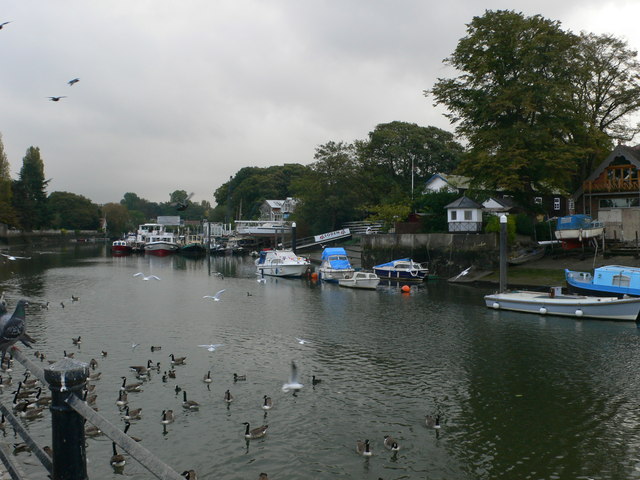
Eel Pie Island sits in the Thames near Twickenham, barely six hundred metres long and connected to the riverbank by a narrow footbridge. Today it is a private community of around fifty homes and artists’ studios. But in the early 1960s, this small island was the most electric music venue in Britain — a place that shaped the sound of a generation and then quietly disappeared from the history books.
An Island Named After a Victorian Dish
Before it had anything to do with rock music, Eel Pie Island had a far more modest reputation. Victorian Londoners would row out from Twickenham on summer afternoons, drawn by the promise of river air and the island’s famous speciality: eel pies.
The eels were caught straight from the Thames and baked into hot pastry cases, sold to day-trippers at the riverside tavern. In an era when working Londoners had little leisure time and less money to spend on it, a boat trip to an island with hot food felt like a genuine treat. The name stuck long after the pies had gone.
A hotel was built in the early nineteenth century to capitalise on the island’s popularity. The Eel Pie Island Hotel became a destination in its own right — a grand ballroom, a terrace overlooking the river, and enough distance from the city to feel like an escape. It attracted a respectable crowd for decades. Then the decades passed, the clientele changed, and the hotel began to fade.
The Ballroom That Changed Everything
By the 1950s, the hotel was ageing and slightly shabby. But the ballroom was still standing — and that was enough. Jazz bands found their way to the island first, playing to audiences who had discovered American music through records brought back from the United States. The island’s slightly ramshackle atmosphere suited the music perfectly.
Then rhythm and blues arrived. Arthur Chisnall, who ran the venue in the early 1960s, had a sharp instinct for what young Londoners were hungry to hear. He began booking R&B acts — raw, American-influenced music played by British bands who had spent years learning from imported records. The crowds came from across the city. The ballroom filled up fast.
There was nothing glamorous about the venue. The floor was uneven. The sound system was basic. There was no proper backstage area. But the atmosphere — the noise, the energy, the sense that something was genuinely happening — was impossible to replicate anywhere else in Britain. Eel Pie Island had become, almost by accident, the centre of the British blues scene.
The Names That Played in the Dark
The Rolling Stones played Eel Pie Island in their early years, before their first record deal, at a time when they were still a band trying to convince promoters and audiences that British musicians could play the blues. They could. And Eel Pie Island was one of the places they proved it.
The Who — then performing under the name The High Numbers — packed the ballroom with teenagers who had nowhere else on a weeknight to hear music this loud and this honest. Eric Clapton played there too. Long John Baldry, one of the most important figures in British R&B, was a regular. Rod Stewart, early in his career, performed on the island before many people knew his name.
For a certain generation of young Londoners, making the journey to Twickenham was a statement of intent. It meant you were serious. It meant you understood what was happening. The island felt separate from the city, separate from convention, separate from the music industry that had not yet caught up with what was being played on that creaking dance floor.
If you want to understand how British rock came to dominate the world in the 1960s, Eel Pie Island is part of the answer. It was a rehearsal space, a proving ground, and a community all at once — hidden on a small Thames island where nobody in authority was paying much attention. You can read more about planning a visit to discover London’s hidden corners in our complete London planning guide.
The Fire That Ended an Era
The hotel closed in 1967. The music stopped, the crowds stopped coming, and the building was abandoned. But the island had attracted a different kind of resident by then — artists, sculptors, musicians who had fallen in love with its oddness and its privacy. They moved into the empty hotel and turned it into an informal commune.
In 1971, fire destroyed the hotel. The building that had witnessed the birth of British rock, where thousands of young Londoners had stood in the dark listening to music that would change everything, was gone. What remained was the island itself: the willow trees, the river, the footbridge, and the stubborn community that had taken root in the ruins.
The fire felt like the end. But Eel Pie Island did not disappear — it transformed. The artists stayed. New residents arrived. Studios replaced the ballroom. Slowly, quietly, the island became what it is today: a private creative community in the middle of the Thames, invisible to most of the city it helped to shape.
What the Island Looks Like Today
You cannot simply walk onto Eel Pie Island. The island is private, and access is restricted to residents and their guests. But you can stand at the entrance to the footbridge on the Twickenham embankment and look across. You can see the studios, the gardens, the boats moored along the bank. On a quiet afternoon, it looks like the most peaceful place in London.
Twickenham itself is worth the trip. The riverside walk stretches for miles in both directions, past historic pubs and boathouses and the kind of slow-moving scenery that London rarely offers. The journey from central London takes about thirty minutes by train from Waterloo. It is the sort of afternoon that the city doesn’t advertise but rewards you richly for finding. Twickenham also fits naturally into a longer south-west London day, which you can plan around our 5-day London itinerary guide.
Once a year, the island opens briefly to the public for an arts open day, when residents’ studios welcome visitors. It is one of the stranger and more rewarding afternoons you can spend in London — a glimpse into a world that most of the city has forgotten existed. London has many such surprises hidden in plain sight, much like the quiet canal district that most visitors never find.
Frequently Asked Questions About Eel Pie Island
Can visitors go onto Eel Pie Island?
The island is private and not open to the public most of the year. However, you can walk to the entrance of the footbridge from the Twickenham embankment and view the island from the riverside path. The island occasionally opens for public art open days, typically held once a year, when visitors can explore the studios and meet residents.
How do I get to Twickenham to visit Eel Pie Island?
Twickenham is roughly thirty minutes from London Waterloo station by South Western Railway train. From Twickenham station, the river embankment and the footbridge to the island are about a ten-minute walk. The riverside area is well signposted and easy to navigate.
What bands played at the Eel Pie Island Hotel?
The Rolling Stones, The Who (then The High Numbers), Eric Clapton, Long John Baldry, and Rod Stewart all performed at the Eel Pie Island Hotel during the early 1960s. The venue was central to the British rhythm and blues scene before any of these artists had achieved widespread fame.
Is there anything else to do near Eel Pie Island?
The Twickenham riverside walk offers some of the most scenic stretches of the Thames in Greater London. Nearby attractions include Ham House (a Stuart mansion managed by the National Trust), Marble Hill House, and a string of excellent traditional pubs along the embankment. It makes for a relaxed half-day or full-day trip from central London.
🇬🇧 25 Hidden Gems of London Most Tourists Never Find
From secret riverside walks to hidden Victorian tunnels, centuries-old pubs to rooftop gardens with skyline views — our free guide reveals the London most visitors never discover. Join 3,000+ London lovers who get it free.
Get Your Free London Hidden Gems Guide →Love more? Join 65,000 Ireland lovers → · Join 43,000 Scotland lovers → · Join 30,000 Italy lovers →
Free forever · Unsubscribe anytime
Subscribe Free