
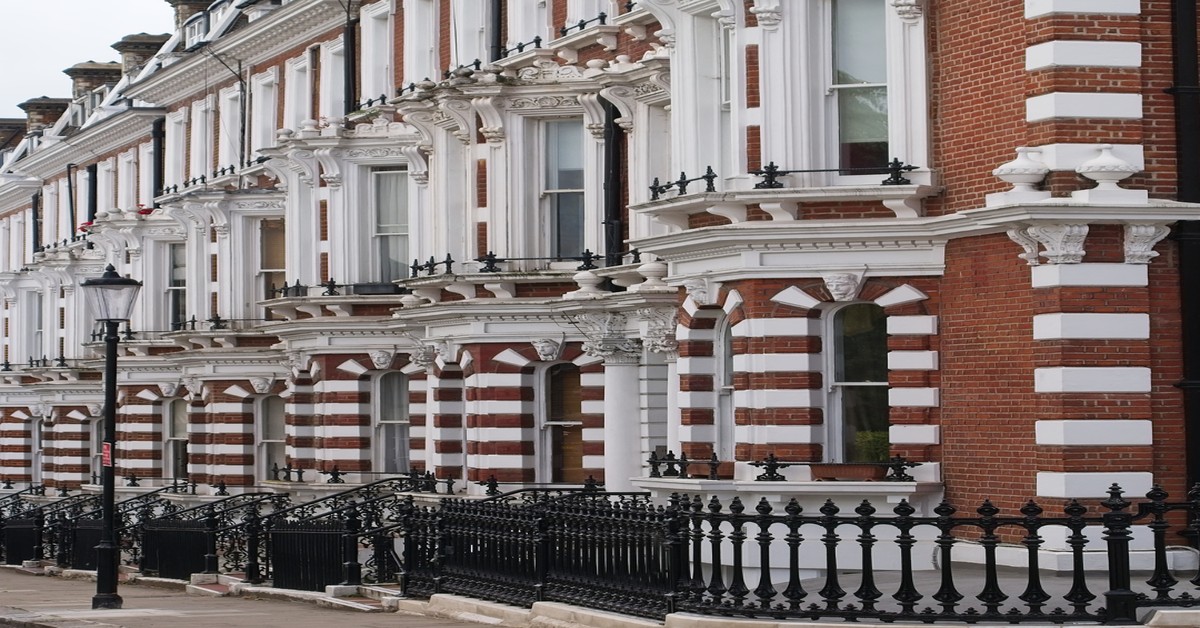
Walk along almost any street in Kensington, Islington, or Hackney and you will see them — long rows of red-brick houses with white plaster detail, iron railings, and tall sash windows. They are so familiar they have become part of London’s wallpaper. Most visitors walk past without a second thought. But every one of those terraces tells a story about one of the most dramatic periods in human history.
Victorian London — the city that existed between Queen Victoria’s coronation in 1837 and her death in 1901 — was the most turbulent, innovative, and contradictory city on earth. It was a place of staggering wealth and desperate poverty, of world-changing invention and catastrophic public health disasters. Understanding Victorian London changes the way you see the city entirely.
This guide takes you behind the famous landmarks and into the real story of how modern London was built.
🏙️ Enjoying this? 3,000 London lovers get stories like this every week. Subscribe free →
The City That Reinvented Itself
When Victoria came to the throne, London was already the largest city in the world. But it was also filthy, overcrowded, and dangerous. Around two million people lived in conditions that are almost impossible to imagine today. Sewage ran in open channels down the middle of streets. Drinking water came from the Thames, which was also the city’s main sewer. Cholera killed tens of thousands in repeated outbreaks through the 1830s and 1840s.
Yet within six decades, London had transformed itself into the most modern city on the planet. It built the world’s first underground railway, constructed hundreds of miles of brick sewers beneath its streets, erected thousands of new homes, and hosted an exhibition that changed how the world thought about technology and trade.
The Victorian era did not just shape London’s skyline. It built the city you walk through today.
The Great Stink of 1858
In the summer of 1858, something happened that forced the government to act. A prolonged heatwave caused the Thames to warm to an unusual temperature. The river, already thick with untreated sewage from millions of Londoners, began to produce a smell so overpowering that it became known simply as the Great Stink.
Members of Parliament, whose new building at Westminster sat directly on the riverbank, were forced to hang curtains soaked in lime chloride across the windows just to be able to work. Even then, some committees had to abandon their meetings entirely. The problem could not be ignored any longer.
Parliament passed emergency funding within eighteen days of the Stink beginning. The man who would spend the next decade solving the problem was a civil engineer named Joseph Bazalgette. What he built beneath London’s streets is one of the greatest engineering achievements of the nineteenth century — and most Londoners today have no idea it exists.
Joseph Bazalgette and the Sewers Beneath Your Feet
Joseph Bazalgette designed a network of interconnected sewers that would intercept London’s waste before it reached the Thames and carry it downstream to treatment works far east of the city. The scale of the project was staggering. Teams of workers dug deep beneath London’s streets — often by hand, working in cramped tunnels by the light of candles and oil lamps.
The main sewers were lined with over 300 million hand-made bricks. Bazalgette insisted on using Portland cement to bind them, a relatively new material at the time. He famously calculated the capacity the sewers would need and then doubled it, reportedly saying: “Well, we’re only going to do this once and there’s always the unforeseen.”
That decision saved London from sewage crises as the city’s population continued to grow through the late Victorian period and beyond. The core of Bazalgette’s sewer network is still in use today. When you walk along the Victoria Embankment beside the Thames, you are walking on top of one of his main interceptor sewers. The embankment itself was built specifically to house it.
Bazalgette also designed several of London’s main roads, bridges, and parks during the same period. He reshaped the physical city more than almost any other individual in its history — yet his name is barely known outside engineering circles.
🏙️ Enjoying this? 3,000 London lovers get stories like this every week. Subscribe free →
The Great Exhibition of 1851: London on the World Stage
Seven years before the Great Stink, London had presented an entirely different face to the world. In May 1851, an extraordinary glass and iron building rose in Hyde Park. It was nicknamed the Crystal Palace, and it housed the Great Exhibition of the Works of Industry of All Nations — the world’s first international trade fair.
More than six million people visited the exhibition in just over five months. They came to see steam engines, scientific instruments, textiles, furniture, and inventions from dozens of countries. The profits from the exhibition were used to purchase land in South Kensington, which became the home of the Victoria and Albert Museum, the Natural History Museum, and the Science Museum — the cluster of cultural institutions still there today.
The Crystal Palace itself was dismantled after the exhibition and re-erected in a south London park, where it burned down in 1936. But its legacy remains in the institutions it funded and in the neighbourhood of South Kensington, which locals sometimes call Albertopolis in honour of Prince Albert, who championed the whole idea.
Who Built Those Victorian Terraces?
As London’s population grew through the Victorian era, the city expanded outward at a remarkable pace. Developers bought up fields and market gardens on the edges of the built-up area and covered them with streets of terraced houses. These were not built for the wealthy. They were built for London’s vast middle class — clerks, shopkeepers, teachers, minor civil servants, and skilled tradespeople.
The houses followed a pattern that had been refined over decades. A narrow frontage with a small front garden behind iron railings. A basement kitchen. Ground floor parlour and dining room. Bedrooms above. A back yard, sometimes with a small outbuilding. Simple to build in large numbers, but designed with enough ornamental detail — the plaster cornices, the decorative brickwork, the sash windows — to give each terrace a sense of respectability.
The streets were often named after the landowners who sold the fields, or after battles and generals of the day. Walk through Islington or Hackney or Battersea and you will find streets named after Crimean War battles, Victorian politicians, and long-forgotten local farmers. Each name is a small piece of frozen history.
The Underground and the Streets Beneath the Streets
Victorian London did not just build above ground and below it. It also built a network of tunnels for passengers. In January 1863, the Metropolitan Railway opened the world’s first underground passenger railway, running from Paddington to Farringdon. Steam locomotives pulled the trains through brick-lined tunnels beneath the city streets.
Passengers reportedly found the experience exhilarating rather than terrifying — though the smoke and steam that filled the tunnels made for a thick atmosphere. The network expanded rapidly through the 1860s and 1870s, eventually forming the Inner Circle that connected the main London termini. Today’s Circle line still runs largely on the routes first laid down in the Victorian era.
When you board a tube train at Baker Street or King’s Cross today, you are travelling through tunnels that were built more than 160 years ago. The brick arches above your head are Victorian workmanship. The engineering that made them possible is the same engineering tradition that produced Bazalgette’s sewers and Brunel’s bridges — a Victorian confidence in the power of brick, iron, and human ingenuity.
Where to See Victorian London Today
Victorian London is not hidden behind museum glass. It is the city you walk through every day. But knowing what to look for makes the experience far richer.
The Victoria Embankment — Walk the embankment from Westminster Bridge to Blackfriars and you are walking across Bazalgette’s main sewer, alongside the pumping station he designed, past the memorial to his achievement that stands near Hungerford Bridge. Read the inscription on the plaque and remember what lies beneath your feet.
Albertopolis, South Kensington — The Victoria and Albert Museum, the Natural History Museum, and the Science Museum all stand on land bought with profits from the 1851 Great Exhibition. Entry to all three is free. They are among the greatest museums in the world, and their existence is a direct result of that extraordinary summer in Hyde Park.
Victorian terraces in Islington and Hackney — Walk the residential streets of these inner London boroughs and you will see intact Victorian terraces largely unchanged from the 1870s and 1880s. Look at the detail in the brickwork, the cast iron railings, and the decorative tiles around the doorways. Each one was built for a specific family with a specific set of expectations about how they wanted to live.
The London Metropolitan Archives — If you have Victorian family connections to London, the Metropolitan Archives in Clerkenwell holds vast records of births, deaths, marriages, and census returns from the Victorian era. Many records are now available online, but a visit to the archives is an experience in itself.
Tracing Your Victorian London Ancestry
Many American visitors to London have Victorian-era connections. The mid to late nineteenth century saw enormous waves of emigration from Britain — to the United States, Canada, Australia, and South Africa. If your family includes ancestors who left Britain between roughly 1840 and 1910, there is a strong chance some of that story begins in a Victorian London street.
The 1881 census is the most complete Victorian census available online. Every person in every household across England and Wales was recorded — name, age, occupation, birthplace, and relationship to the head of household. You can search it for free on the Family Search website. Find a London ancestor in that census and you will know exactly which street they lived on and what they did for a living.
From there, you can search the Victorian street on old Ordnance Survey maps (available free on the National Library of Scotland website) and in many cases find photographs of the same street from the 1880s or 1890s. In some cases, the houses your ancestor lived in are still standing. Walking a Victorian London street knowing that your great-great-grandparent once walked the same pavement is one of the most powerful experiences travel can offer.
🇬🇧 25 Hidden Gems of London Most Tourists Never Find
From secret riverside walks to hidden Victorian tunnels, centuries-old pubs to rooftop gardens with skyline views — our free guide reveals the London most visitors never discover. Join 3,000+ London lovers who get it free.
Get Your Free London Hidden Gems Guide →Already subscribed? Download your free London guide (PDF)
Love more? Join 64,000 Ireland lovers → · Join 43,000 Scotland lovers → · Join 30,000 Italy lovers →
Free forever · One email per week · Unsubscribe anytime
Subscribe Free