
It was six in the morning on a summer’s day in 1802. William Wordsworth was on a coach heading out of London, and he had every reason to be relieved. He loathed the city. It was noisy, overcrowded, and full of what he once called “the weight of too much liberty.” But as the coach rolled onto Westminster Bridge, something stopped him cold.
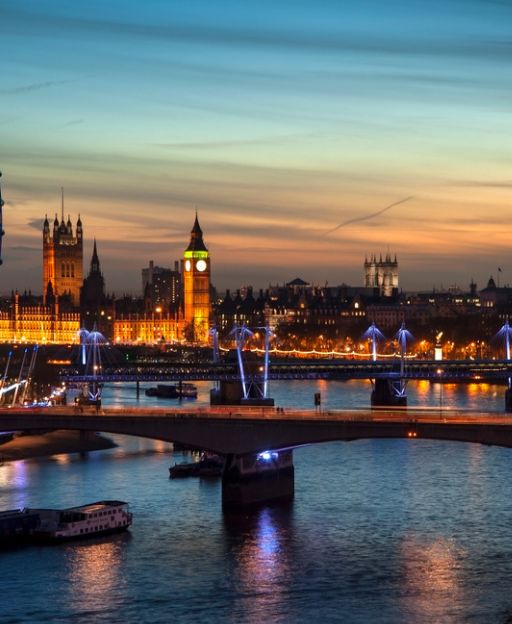
What he saw that morning became one of the most celebrated poems in the English language — and one of the most surprising things any great writer ever said about London.
The Poet Who Despised Cities
William Wordsworth was a man of mountains. He grew up in the Lake District, walked thousands of miles across the English countryside, and built his entire literary reputation on the power of wild, open places.
London was everything he stood against. He called it spiritually deadening, morally corrupting, and physically exhausting. He visited as rarely as he could, endured it when he had to, and left as quickly as possible.
In the summer of 1802, he was in London only because he needed to be. He and his sister Dorothy were travelling to France to deal with personal matters. They had booked the early coach from London. Most of the city was still asleep when they climbed aboard.
They crossed Westminster Bridge just as the sun was beginning to rise. And Wordsworth, the man who hated cities, could not look away.
What He Saw That Morning
Dorothy Wordsworth kept a diary. Her entry from that morning is brief and direct: “It was a beautiful morning. The city, St Paul’s, with the river, and a multitude of little boats, made a most beautiful sight as we crossed Westminster Bridge.”
Her brother said more. He wrote a sonnet. Fourteen lines. Not a word wasted.
“Earth has not anything to show more fair,” he began. He went on to describe ships, towers, domes, theatres, and temples lying open to the fields and sky. He wrote that the air was smokeless and bright. That the river moved gently at its own pace. That even the houses seemed to be asleep. And then, in the closing lines, he admitted something extraordinary:
“Dear God! the very houses seem asleep; / And all that mighty heart is lying still!”
The city he had always dismissed as a soulless machine had, for one quiet morning, revealed its heart to him. He was astonished by it.
Why the Hour Made All the Difference
The key was the time of day. London in the early morning of 1802 was a different world. The coal fires that would later fill the air with soot had not yet been lit. The factories were silent. The thousands of horses, carts, hawkers, and labourers who would crowd the streets by mid-morning had not yet appeared.
Wordsworth saw London stripped of its noise and grime. The air was clean — the poem specifically notes the “smokeless air.” The river caught the early light. St Paul’s dome rose clear against the sky.
This version of London existed every day, for perhaps an hour or two. Almost nobody saw it, because almost nobody was awake. Wordsworth happened to be passing through at exactly the right moment, with exactly the right frame of mind.
His sister saw it too. But she had the good sense to write it down plainly. Her brother turned it into a sonnet that has outlasted them both by more than two centuries.
Enjoying this? 3,000+ London lovers get stories like this every week. Subscribe free →
Reading the Poem Today
“Composed Upon Westminster Bridge, September 3, 1802” is fourteen lines long. Wordsworth misdated it — the actual crossing happened on 31 July — but the poem has been known by that title ever since.
It is a Petrarchan sonnet: eight lines setting up a scene, six lines drawing a conclusion. The first eight describe what Wordsworth saw. The final six turn inward, to the feeling the sight produced.
What makes it remarkable is who wrote it. Wordsworth had built his career on the idea that nature — rivers, hills, moorland — was the source of all true feeling. A city was the opposite of that. And yet here he was, writing about a city in exactly the terms he reserved for the natural world.
The Thames, he wrote, “glideth at his own sweet will.” A river described in the language of freedom and of living things — flowing through the heart of a city he had always seen as the enemy of both. If you want to understand why the poem matters, that line is the key.
If you are planning your first visit to London and want to understand the city before you arrive, our London trip planning guide covers everything you need to know about where to go and what to see.
How to Stand Where Wordsworth Stood
Westminster Bridge is not difficult to find. It connects Westminster on the north bank to Lambeth on the south, with the Houses of Parliament on one side and St Thomas’ Hospital on the other.
The current bridge was built in 1862 — Wordsworth crossed an older stone structure — but the view is recognisably the same. St Paul’s Cathedral still rises above the skyline to the east. The Thames still bends through the city. The morning light still falls across the water in the same direction.
If you want to catch something of what the poet experienced, timing matters more than anything else. Cross the bridge before 7am on a clear summer morning. Stand near the middle. Face upstream toward Lambeth Bridge. Watch the water and the city settle into the day.
For another angle on London’s literary history and the streets that have inspired writers for centuries, see our piece on the London that Sherlock Holmes walked through — much of it still intact today.
The City He Could Not Quite Dismiss
Wordsworth never became a London poet. He returned to the Lake District and spent the rest of his long life there. He became Poet Laureate in 1843, aged 73, and died seven years later without writing another poem about the city he had briefly loved.
But the sonnet survived. It is quoted in speeches, studied in schools, and printed on postcards sold a few hundred metres from the bridge where it was conceived. Every year, thousands of visitors cross Westminster Bridge without knowing they are following in the footsteps of one of England’s greatest poets.
The bridge is still there. The river still moves at its own pace. The morning light still comes from the east. Some things, in London, remain stubbornly themselves.
What is Wordsworth’s poem about Westminster Bridge?
“Composed Upon Westminster Bridge, September 3, 1802” is a fourteen-line sonnet describing London at dawn. Wordsworth portrays the city as breathtakingly beautiful in the early morning quiet, before the day’s noise and smoke begin. It is widely considered one of the finest sonnets in English literature.
When is the best time to visit Westminster Bridge?
Early morning, before 7am, on a clear summer day. The light is at its finest, the crowds have not yet arrived, and you may catch something of the stillness Wordsworth described. Sunday mornings in June or July are particularly good.
Did Wordsworth actually cross Westminster Bridge?
Yes. He and his sister Dorothy crossed it on a coach on 31 July 1802, heading for France in the early morning. Dorothy recorded it in her journal the same day. Wordsworth’s poem is dated September 3, which is believed to be an error — he likely composed or revised it shortly after the crossing.
What can you see from Westminster Bridge today?
On a clear day you can see the Houses of Parliament and the Elizabeth Tower (commonly called Big Ben) immediately to the north, St Paul’s Cathedral to the east along the Thames, and the London Eye to the south-east. The view east toward the City of London is particularly striking at dawn or dusk.
🇬🇧 25 Hidden Gems of London Most Tourists Never Find
From secret riverside walks to hidden Victorian tunnels, centuries-old pubs to rooftop gardens with skyline views — our free guide reveals the London most visitors never discover. Join 3,000+ London lovers who get it free.
Get Your Free London Hidden Gems Guide →📲 Know someone who’d love this? Share on WhatsApp →
Love more? Join 65,000 Ireland lovers → · Join 43,000 Scotland lovers → · Join 29,000+ Italy lovers →
Free forever · · Unsubscribe anytime
Subscribe Free