
Walk down Eaton Square or stroll along Sloane Street and you might think you’re admiring some of the finest privately owned real estate in the world. You’d be right — but the private owner is probably not who you imagine. Much of what you’re looking at belongs to a single family. And it has for more than 300 years.
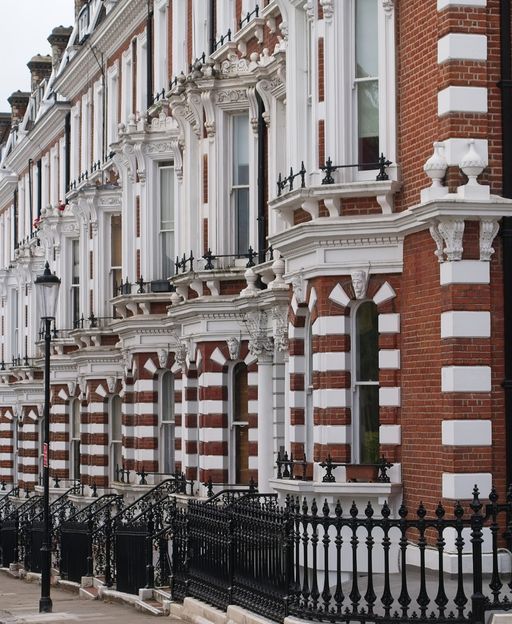
London has a secret most visitors never discover. Beneath the glossy facades and black iron railings of its most beautiful streets lies a centuries-old system of land ownership unlike almost anything else in the world. A handful of aristocratic families — many of them titles you’d recognise from history books — still quietly own enormous swathes of central London. They are the invisible landlords of one of the most expensive cities on earth.
A 12-Year-Old Girl Who Changed London Forever
The story begins in 1677, with a 12-year-old girl named Mary Davies. She was the heiress to a marshy, undeveloped patch of land north of the village of Chelsea. Her guardians arranged her marriage to Sir Thomas Grosvenor, a wealthy baronet from Cheshire.
🏙️ Love London?
3,000 London lovers get hidden history, street-level stories, and local secrets every week. Free, forever — no spam, unsubscribe any time.
Subscribe free — enter your email:
The land Mary brought as her dowry seemed unremarkable at the time. Swampy fields used for grazing cattle. But as London expanded westward through the 18th and 19th centuries, that patch of ground became something extraordinary. It became Mayfair. It became Belgravia. It became some of the most expensive real estate on the planet.
Mary Davies suffered severe mental illness in later life and spent her final years in considerable distress. She could not have known what that childhood marriage had set in motion. Today, the Grosvenor family — now headed by the Duke of Westminster — is estimated to be worth well over £10 billion. Their London estate alone spans roughly 300 acres in the heart of the capital.
How One Family Shaped the Look of an Entire District
The Grosvenor Estate did not just own the land. It decided what was built on it, how it should look, and how it must be maintained. This is the key to understanding why Belgravia and Mayfair look the way they do.
When the estate began developing its land in the early 18th century, it hired architects to create a unified vision. Grand stucco terraces with matching facades. Communal garden squares locked behind iron railings. Wide streets laid out in ordered grids. Nothing built without the estate’s approval.
That control has never fully relaxed. Even today, tenants on the Grosvenor Estate must maintain the exterior of their properties to strict standards. Certain businesses are not permitted. The estate decides what can be changed and what cannot. The result is a district that feels like a private village inside a city — because in many ways, it still is one.
The Other Great Families of London
The Grosvenors are not alone. London’s central districts were carved up between a relatively small number of aristocratic families during the great building booms of the 18th and 19th centuries. Their descendants still hold much of that land today.
The Cadogan family owns most of Chelsea. The street names say it all: Cadogan Square, Cadogan Gardens, Sloane Street. They inherited their estate from Sir Hans Sloane — the physician and collector whose curiosity cabinet eventually became the British Museum. Sloane’s land passed to the Cadogans through marriage, and they have held it ever since.
The Howard de Walden Estate controls most of Marylebone, including the famous Harley Street medical district. Walk along Welbeck Street or Wigmore Street and you are walking through land managed by a single family office. The Bedford Estate historically shaped Bloomsbury — Russell Square, Woburn Square, and the streets around the British Museum all bear the marks of the Duke of Bedford’s 18th-century development plans.
These are not absentee landlords living in distant castles. Their estate offices sit in the very districts they own. They manage planning applications, negotiate leases, and set architectural standards. The most beautiful parts of London look the way they do largely because of decisions made in these estate offices.
Why Your Doorstep May Not Be Yours
Here is where the system becomes genuinely strange to anyone from North America. In England, owning a house does not always mean owning the land beneath it. Leasehold ownership means you purchase the right to occupy a property for a fixed number of years — sometimes 99, sometimes 125, sometimes 999. When the lease expires, ownership of the property reverts to the freeholder. In the great London estates, that freeholder is the Duke of Westminster, or the Cadogan family, or one of the others.
This system created some of the most expensive homes in the world where the buyer technically never owns the ground they stand on. Flats in Belgravia and Mayfair have sold for £20 million or more on short leaseholds. The land beneath them still belongs to a family whose fortune began with a 17th-century marriage arrangement.
The leasehold system has been controversial for decades and is currently being reformed by Parliament. But for now, the great estates remain intact. Their grip on central London — and on its character — has barely loosened in three centuries.
What This Means When You Walk the Streets
For visitors, understanding the estate system changes how you see London. Those immaculately maintained terraces in Chelsea are not just well-kept neighbourhoods. They are the deliberate product of a single family’s architectural vision, enforced through lease conditions that span generations.
The matching window boxes on Eaton Terrace. The identical white stucco facades on Chester Square. The communal gardens that residents can enter with a key but visitors cannot. All of it is the Grosvenor Estate maintaining the world it created in the 1820s.
The same applies across London. When you walk through Marylebone’s quiet Georgian streets, you are walking through the Howard de Walden family’s vision of how a London neighbourhood should feel. When you sit in Russell Square on a summer afternoon, you are resting on ground that was once the Duke of Bedford’s private park.
If you’re planning to explore these remarkable areas, our London planning hub has everything you need to navigate the city’s distinct neighbourhoods. For understanding the character of each area before you arrive, the London neighbourhood guide covers all the estate districts in detail. You might also enjoy reading about the London streets that haven’t changed since the Victorian era — many of them sit on exactly these estates.
The Streets That Money Could Never Quite Buy
There is a pleasing irony at the heart of London’s estate system. The wealthiest people in the world — hedge fund managers, tech billionaires, foreign royalty — have paid extraordinary sums to live in these streets. And yet they are tenants of families whose wealth came not from innovation or industry, but from a 12-year-old girl’s wedding in the 17th century.
The Grosvenor, Cadogan, Howard de Walden, and Bedford estates are not relics of a forgotten system. They are living, operating institutions that shape the daily experience of central London. Their architecture offices still process applications. Their surveyors still inspect facades. Their leases still set conditions on what colour you may paint your front door.
Next time you walk through Belgravia or stroll along the King’s Road, look up at those matching facades and think of the families who built them — and who still, quietly, own them. London’s beauty did not happen by accident. It was commissioned.
🇬🇧 25 Hidden Gems of London Most Tourists Never Find
From secret riverside walks to hidden Victorian tunnels, centuries-old pubs to rooftop gardens with skyline views — our free guide reveals the London most visitors never discover. Join 3,000+ London lovers who get it free.
Get Your Free London Hidden Gems Guide →Love more? Join 65,000 Ireland lovers → · Join 43,000 Scotland lovers → · Join 30,000 Italy lovers →
Free forever · Unsubscribe anytime