
Hyde Park gets all the postcards. But Londoners who know their city head north to Hampstead Heath — 790 acres of ancient woodland, wild meadows and swimming ponds that feel nothing like a formal park. This is the place that reminds people the city hasn’t completely swallowed everything green and honest.
A Green Space That Was Almost Lost Forever
In the mid-1800s, property developers had clear plans for Hampstead Heath. The intention was to build houses across the whole thing — every acre of it.
A group of Londoners were furious enough to fight back. After years of public campaigning, the Metropolitan Board of Works purchased the heath in 1871 and preserved it for the public. It was one of the earliest green space battles in British history, and it was won.
Today the heath covers 790 acres across North London. It is managed deliberately to feel wild — rough grassland, ancient woodland and meadow that haven’t been formally landscaped in centuries. It’s the kind of place where you can genuinely lose a path, turn a corner, and find yourself somewhere you didn’t know existed.
Parliament Hill and London’s Best Skyline View
At the south-east edge of the heath sits Parliament Hill, a gentle rise that offers one of London’s most celebrated views. From the top, on a clear morning, you can see the Shard, the Gherkin, the dome of St Paul’s, and — on very clear days — the hills of Surrey beyond the city.
It’s one of the few spots where London actually looks manageable. Contained. Understandable as a place, rather than just a thing you’re inside of.
Legend says the hill takes its name from Guy Fawkes’ conspirators, who allegedly planned to watch Parliament burn from this spot in 1605. True or not, the view has drawn Londoners for generations. Get there early. The light on the city at dawn in summer is something you won’t quickly forget.
The Swimming Ponds That Open at Dawn
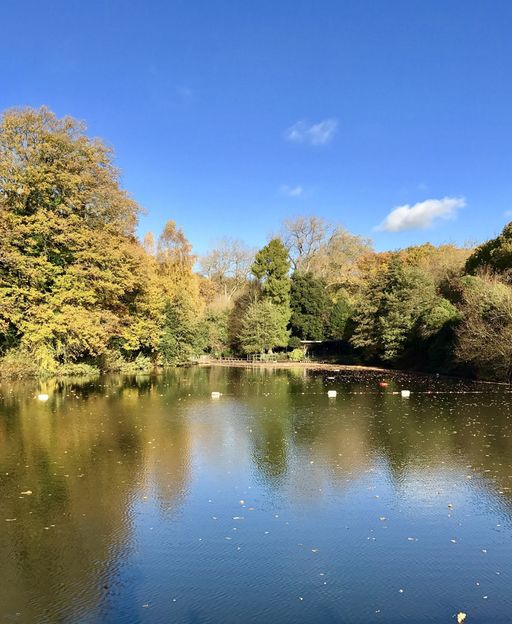
Hampstead Heath has three outdoor swimming ponds — men’s, women’s and mixed — that have been open to the public since the Victorian era. They are fed by underground springs. They are cold even in summer.
Some Londoners swim here every single day of the year, including January, when the water temperature drops close to freezing. The women’s pond in particular has a devoted following that crosses generations, professions and backgrounds. It is one of the genuinely egalitarian places left in this city.
You don’t need to be a serious swimmer to enjoy them. Entry costs a few pounds and the ponds open at dawn. On a warm July morning, there is nowhere better in London.
For everything you need to know before you visit, read our full guide to Hampstead Heath’s outdoor swimming ponds.
Enjoying this? 3,000+ London lovers get stories like this every week. Subscribe free →
Kenwood House — The Free Gallery Most Visitors Never Find
On the northern edge of the heath sits Kenwood House, a neoclassical mansion set against manicured lawns with a lake below. Entry is free. Inside is one of the most quietly remarkable art collections in London.
Walk in and you’ll find a Rembrandt self-portrait, a Vermeer, a Gainsborough, and a Turner — all in the same building. The Iveagh Bequest was gifted to the nation in 1927 on the condition that it remain permanently accessible to the public, free of charge.
Most visitors to London never make it here. Which means you’ll often have the rooms almost to yourself. The views from the terrace over the grounds are worth the trip even if you have no interest in art.
The house is also connected to a remarkable story involving the nearby Spaniards Inn — a pub that once helped save Kenwood’s entire art collection from a mob. It’s worth reading before you visit.
The Hidden Corners Most People Walk Past
Between Parliament Hill and Kenwood lie stretches of ancient oak woodland that feel genuinely remote. Kenwood Wood appears on maps from the medieval period. The trees here were standing long before London expanded to surround them.
On the west side of the heath, the Hill Garden and Pergola is an extraordinary Edwardian structure built by Lord Leverhulme in the early 20th century as a private garden. It’s now open to the public and almost always quiet — a long, raised walkway draped in climbing plants above a formal garden below.
Most visitors to the heath never find it. Which is, frankly, part of the appeal.
How to Get to Hampstead Heath and What to Expect
Hampstead Heath is large enough to fill a full day and still leave corners unexplored. It is equally well suited to a two-hour morning walk.
The easiest route from central London is the Northern line to Hampstead or Belsize Park stations, both of which are short walks from the main heath. Gospel Oak overground station sits directly on the heath’s edge near the ponds, which is useful if swimming is the main goal.
Entry to the heath is free. Dogs are welcome across most of it. There are no car parks. The swimming ponds charge a small fee. Bring layers — the heath sits higher than most of the city and catches the wind.
To get the most from your time in London, our London trip planning hub covers everything from where to stay to how to get around.
What is the best time of year to visit Hampstead Heath?
Late spring and summer mornings are ideal — Parliament Hill is quieter before 9am and the ponds are at their best when the weather is warm. Autumn is beautiful for the woodland colours. The heath is worth visiting year-round; a frosty winter morning has its own particular character.
How do you get to Hampstead Heath from central London?
Take the Northern line to Hampstead station — about 15 minutes from King’s Cross. It’s a short downhill walk to the main heath entrance. If you’re heading specifically to swim, Gospel Oak overground station places you directly beside the ponds.
Is Kenwood House really free to visit?
Yes, completely free. Kenwood House is managed by English Heritage and its entire collection — including the Rembrandt self-portrait and the Vermeer — is permanently open to the public at no charge. There is a café on site that charges separately.
Can you swim in Hampstead Heath ponds in winter?
Yes. The men’s and women’s ponds are open year-round, including through January and February when water temperatures drop to around 4°C. The mixed pond typically opens from May to September. Cold-water swimming has a devoted following on the heath and the ponds are busy even in winter.
On a still morning, with the city spread out below Parliament Hill and the pond water cold from the night before, Hampstead Heath does something London rarely manages: it makes you feel like you’ve escaped — without actually leaving.
🇬🇧 25 Hidden Gems of London Most Tourists Never Find
From secret riverside walks to hidden Victorian tunnels, centuries-old pubs to rooftop gardens with skyline views — our free guide reveals the London most visitors never discover. Join 3,000+ London lovers who get it free.
Get Your Free London Hidden Gems Guide →📲 Know someone who’d love this? Share on WhatsApp →
Love more? Join 65,000 Ireland lovers → · Join 43,000 Scotland lovers → · Join 29,000+ Italy lovers →
Free forever · · Unsubscribe anytime
Subscribe Free