
In 1974, after three hundred years feeding London, the vegetable sellers left Covent Garden overnight. The cobblestones went quiet. The crates disappeared. The smell of cabbage and cut flowers, which had soaked into the stone since the 1600s, slowly faded.
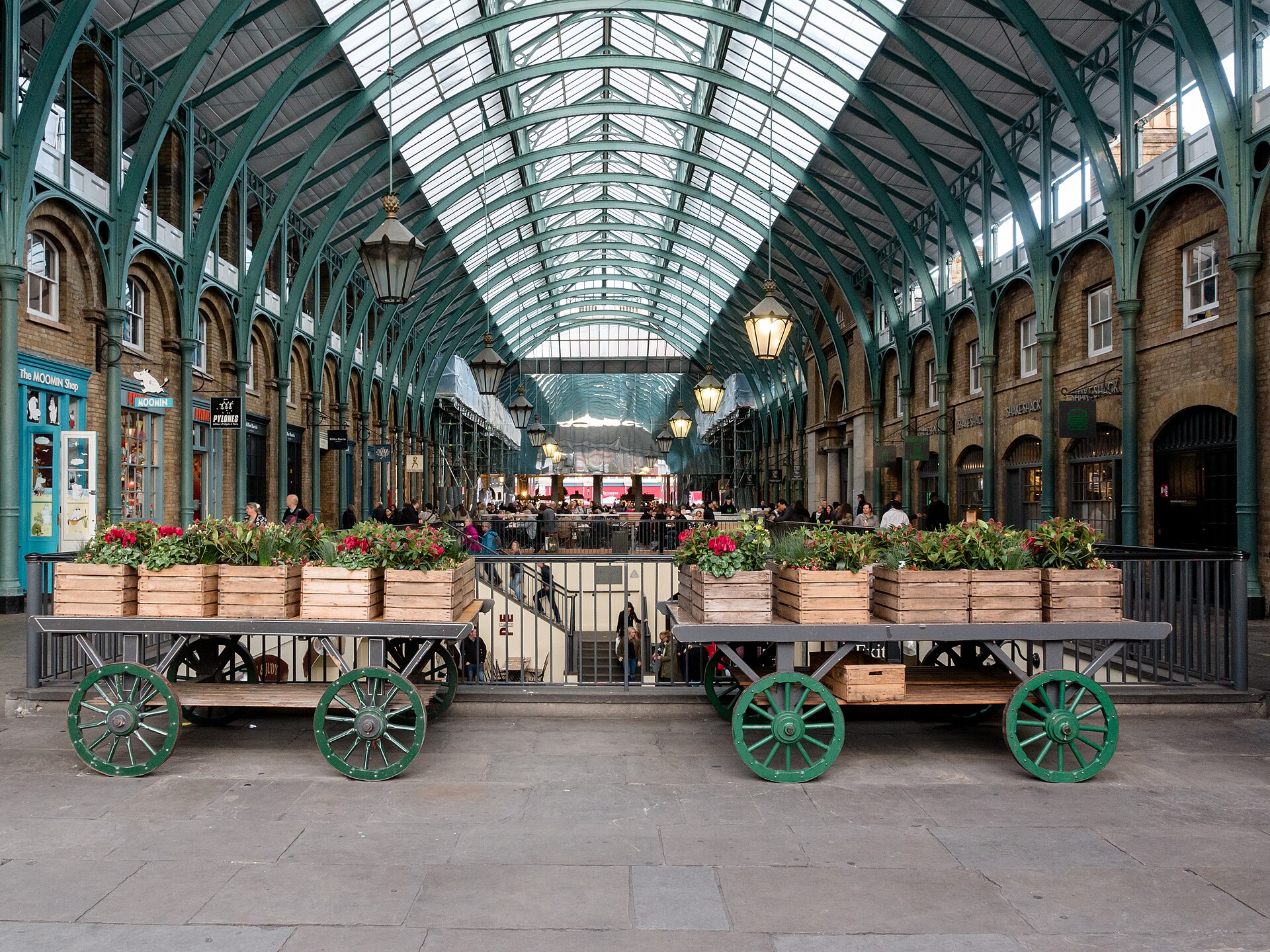
Within a decade, what had been one of Europe’s busiest wholesale markets became the most-photographed piazza in Britain. The transformation of Covent Garden is not just a London story. It is the story of how a city reimagines itself — and what it keeps from the past when it does.
London’s First Planned Square — And Its First Market
Covent Garden did not begin as a market. In the 1630s, the Earl of Bedford commissioned Inigo Jones to design a residential piazza in the Italian style. It was London’s first planned public square — a bold architectural statement from a man who had studied the great squares of Rome and Florence.
🏙️ Love London?
3,000 London lovers get hidden history, street-level stories, and local secrets every week. Free, forever — no spam, unsubscribe any time.
Subscribe free — enter your email:
Jones built the Church of St Paul on the west side, with a grand portico facing the square. The church still stands today, largely unchanged. The terraced houses were intended for aristocrats who wanted fashionable London living without the noise of the crowded city to the east.
Within a generation, traders had moved in. Flower sellers arrived first. Then fruit and vegetable merchants from the surrounding counties. By the mid-1700s, the market had grown so large that a proper hall was built to contain it. The grand piazza Jones designed for wealthy residents had become the city’s greatest food market — and nobody had planned it that way.
The Market That Inspired London’s Most Famous Character
By the Victorian era, Covent Garden was inseparable from London’s working life. Each morning, porters arrived before dawn, carrying flower baskets stacked so high they obscured the man beneath. The flower sellers — mostly women and children — lined the streets around the piazza from first light.
George Bernard Shaw knew this world. He based Eliza Doolittle, the Covent Garden flower girl at the heart of Pygmalion, on the women he watched here in the 1880s. The line “Would you like to buy a flower, kind sir?” was not a theatrical invention. It was a daily reality on these cobblestones.
Charles Dickens also walked these streets. He wrote about the coffee stalls and the early-morning crowds in Sketches by Boz. The market had its own language, its own rituals, its own economy that functioned entirely before most of London had woken up. For anyone tracing Dickens’s London, Covent Garden is essential ground.
Eight Hundred Tons a Day — and Then Silence
At its Victorian peak, Covent Garden handled 800 tons of fruit, vegetables, and flowers every single day. The market employed thousands: growers who came up from Kent and Worcestershire overnight, porters who balanced impossible loads on their heads, traders who had held the same pitches for generations.
By the 1950s, the logistics had become impossible. Modern lorries could not navigate the Jacobean street plan. The cobblestones that gave the piazza its character made delivery a daily battle. In 1974, after prolonged debate, the market relocated to Nine Elms in Vauxhall — a functional concrete site built for the twentieth century.
The empty piazza might have been demolished. Plans existed to build an office complex on the site. A public campaign, led by local residents and heritage campaigners, succeeded in saving the Victorian market hall. Six years after the last vegetable crate was loaded, Covent Garden reopened as a shopping and entertainment destination. The bones of the market survived. What happened inside changed completely.
Why Every Street Performer Here Has to Audition
The tradition of performance at Covent Garden is older than the market itself. The first recorded Punch and Judy show in England took place here in 1662. Samuel Pepys watched it and wrote about it in his diary. He was enchanted. The puppet show had arrived from Italy, and Covent Garden was where it found its British home.
When the market closed and the piazza was redeveloped, street performance became central to the new identity. But unlike most London locations where busking is largely unregulated, Covent Garden runs a formal audition system. Performers apply to the council, are assessed, and are allocated specific pitches at specific times. The quality of acts in the piazza is not an accident.
On any afternoon, you can watch acrobats, classical musicians, comedians, and living statues working the same cobblestones where flower sellers once competed for space. The audience changes every few minutes. The performers know how to read a crowd. The tradition of making a living by entertaining strangers in this square has not changed in four hundred years — only the costume has.
The Opera House That Has Burned Down Twice
At the northeast corner of the piazza, the Royal Opera House has stood — in one form or another — since 1732. John Rich, the theatre impresario who made his fortune from The Beggar’s Opera, built the first theatre on this site. It burned to the ground in 1808. The replacement burned down in 1856. The current building, designed by Edward Barry and opened in 1858, is London’s third Royal Opera House.
Today it is one of the world’s great performing arts venues. The bronze ballerina statue outside — a frequent backdrop for photographs — is Young Dancer by sculptor Enzo Plazzotta. She stands among red telephone boxes that have themselves become part of the most-photographed corner of the piazza.
You do not need a ticket to visit. The main foyer and hall are open during the day. On summer evenings, the Royal Ballet sometimes broadcasts live performances to a screen in the piazza — free to watch, with hundreds of Londoners spread across the cobblestones. It is one of the most unexpected pleasures in the city.
Planning Your Visit to Covent Garden
Covent Garden works at any hour. Early morning, before ten, the piazza is quiet and the light is good. The Apple Market inside the Victorian hall — selling antiques on Monday, crafts and design the rest of the week — opens around ten. Street performers typically begin at eleven.
The surrounding streets reward slow exploration. Neal’s Yard, a tiny courtyard off Shorts Gardens, is one of London’s most colourful hidden spaces. The Lamb and Flag pub on Rose Street has been serving since 1772 and is the oldest surviving pub in the Covent Garden area. The poet John Dryden was reportedly beaten up outside it in 1679.
If you are planning a trip to London, the London planning guide covers transport, areas to stay, and how to build a good itinerary. Covent Garden is within easy walking distance of the Strand, the South Bank, and the West End theatres. Another London market with centuries of history worth including in a visit is Greenwich Market, which has been trading since before the United States existed.
The market that once fed the city now entertains it. The cobblestones have absorbed the noise of cabbages and cellos alike. What makes Covent Garden endure is not nostalgia. It is the same thing that kept people coming here for four hundred years: the simple pleasure of being in a busy, beautiful, living place.
🇬🇧 25 Hidden Gems of London Most Tourists Never Find
From secret riverside walks to hidden Victorian tunnels, centuries-old pubs to rooftop gardens with skyline views — our free guide reveals the London most visitors never discover. Join 3,000+ London lovers who get it free.
Get Your Free London Hidden Gems Guide →Love more? Join 65,000 Ireland lovers → · Join 43,000 Scotland lovers → · Join 30,000 Italy lovers →
Free forever · Unsubscribe anytime
