
At half six in the morning, Portobello Road smells of old leather, cold air, and strong tea. The dealers are already here — and they are not selling to you. They are selling to each other.
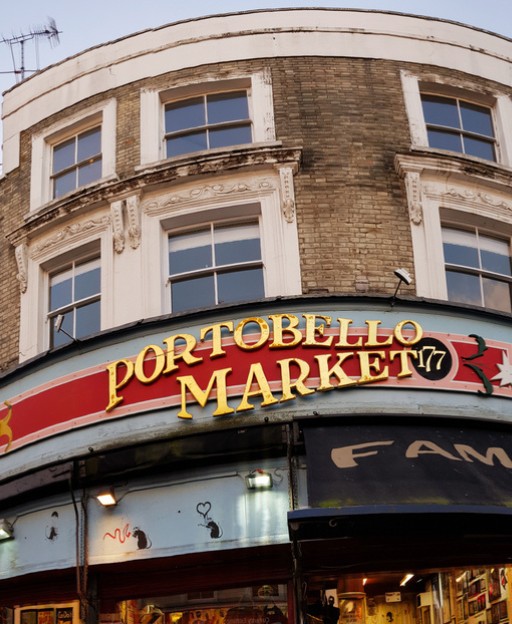
This is the version of Portobello Road that most visitors never see. By ten o’clock on a Saturday morning, the street is heaving. But in those quiet hours before the crowds arrive, the market has a completely different personality — one that belongs entirely to the people who truly know it.
The Hour Before Everything Changes
Long before the tourists step off the Tube at Notting Hill Gate, the real business of Portobello Road is already underway. Traders arrive before dawn. Vans line the kerb. Folding tables go up, torches come out, and deals are struck in the half-light.
There is a group of people in the antique trade known as “runners.” These are the dealers who travel between markets, buying from one to sell to another. A runner might pick up a Victorian silver toast rack at Portobello for £40 before 7am and have it in a Bond Street shop by lunchtime for ten times the price.
The best pieces rarely make it onto the stalls at all. They change hands between dealers quietly, sometimes with nothing more than a nod and a handshake, before the market officially opens. This is the Portobello Road that the guidebooks don’t describe, because the guidebooks were not there at dawn.
If you want to see this side of the market, arrive by 8am on a Saturday. Wear sensible shoes and bring cash. Do not expect the dealers to explain what something is. They assume you already know.
Friday and Saturday Are Two Completely Different Markets
Most visitors come on a Saturday — and there is nothing wrong with that. Saturday is spectacular. The market stretches for nearly a mile and a half, from Notting Hill Gate all the way north to Golborne Road, with more than a thousand stalls at peak season. It is noisy, colourful, and overwhelming in the best possible way.
But serious collectors tend to come on a Friday. The crowds are thinner. The stalls are fewer. And the quality of the antiques is, paradoxically, often higher — because the best dealers set up on Fridays, then pack up before the Saturday masses arrive.
There is also a small but dedicated Sunday market further up near Golborne Road. It is scruffier, cheaper, and more chaotic — a proper junk market rather than a curated antiques fair. You can find extraordinary things there if you are prepared to dig.
Knowing which day suits you changes the whole experience. If you want the spectacle, come Saturday. If you want the finds, come Friday. And if you want the feeling of a market that belongs to the neighbourhood rather than the tourists, come Sunday and walk up to Golborne Road.
Enjoying this? 3,000+ London lovers get stories like this every week. Subscribe free →
What to Buy and What to Leave Behind
The antiques section runs from Notting Hill Gate to roughly Westbourne Grove. This is the postcard version of Portobello — silver, ceramics, vintage jewellery, maps, old photographs, and the kind of furniture you have no idea how you would get home on the plane.
Vintage clothing is some of the best value on the market. The stalls between Elgin Crescent and Talbot Road stock everything from 1970s leather jackets to 1950s tea dresses. Prices are negotiable. Go later in the day and dealers are often willing to drop 20 or 30 per cent rather than pack things up unsold.
If you are buying antiques, take your time. Hold things. Look underneath. Check for wear patterns that match the supposed age. Genuine Victorian silverware has a weight and patina that reproductions rarely replicate. Dealers appreciate a buyer who knows what they are looking at — and are quicker to deal with one.
The food stalls begin around the Alice Pleasance section of the market and continue north. Portuguese custard tarts, jerk chicken, fresh pasta, Sri Lankan street food — Portobello’s food vendors reflect the extraordinary range of communities that have shaped Notting Hill over the decades. If you want to understand the deeper cultural history of this neighbourhood, the food is a good place to start.
The Stretch Most Tourists Never Reach
The majority of visitors stop somewhere around Westbourne Grove and turn back. That is understandable — the antiques section is beautiful, and the crowds can be exhausting. But if you keep walking north, the market changes completely.
Past Westbourne Park Road, the stalls become scruffier and more interesting. There are second-hand vinyl records, old tools, mismatched crockery, worn-out maps, boxes of postcards with faded handwriting on the back. These are the things that did not make the cut for the antiques dealers but have not found their way to the bin either. For the right buyer, this stretch is extraordinary.
At the very top of the market, where Portobello meets Golborne Road, the character shifts entirely. This is a Portuguese and Moroccan enclave, with cafes, pastry shops, and a small cluster of stalls that feel nothing like the tourist market below. The coffee here is better and the prices are lower. If you are planning your wider London trip, our London trip planning guide covers some of the best ways to get around between neighbourhoods like this.
How to Make the Most of Your Visit
Arrive early. On Saturdays in particular, the best stalls are mobbed by 10am. If you want to browse at your own pace without being jostled, get there before nine.
Bring cash. Card readers are rare at the smaller stalls and non-existent at the early morning dealers. Most stallholders prefer cash anyway — and it gives you more room to negotiate.
Walk the whole street. Most people see a fraction of what is on offer because they turn back too soon. The full stretch from Notting Hill Gate to Golborne Road and back is about three miles on foot. Wear comfortable shoes and treat it as a proper morning out rather than a quick browse.
Do not be afraid to ask. The dealers are used to questions. If something interests you, pick it up, look at it, and ask what it is. You will learn more in ten minutes of genuine conversation with a Portobello dealer than you will from any guidebook. They have been coming here for decades. Some of them inherited the stall from their parents.
If you are staying in the area and want to plan the rest of your day around the neighbourhood, Notting Hill is one of the best areas to base yourself — especially for a first visit to London.
Frequently Asked Questions About Portobello Road Market
When is the best time to visit Portobello Road Market?
Early Saturday morning before 10am gives you the full antiques experience with fewer crowds. Friday is quieter still and favoured by serious collectors — the quality tends to be higher, with less of the tourist trade.
How long does it take to walk the full Portobello Road Market?
The full stretch from Notting Hill Gate to Golborne Road is about 1.5 miles one way. Allow two to three hours if you plan to browse properly, or the whole morning if you are hunting for antiques and stopping to talk to dealers.
Is Portobello Road Market free to visit?
Yes, entry is completely free. Bring cash for purchases though — many smaller stall holders do not accept cards, and cash gives you more room to negotiate on price.
Where is Portobello Road Market and how do I get there?
Take the London Underground to Notting Hill Gate station (Central and Circle lines). The market begins a short walk north along Pembridge Road. It runs all the way up to Golborne Road at the northern end.
Portobello Road is not just a market. It is a living record of everything London has absorbed over the last two centuries — the traders, the migrants, the collectors, the dreamers, and the people who got up at dawn to be there first. Whatever you are looking for, it is probably here. You just have to know where to look.
🇬🇧 25 Hidden Gems of London Most Tourists Never Find
From secret riverside walks to hidden Victorian tunnels, centuries-old pubs to rooftop gardens with skyline views — our free guide reveals the London most visitors never discover. Join 3,000+ London lovers who get it free.
Get Your Free London Hidden Gems Guide →📲 Know someone who’d love this? Share on WhatsApp →
Love more? Join 65,000 Ireland lovers → · Join 43,000 Scotland lovers → · Join 29,000+ Italy lovers →
Free forever · Unsubscribe anytime
Subscribe Free