
On 10 June 2000, London opened its first new Thames crossing in more than a century. Within hours, the Millennium Bridge was swaying so violently that terrified pedestrians were gripping the handrails. Two days later, it was shut. It would stay shut for nearly two years.
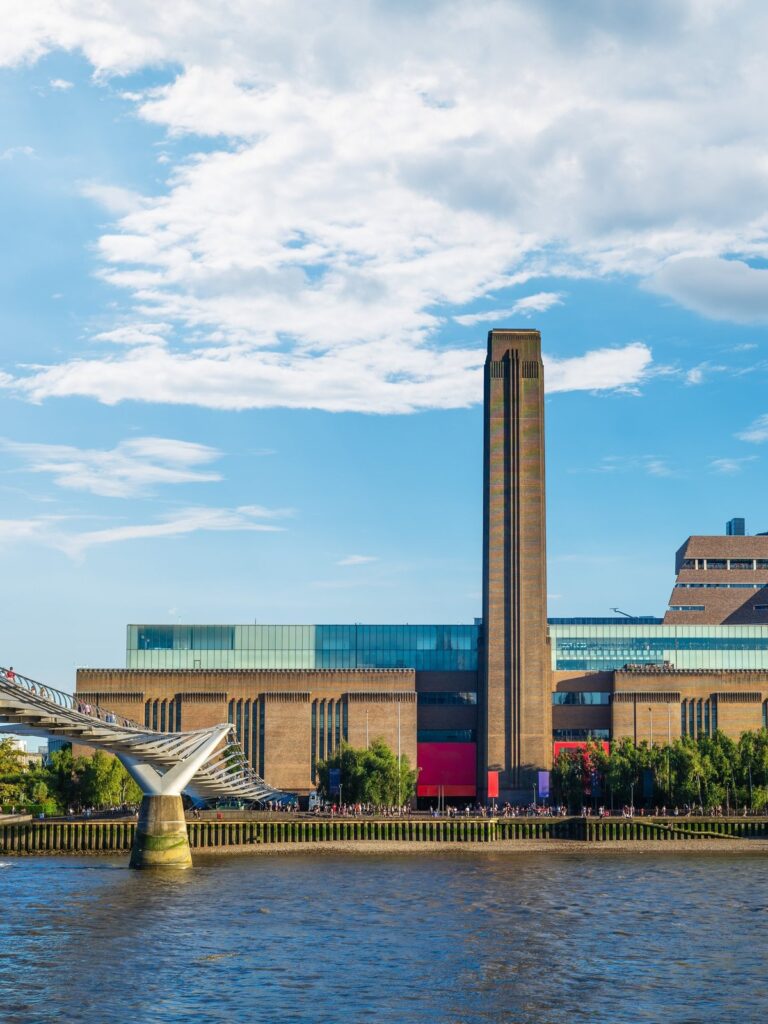
A Bridge Built for a New Century
The Millennium Bridge was London’s gift to itself for the year 2000. Designed by architect Norman Foster, sculptor Anthony Caro, and engineers Arup, it was everything a modern footbridge should be: elegant, spare, and daringly simple.
Unlike the heavy Victorian engineering of Tower Bridge, the Millennium Bridge was a blade of steel stretched across the river. It runs 325 metres between the South Bank and the City of London, with a deck just four metres wide — less than a single lane of traffic.
The design brief was clear: a minimal crossing that would feel like a continuation of the city rather than an interruption of the skyline. On paper, it was flawless. In practice, it was anything but.
What Happened on Opening Day
The bridge opened to the public on 10 June 2000. Thousands of Londoners turned up — an estimated 90,000 people crossed it on the first day alone. As they walked, something strange started to happen.
The bridge began to sway. Not dramatically at first, but enough that people noticed. Some stopped and held the handrails. Others planted their feet further apart to steady themselves. Without realising it, they were making things worse.
The movement spread along the length of the bridge. By midday, sections were lurching up to 70mm from side to side. People were losing their balance. Some were frightened. Engineers watching from the banks had no immediate explanation.
By the afternoon, the bridge had been partially cleared. By 12 June 2000 — just 48 hours after opening — the Millennium Bridge was closed.
The Engineering Puzzle That Stumped the Experts
What had gone wrong? For months, the team at Arup worked to understand it. The bridge hadn’t been badly built. The materials hadn’t failed. The answer, when it emerged, was something nobody had encountered quite like this before at this scale.
When a structure sways, people walking across it naturally adjust their gait to stay balanced. They widen their stance. They step in rhythm with the movement. Without intending to, thousands of pedestrians had begun walking in near-perfect synchrony — and that synchrony was feeding energy back into the bridge.
The phenomenon was named synchronous lateral excitation. It was known in engineering theory, but nobody had seen it overwhelm a major new bridge like this. The Millennium Bridge became a case study that is still taught in engineering courses around the world.
Enjoying this? 3,000+ London lovers get stories like this every week. Subscribe free →
The fix was not cheap. Engineers installed 37 fluid viscous dampers and 52 tuned mass dampers — essentially hidden shock absorbers built into the structure of the bridge. The work took nearly two years. The total cost of the modifications came to around £5 million.
The bridge reopened on 22 February 2002. It has not wobbled since.
The Bridge That Became a London Legend
There is a particular quality to how the Millennium Bridge story turned out. The embarrassment was total. The press coverage was unsparing. And then, somehow, the bridge became one of the most beloved crossings in the city.
Part of it is the location. The view from the centre of the bridge is one of the finest in London: St Paul’s Cathedral directly ahead, Tate Modern behind you, the Thames running fast beneath your feet. It is difficult to stand there and not feel something.
Part of it is also Harry Potter. In 2009, the Millennium Bridge appeared in Harry Potter and the Half-Blood Prince, destroyed by Death Eaters in the film’s opening sequence. The bridge that had embarrassed its designers became a global landmark, recognisable to millions who had never visited London.
Walking the Millennium Bridge Today
The crossing takes about five minutes at a relaxed pace. Most people stop somewhere in the middle for photographs — the geometry of the bridge frames St Paul’s Cathedral perfectly when you stand at the right point.
The bridge is open 24 hours and free to cross. Early morning is the best time to visit. Before 8am on most days, you can walk across almost alone, with the cathedral golden in the morning light and only the occasional barge below.
At the south end, you step directly into Tate Modern, one of the most visited modern art galleries in the world. The riverside walk continues east to Shakespeare’s Globe Theatre — just ten minutes on foot, still one of the most extraordinary experiences London has to offer.
If you want to understand the wider history of this stretch of river, the story of the Thames frost fairs offers a vivid sense of how Londoners have always found ways to use — and celebrate — the water. And for everything else you need before your trip, the London Planning Hub is a good place to start.
Frequently Asked Questions
Can you still feel the Millennium Bridge sway?
You may feel a faint vibration, particularly when the bridge is busy. The dampers reduced the movement significantly but did not eliminate it completely. It is well within safe limits, and the bridge has operated without incident since reopening in 2002.
Is the Millennium Bridge free to use?
Yes, completely free. It is a public pedestrian footbridge, open 24 hours a day, with no charge at any time. There is no ticket barrier, no entry fee, and no need to book.
What is on either side of the Millennium Bridge?
The north end opens near St Paul’s Cathedral and is a short walk from Bank station. The south end leads directly to Tate Modern and the South Bank riverside walk, which continues east towards Shakespeare’s Globe and Tower Bridge.
When is the best time to visit the Millennium Bridge for photographs?
Early morning offers the best combination of light and quiet. The bridge runs roughly east-west, which means the morning sun catches St Paul’s dome from the south side in a way that is particularly striking. Weekend mornings between 7am and 9am are often nearly empty.
🇬🇧 25 Hidden Gems of London Most Tourists Never Find
From secret riverside walks to hidden Victorian tunnels, centuries-old pubs to rooftop gardens with skyline views — our free guide reveals the London most visitors never discover. Join 3,000+ London lovers who get it free.
Get Your Free London Hidden Gems Guide →📲 Know someone who’d love this? Share on WhatsApp →
Free forever · Unsubscribe anytime
Subscribe Free