
In 1949, an American actor walked to the bank of the Thames in Southwark and found a small bronze plaque on a pub wall. It marked the approximate spot where Shakespeare’s Globe Theatre had once stood. Sam Wanamaker looked at that plaque, looked at the car park beside it, and quietly decided he wouldn’t accept it.
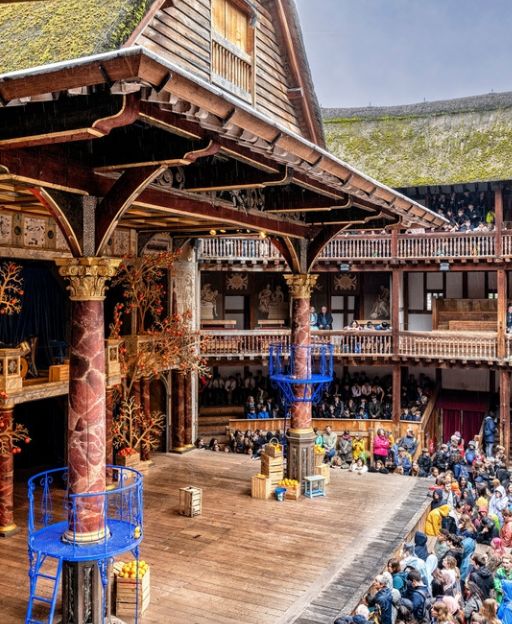
The Theatre That Changed the World — Then Disappeared
Shakespeare’s Globe was built in 1599 on the south bank of the Thames, in the rough, loud district of Southwark. It was built by the Chamberlain’s Men — Shakespeare’s own company — using timber salvaged from their previous theatre north of the river.
The plays written for this stage include Hamlet, Othello, King Lear, and Macbeth. The Globe held around 3,000 people, who stood in the open yard as groundlings or sat in covered galleries above. Admission cost one penny — roughly the same as a loaf of bread.
The original Globe burned to the ground in June 1613 when a cannon misfired during a performance of Henry VIII. A spark caught the thatched roof. Nobody was killed — one man reportedly put out his smouldering breeches with beer — but the building was gone within two hours.
A second Globe was built on the same site by 1614. Thirty years later, the Puritan-controlled Parliament closed all theatres, calling them dens of sin. In 1644, the second Globe was demolished and the land sold off for tenements. Shakespeare’s greatest stage ceased to exist.
The Southwark area around the Globe has centuries of extraordinary stories packed into a single riverside mile — explore it all on the complete South Bank walk from London Bridge to Westminster.
The American Who Wouldn’t Let It Go
Sam Wanamaker was born in Chicago in 1919 and became a successful stage and film actor. In the early 1950s, he was blacklisted by Hollywood during the McCarthy era — his name appeared on lists of suspected communist sympathisers — and he came to England to work.
He’d first encountered the Globe site during an earlier visit to London in 1949. The bronze plaque he found wasn’t even on the original site — it was nearby, on the wall of the Anchor pub. The actual spot was beneath a derelict factory.
Wanamaker was baffled that England’s most celebrated writer had no proper monument in the city where he’d lived and worked. He began writing letters, making calls, and slowly gathering support. Nobody in authority was particularly interested.
He founded the Globe Playhouse Trust in 1970 and began campaigning formally for a reconstruction. The project took him the rest of his life.
Twenty-Three Years of Stubbornness
Wanamaker faced opposition from nearly every direction. English critics complained that an American had no business interfering with Shakespeare’s legacy. Southwark council was sceptical. Planners were difficult. Funding was almost impossible to secure.
He spent two decades raising money from private donors, brick by brick. He lectured, performed in plays, and lobbied politicians. He got actors and directors on side, then royalty.
The design was painstakingly researched. Academic historians and theatre archaeologists studied surviving documents — contracts, legal records, and a sketch of the original interior from the 1590s. The result was a reconstruction built on the best available historical evidence.
The theatre was to be built using traditional Elizabethan methods: hand-made bricks, green oak frames, and a thatched roof — the first thatched roof to be approved in central London since the Great Fire of 1666.
Enjoying this? 3,000+ London lovers get stories like this every week. Subscribe free →
The Tragedy in the Timeline
Building work finally began in earnest in the late 1980s. For years, the project had been stalled by planning battles, funding gaps, and a seemingly endless cycle of setbacks. When the walls finally began to rise beside the Thames, Wanamaker was already unwell.
Sam Wanamaker died in December 1993, aged 74, of cancer. The walls of the Globe were barely above ground level. He never heard a single word spoken on that stage.
His daughter, actress Zoë Wanamaker, continued to support the project in the years that followed. The Globe Theatre opened in June 1997 with a production of Henry V. Mark Rylance was the first artistic director. The theatre that one stubborn American had refused to let die was finally alive.
In 2014, the indoor candlelit theatre beside the main Globe — the Sam Wanamaker Playhouse — opened in his honour. It seats around 340 people and performs year-round by the warm light of candles, just as the original indoor theatres of the 17th century did.
What Makes the Globe Unlike Any Other Theatre
Most theatres separate the audience from the stage. The Globe does the opposite.
Groundlings — standing ticket holders in the open yard — are separated from the actors by nothing except air. Performers make eye contact, address the audience directly, and play to whoever is watching. Interaction is part of the performance.
The theatre is open to the sky. If it rains, it rains on everyone equally. The season runs from May to October, and performances happen whatever the weather. This is not a place designed for comfort — the gallery seats are wooden benches without cushions. It is, by design, the most authentic Shakespeare experience anywhere in the world.
Planning Your Visit to Shakespeare’s Globe
The Globe offers guided tours year-round, even when no performances are running. These cover both the main theatre and the Sam Wanamaker Playhouse, and they’re genuinely excellent — well-researched and enthusiastically delivered. Budget around 90 minutes.
Groundling tickets — standing in the open yard — start at just £5, making this one of the best-value theatre experiences in London. Gallery seats cost more but give you a covered view from the upper tiers. Book in advance for popular Shakespeare productions, which sell out quickly.
The Globe sits on Bankside, a short walk from London Bridge or Blackfriars stations. Tate Modern is directly next door. If you’re planning your first London trip, the South Bank is the ideal place to begin — our London trip planning guide covers where to stay, what to book ahead, and how to get the most from each area.
London has no shortage of literary landmarks — from the street corners that shaped Dickens to the film sets that made Harry Potter feel possible.
How do I get to Shakespeare’s Globe Theatre?
The Globe is on Bankside, on the south bank of the Thames. The nearest stations are London Bridge (5 minutes walk) and Blackfriars (10 minutes). The Millennium Bridge connects directly to the theatre from the north bank of the river — walk across from St Paul’s Cathedral and the Globe is directly ahead.
Can I see a Shakespeare play at the Globe all year round?
The main open-air Globe Theatre runs its season from May to October. The Sam Wanamaker Playhouse — the indoor candlelit theatre next door — performs year-round, including winter, with its own programme of plays and music events. Both venues are worth visiting.
What is the Sam Wanamaker Playhouse?
The Sam Wanamaker Playhouse is an intimate indoor theatre opened in 2014 and named after the man who rebuilt the Globe. It seats around 340 people by candlelight, recreating the atmosphere of a 17th-century Jacobean indoor theatre. It’s smaller and more intense than the main Globe — an extraordinary experience in its own right.
Is it worth visiting the Globe if there’s no performance on?
Yes, without question. The guided tours run throughout the year and give you access to both theatres with expert commentary. The exhibition inside covers the full history of Shakespeare’s Globe, from the original Elizabethan building to Sam Wanamaker’s remarkable campaign to bring it back. Budget around 90 minutes for the full experience.
🇬🇧 25 Hidden Gems of London Most Tourists Never Find
From secret riverside walks to hidden Victorian tunnels, centuries-old pubs to rooftop gardens with skyline views — our free guide reveals the London most visitors never discover. Join 3,000+ London lovers who get it free.
Get Your Free London Hidden Gems Guide →📲 Know someone who’d love this? Share on WhatsApp →
Love more? Join 65,000 Ireland lovers → · Join 43,000 Scotland lovers → · Join 29,000+ Italy lovers →
Free forever · Unsubscribe anytime
Subscribe Free