
Step onto Brick Lane on a Friday evening and the street hits you before you turn the corner. Cumin. Fenugreek. Cardamom. The scent of a hundred simmering pots pouring out of open kitchen doors and onto the rain-damp pavement. You don’t need a menu. You don’t need a map. Your nose already knows where you are.
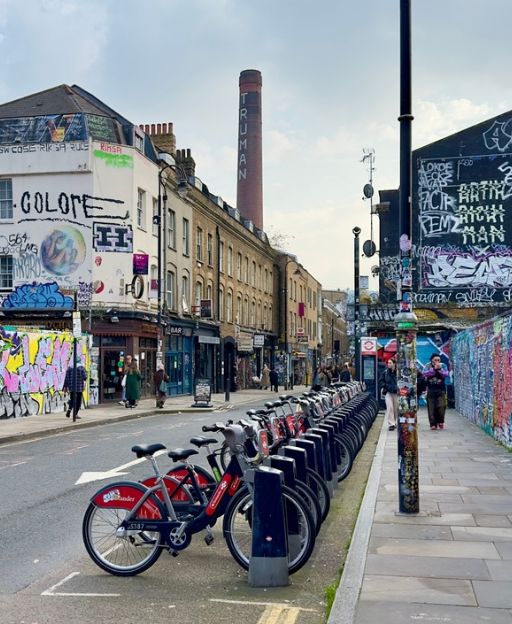
This one-kilometre stretch of East London has had many lives. Huguenot silk weavers. Jewish bakers. Punk clubs. But for the past five decades, Brick Lane has been defined by one thing above everything else: curry. The story of how that happened is one of London’s great untold tales — and it began not with a restaurant, but with a boat.
A Street That Has Always Belonged to the Newcomers
Long before the first curry house opened on Brick Lane, the street had already changed hands several times. The Huguenots arrived in the late 1600s, fleeing religious persecution in France. They built a chapel on the corner — a building that has since served as a synagogue and is now a mosque. That single structure tells the whole story of the street in miniature.
By the 19th century, Brick Lane was the heartland of London’s Jewish East End. Tailors, bagel bakeries, and herring sellers packed the pavements. The famous Beigel Bake at number 159 opened in 1855 and has been trading 24 hours a day ever since. It is one of the few things on Brick Lane that has never changed.
By the mid-20th century, the Jewish community had largely moved on to north London. The street was quiet, a little rundown, and ready for its next chapter. That chapter arrived on ships from what was then East Pakistan.
The Bangladeshi Migrants Who Changed Everything
The first significant wave of Bangladeshi migrants came to Britain in the years following partition in 1947. Most were from the Sylhet region — a lush, river-crossed area of northeastern Bangladesh where many families had long-standing connections to the British merchant navy. They came to work, and they came to stay.
Spitalfields and Whitechapel, the neighbourhoods surrounding Brick Lane, became the centre of London’s Bangladeshi community. By the 1970s, the population had grown large enough to reshape the street. The first curry houses opened — small rooms, plastic tablecloths, bring-your-own lager, and food unlike anything most East Enders had ever tasted.
The restaurant owners were practical about it. They adapted their cooking to British tastes — milder, creamier, sweeter than the food they made at home. Chicken tikka masala, arguably the most famous dish on every Brick Lane menu, is more of a British invention than an authentic subcontinental recipe. It didn’t matter. Londoners fell in love with it anyway.
The Restaurant Wars That Built a Legend
By the 1980s, Brick Lane had become a proper curry corridor. And the competition between restaurants was intense in a way that made the street genuinely alive.
Touts stood outside every door — smart young men in white shirts, calling out to passing diners with offers of free wine, discount set menus, and the bold claim that their restaurant was the best in London. It was chaotic, occasionally absurd, and enormously effective. The street developed a reputation as the place you went for a curry in London — the way you went to Chinatown for dim sum or Soho for Italian.
That era produced both the mythology and the mediocrity of Brick Lane. The pressure to fill seats every night sometimes came at the expense of quality. But it also created a competitive market that, at its best, rewarded the restaurants that cooked with genuine care.
Enjoying this? 3,000+ London lovers get stories like this every week. Subscribe free →
What Brick Lane Looks Like Today
The street has changed again in the 21st century. Gentrification has rolled in from Shoreditch to the west — and if you want to understand just how dramatically that neighbourhood has transformed, read the full story here — and Brick Lane now sits in an uncomfortable middle ground between its working-class immigrant roots and the craft coffee shops and vintage boutiques that have moved in alongside.
Many of the original curry houses remain, some now run by the children and grandchildren of the founders. But there are also street food stalls selling Korean fried chicken, Ethiopian injera, and Taiwanese bao buns. On Sunday mornings, the Brick Lane Market stretches the length of the street and spills into the surrounding alleys — part car boot sale, part vintage fair, part food market, entirely London.
The Truman Brewery complex, which anchors the northern end of the street, is now a hub of independent shops, galleries, and event spaces. The old brick chimney that once poured smoke over the East End now rises above a Sunday market where you can buy a second-hand leather jacket and a plate of jerk chicken in the same ten minutes.
What to Order — and Where to Go
If you visit one of Brick Lane’s curry houses, most menus follow a familiar pattern: chicken tikka masala, lamb rogan josh, prawn balti, saag aloo. These are the dishes that built the street’s reputation, and the best places still do them well.
Look for restaurants that go beyond the standard menu — Sylheti regional fish dishes, karahi-style cooking, or anything described as the chef’s own recipe. These are the meals that remind you this is food with a real heritage, not just a tourist-friendly adaptation.
Don’t skip the bread. A naan pulled fresh from the tandoor, blistered and steaming, is worth the trip on its own. And before you leave the street, stop at Beigel Bake. A hot salt beef beigel at midnight, standing on the pavement with a smear of mustard, is one of the most London things you can do. It’s been that way for more than 150 years. Planning your visit? Start with our London planning hub for everything you need to know. You can also read about the best food in London to build your full itinerary.
What is Brick Lane famous for?
Brick Lane is famous for its concentration of Bangladeshi curry restaurants, which began opening in the 1970s as the area became the heart of London’s Bengali community. Today the street is also known for its Sunday market, street art, vintage shops, and the historic Truman Brewery complex.
When is the best time to visit Brick Lane?
Sunday morning is the best time to visit for the full Brick Lane experience — the market is in full swing from around 9am, and the street is at its most lively. For curry, Friday and Saturday evenings are the classic time to go, when the restaurants are busy and the atmosphere is at its peak.
How many curry houses are on Brick Lane?
At its peak, Brick Lane had around 50 curry restaurants along its length. Today that number has reduced as the area has diversified, but you’ll still find more than 30 curry houses and Indian restaurants within a short walk of the main stretch.
Is Brick Lane safe to visit?
Brick Lane is a busy, well-visited street in Zone 1 London and is generally safe for tourists. Like any urban area, it’s worth being aware of your surroundings at night, but the street has good footfall throughout the evening. The Sunday market is one of the most family-friendly spots in East London.
Brick Lane doesn’t ask you to choose between its past and its present. The old and the new sit side by side on the same pavement — the 24-hour bagel shop next to the craft beer bar, the family-run curry house next to the vintage record stall. That tension is exactly what makes the street so alive. You can taste 400 years of immigration in a single walk from one end to the other.
🇬🇧 25 Hidden Gems of London Most Tourists Never Find
From secret riverside walks to hidden Victorian tunnels, centuries-old pubs to rooftop gardens with skyline views — our free guide reveals the London most visitors never discover. Join 3,000+ London lovers who get it free.
Get Your Free London Hidden Gems Guide →📲 Know someone who’d love this? Share on WhatsApp →
Love more? Join 65,000 Ireland lovers → · Join 43,000 Scotland lovers → · Join 29,000+ Italy lovers →
Free forever · Unsubscribe anytime
Subscribe Free