
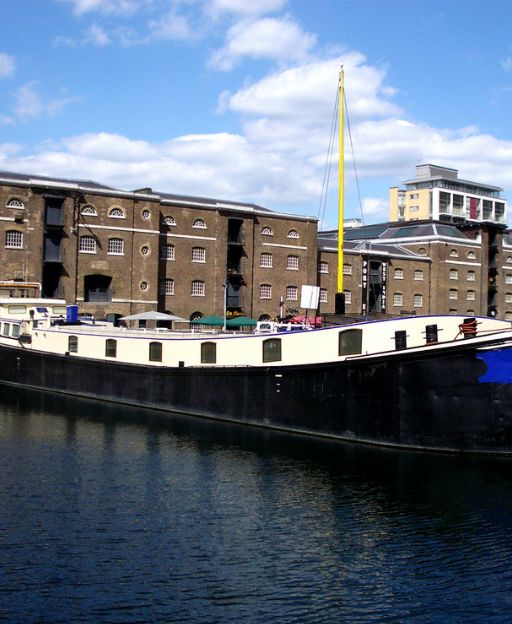
Stand at West India Quay and look up. Those enormous brick warehouses have stood here for over 200 years. They were built to hold rum, sugar, and cotton that flowed from the Caribbean into Britain’s veins. Today, they hold something else entirely.
How the West India Docks Were Born
Before the 1800s, London’s river trade was chaotic. Thousands of ships lined up along the Thames, waiting sometimes weeks to unload. Theft was rampant — merchants lost fortunes to river pirates who stripped cargoes in the dead of night.
The solution was radical. In 1800, Parliament approved the West India Docks — the first enclosed commercial docks in London’s history. By 1802, they were open for business. Almost overnight, they became the most secure, most efficient port in the world.
The warehouse walls were built three metres thick. The entire dock complex was surrounded by high walls and armed guards. Custom-built quays meant ships could unload directly into the warehouses without touching open ground. It was a revolution in how Britain handled trade.
Nothing quite like it had been built before. And for several decades, nothing could rival it.
At Its Peak, This Was the Busiest Port on Earth
By the mid-1800s, the London docks stretched for miles along the north bank of the Thames. The West India Docks, St Katharine Docks, the London Docks, the Royal Docks — together, they formed the beating heart of the British Empire.
Sugar poured in from Jamaica and Barbados. Rum arrived by the barrel. Coffee, spices, cotton, and timber from across the globe moved through these warehouses and out into Britain.
At the height of empire, the Port of London was handling more cargo than any other port in the world. Tens of thousands of men worked these docks — stevedores, lightermen, coopers, and dock labourers — many earning barely enough to survive.
The work was brutal and unpredictable. Every morning, hundreds of men gathered at the dock gates hoping to be picked for a day’s work. Those not chosen went home empty-handed.
Life on the Docks — The Men Who Made It Work
The culture around the docks was uniquely its own. Dockers developed their own slang, their own hierarchies, their own fierce sense of identity. The work was heavy and dangerous — falls, crushing injuries, and drownings were common.
The East End that grew up around the docks was dense, loud, and alive. Pubs, lodging houses, and street markets filled every corner. The smell of spices and rope and river water hung in the air permanently.
Women and children picked through the mud at low tide — these were the mudlarks, searching for anything dropped or lost from the ships. Coins, nails, lumps of coal, fragments of timber. It was a hard way to earn pennies, but it kept families alive.
The culture of self-reliance that defines the East End — tough, resourceful, fiercely community-minded — was forged right here on these docklands.
Enjoying this? 3,000+ London lovers get stories like this every week. Subscribe free →
Why the Docks Died — and How Quickly It Happened
The decline came fast. After the Second World War, damaged infrastructure and changing technology began squeezing out London’s docks. By the 1960s, containerisation was transforming global shipping.
Huge container ships required deep water and vast flat land — neither of which the old East London docks could offer. The Thames was too shallow. The docks too cramped. The future lay downstream.
By 1967, the East India Docks had closed. The London and St Katharine Docks followed. The West India Docks shut in 1980. Within a few years, an area that had employed tens of thousands stood silent and derelict.
The warehouses sat empty. The cranes rusted. The water went still. An entire way of life simply stopped.
The unemployment hit the East End hard. Communities that had depended on dock work for generations found themselves without it. The decline rippled outward — shops closed, pubs emptied, families moved away.
What Rose From the Ruins
In 1981, the government established the London Docklands Development Corporation. Its brief was to regenerate a vast area of derelict land — and it did so on a scale that few could have imagined.
Canary Wharf, now one of London’s two great financial centres, rose on the site of the old West India Docks. The tower that became known as One Canada Square was, when completed in 1991, the tallest building in Britain.
Today, glass towers reflect in the same water where ships once loaded rum and cotton. Banks and law firms occupy the ground where stevedores once sweated. Take the DLR from Bank to Canary Wharf and you’re crossing the footprint of one of history’s greatest industrial transformations.
The old dock walls still stand. The original warehouses at West India Quay survive — grade I listed, their brickwork intact, their scale still astonishing. If you’re planning a trip to this part of London, our full London planning guide will help you make the most of it.
The Museum Most Visitors Walk Past
The Museum of London Docklands sits inside Warehouse No. 1 of the old West India Docks — a building completed in 1803. It’s one of the finest examples of early industrial architecture in Britain, and one of the most overlooked museums in the city.
Inside, three floors trace the entire history of London’s relationship with its river. From Roman trading settlements to the slave trade, from the Victorian dock gangs to the development of Canary Wharf.
The Sailortown exhibition recreates an entire Victorian neighbourhood — pubs, lodging houses, shops — as it would have looked in the 1880s. It’s immersive, atmospheric, and entirely free.
Most visitors to Canary Wharf come for the restaurants and the shopping. They walk within 50 metres of this museum and don’t know it exists. That makes it, oddly, one of the quietest and most rewarding places in London to spend a few hours.
For those who want more of London’s remarkable history, a visit to West India Quay pairs beautifully with a walk along the South Bank through 2,000 years of London history.
Where exactly is the Museum of London Docklands?
The museum is at West India Quay, Canary Wharf, E14 4AL. Take the DLR to West India Quay station — it’s a two-minute walk. Entry is free and no booking is required, though some temporary exhibitions may have an entry fee.
What are the opening times for the Museum of London Docklands?
The museum is open daily from 10am to 5pm, with last admission at 4:30pm. It’s free to visit year-round. The café inside the historic warehouse building is open during museum hours.
Is the Docklands area worth visiting for first-time tourists?
Absolutely. The combination of the free museum, the original Victorian warehouses at West India Quay, and the striking modern skyline of Canary Wharf makes this one of London’s most dramatic contrasts. Best visited on a weekday morning when the financial district is busiest and most alive.
Can you see the original dock walls and structures today?
Yes — the West India Quay warehouses are grade I listed and largely intact. Walk along the quayside and you can touch the same brickwork that stored Caribbean sugar in the 1800s. The dock water itself still sits where the ships once moored.
The warehouses at West India Quay are still there — worn brickwork, high ceilings, the faint geometry of empire. Stand in front of them with the glass towers of Canary Wharf rising behind you, and you feel the full weight of what London has been, and what it keeps becoming.
🇬🇧 25 London Places Most Visitors Miss
From secret riverside walks to hidden Victorian tunnels, centuries-old pubs to rooftop gardens with skyline views — our free guide reveals the London most visitors never discover. Join 3,000+ London lovers who get it free.
Get Your Free 25-Places Guide →📲 Know someone who’d love this? Share on WhatsApp →
Love more? Join 65,000 Ireland lovers → · Join 43,000 Scotland lovers → · Join 29,000+ Italy lovers →
Free forever · Unsubscribe anytime
Subscribe Free