
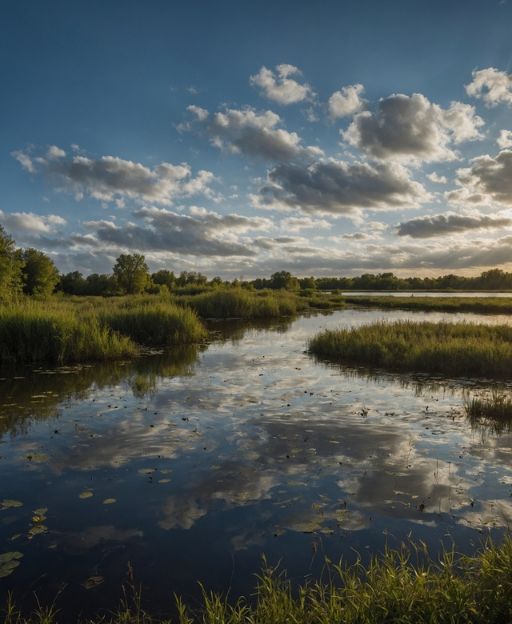
You take the Victoria line out of central London, walk for 15 minutes past ordinary streets, and then you turn a corner — and the city simply vanishes. In its place: 211 hectares of open water, reed beds, and vast sky that stretches to the horizon.
Walthamstow Wetlands is Europe’s largest urban wetland nature reserve. Most Londoners have never heard of it. Most tourists walk straight past it. That is entirely their loss.
A Victorian Secret Hiding in Plain Sight
The land has been here all along. These are working reservoirs, built in the 1850s to supply clean drinking water to a rapidly expanding London. For over 150 years, they were closed to the public — a vast stretch of wild land sitting quietly while the city rushed around it on all sides.
In 2017, the London Wildlife Trust opened Walthamstow Wetlands to everyone. Entry is free. The reservoirs are still fully operational — Thames Water continues to manage the supply — but the walking paths, the wildlife, and the extraordinary quiet are now open to all.
At the heart of the site stands the Engine House, a restored Victorian pumping station dating from 1885. Inside, you’ll find exhibitions on the wetlands’ ecology and history, a café serving decent coffee, and rangers who can point you towards whatever has been spotted that morning. Step outside and you’re immediately back among the reed beds, with nothing but open water and sky in front of you.
The Wildlife That Calls This Place Home
Walthamstow Wetlands is one of the best birdwatching sites in London — and you don’t need binoculars or a field guide to enjoy it.
Year-round, great crested grebes glide across the open water with their extraordinary tufted plumage. Grey herons stand motionless at the water’s edge for minutes at a time before striking with sudden, startling speed. Cormorants perch on posts with their wings spread wide, drying themselves in the sun like prehistoric creatures who never quite got the message that the Cretaceous was over.
Watch the reeds carefully and you might catch a flash of electric blue — a kingfisher, diving so fast it’s gone before you’ve properly understood what you saw.
In autumn and winter, the skies fill with thousands of migrating birds: teal, pochard, shoveler, and sometimes rarer visitors blown in from Scandinavia. Peregrine falcons nest on the site and hunt over the open water with terrifying precision — you’ll usually hear the pigeons panic before you spot the falcon itself.
More than 200 bird species have been recorded at Walthamstow Wetlands. Even if you’ve never picked up a pair of binoculars in your life, the sheer volume and variety of life here has a way of slowing you down and making you look properly at the world around you.
Walking the Wetlands — What It’s Actually Like
The main footpath loops around the reservoirs in a wide circuit. The full walk takes about two hours at a relaxed pace, and the terrain is almost entirely flat — good news for families, older visitors, and anyone who’d rather wander than hike.
There are stretches where you walk along narrow causeways between two open bodies of water. Herons stand just a few metres to either side, completely unbothered by your presence. The sound of London traffic fades quickly. In its place: wind in the reeds, the call of coots, and the occasional splash of something you didn’t quite see.
Dogs are welcome on leads. Pushchairs manage the main paths without trouble. There are no admission gates, no queues, and no need to book ahead. You simply arrive and walk.
The early morning and late afternoon are the most rewarding times. The light turns golden, the water goes perfectly still, and the site is at its quietest. Bring a flask. Take your time.
Enjoying this? 3,000+ London lovers get stories like this every week. Subscribe free →
How to Get There and What to Know Before You Go
The most direct route from central London is to take the Victoria line to Tottenham Hale station. Walk north along Ferry Lane for about 15 minutes and the main entrance appears on your right — it’s clearly signed.
Alternatively, Blackhorse Road station, which serves both the Victoria line and the London Overground, puts you about five minutes from the northern entrance on Forest Road. Either works well.
The wetlands are open daily year-round. Summer opening hours run roughly from 9:30am to 4:30pm; winter hours are shorter as the light fades earlier. Check the London Wildlife Trust website for current seasonal hours before you travel.
There is no on-site car park, and street parking nearby is limited. The tube is by far the most straightforward option, and the walk from Tottenham Hale is genuinely worth it — you move from ordinary East London streets into a landscape that feels like a completely different world.
London’s Other Wild Escapes Worth Knowing About
Walthamstow Wetlands is extraordinary, but it’s one of several places in London where the natural world quietly insists on itself. For wild swimming in open water, the ancient ponds at Hampstead Heath have been pulling Londoners north for well over a century — separate ponds for men, women, and mixed bathing, still in use today and still free to enter.
London also has a long tradition of outdoor swimming that most visitors never discover. A guide to London’s open-air ponds and lidos takes in the best options across the city, from Parliament Hill Lido to Tooting Bec.
And if you’re still building your trip from scratch, the perfect 3-day London itinerary for first-time visitors balances the major landmarks with the quieter corners like this one — the side of London that most tourists simply never reach.
Frequently Asked Questions
What can you see at Walthamstow Wetlands?
Over 200 bird species have been recorded at the site, including kingfishers, grey herons, peregrine falcons, great crested grebes, and large numbers of migrating ducks in winter. The wetland landscape itself — open reservoirs, reed beds, and wide-open sky — makes the visit worthwhile even on a quiet day.
Is Walthamstow Wetlands free to enter?
Yes, entry is completely free. The site is managed by the London Wildlife Trust and is open to everyone year-round, with no booking required. The café inside the Engine House charges standard café prices.
How do I get to Walthamstow Wetlands from central London?
Take the Victoria line to Tottenham Hale and walk north along Ferry Lane for about 15 minutes — the main entrance is clearly signed. Blackhorse Road station (Victoria line and London Overground) also gives access from the northern side, about five minutes on foot.
When is the best time to visit Walthamstow Wetlands?
Spring and autumn are the most rewarding seasons — spring for nesting birds and early wildflowers, autumn for large numbers of migrating ducks and waders arriving from Scandinavia. Early morning visits in summer give you the site almost to yourself, with the light at its most beautiful over the water.
The city doesn’t disappear very often. But at Walthamstow Wetlands, standing between two open reservoirs with a heron twenty feet away and the only sound the wind moving through the reeds, it genuinely does. Go soon. Tell no one.
🇬🇧 25 Hidden Gems of London Most Tourists Never Find
From secret riverside walks to hidden Victorian tunnels, centuries-old pubs to rooftop gardens with skyline views — our free guide reveals the London most visitors never discover. Join 3,000+ London lovers who get it free.
Get Your Free London Hidden Gems Guide →📲 Know someone who’d love this? Share on WhatsApp →
Love more? Join 65,000 Ireland lovers → · Join 43,000 Scotland lovers → · Join 29,000+ Italy lovers →
Free forever · Unsubscribe anytime
Subscribe Free