
Solo Travel in London: The Complete Guide for US Visitors
Solo travel in London is one of the most rewarding trips you can take from the US. The city is easy to navigate, English-speaking, and packed with things to do — whether you have four days or four weeks. This guide covers everything you need to know before you go: where to stay, how to get around, what to budget, and how to make the most of London on your own.
Why London Is Perfect for Solo Travellers from the US
London ranks among the top five cities in the world for solo travel. The reasons are straightforward. There is no language barrier. The public transport system is one of the best in Europe. Hostels, hotels, and short-term rentals all cater well to solo visitors. And the city has a culture of independent exploration that suits people travelling alone.
Americans tend to find London less intimidating than Paris or Rome. You can ask for directions, read every sign, and order food without any second-guessing. That ease of communication makes a huge difference when you are navigating a new city on your own.
The city is also very safe for solo travellers. Central London — Westminster, Soho, South Bank, Covent Garden, Shoreditch — is busy around the clock and well-policed. Use the same common sense you would in any large city and you will have no problems.
The Social Side of Solo Travel in London
One of the biggest worries about travelling alone is feeling isolated. London solves this quickly. Hostel common rooms, free walking tours, pub quiz nights, museum talks, and food markets are all places where you naturally meet other travellers. The city has a very active solo travel scene — you are far from the only person exploring it independently.
Many travellers find that London solo trips become some of their most memorable. You set your own pace. You change plans on a whim. You spend three hours in the National Portrait Gallery without feeling guilty. That freedom is hard to replicate when you are travelling with others.
Where to Stay When You Are Travelling Alone
Choosing the right neighbourhood makes a big difference for solo travellers. You want somewhere with good transport links, plenty of things nearby, and a sense of life on the streets after dark.
For a detailed breakdown of each neighbourhood, read our guide to the best neighbourhoods for first-time visitors. Here is a quick overview for solo travellers specifically.
Shoreditch — Best for Solo Travellers Who Like a Scene
Shoreditch is East London’s creative heartland. Street art covers the walls. Independent cafés, record shops, and vintage stores fill the streets. The nightlife is some of the best in the city. If you want to meet people, Shoreditch makes it easy — the bars and music venues here attract a sociable, curious crowd.
The area is well connected by Overground and Elizabeth line services. Prices are slightly lower than central London, which helps if you are on a solo budget.
Covent Garden — Best for First-Time Solo Visitors
Covent Garden puts you in the centre of everything. The West End is a short walk in one direction, South Bank in another. You are five minutes from the British Museum and ten from Soho. For a solo first-timer who wants to walk to as much as possible, this location is hard to beat.
The street performers in the piazza, the covered market, and the surrounding streets all create a lively atmosphere. You will never feel bored or lonely in Covent Garden.
South Bank — Best for Culture-Focused Solo Travel
The South Bank runs along the Thames between London Bridge and Waterloo. It holds the Tate Modern, the Globe Theatre, the National Theatre, the BFI Southbank, Borough Market, and the Southbank Centre. All of this is connected by a riverside walkway you can follow from Waterloo to Tower Bridge.
For a solo traveller who wants museums, food markets, river views, and evening performances all in one area, South Bank delivers everything.
🇬🇧 Enjoying this guide? More than 3,000 London lovers get stories and tips like this every week. Subscribe free →
Getting Around London as a Solo Traveller
Getting around is genuinely easy in London. The Underground — the Tube — covers the whole city. Buses run everywhere the Tube does not. And the city is very walkable if you stay in central zones.
The single best thing you can do before arriving is get an Oyster card or set up contactless payment on your phone. You tap in and tap out at every station. No tickets to buy, no queues at machines. Your fare is automatically capped daily so you never overpay.
For a full breakdown of your options — including night buses, the Elizabeth line, and walking routes — see our complete guide to getting around London.
Solo Safety Tips on London Transport
London transport is very safe. Keep your bag in front of you on the Tube during peak hours. Do not leave your phone on restaurant tables. Licensed black cabs and Uber both work well — avoid unlicensed minicabs offered on the street.
Night buses run all night on key routes. The Tube stops around midnight on weekdays (slightly later on weekends), so plan accordingly if you are out late.
Planning Your Solo London Budget
Budget planning for a solo trip differs slightly from group travel. You bear all accommodation costs yourself, which is the biggest factor. Everything else — transport, food, entry fees — costs the same regardless of group size.
Here is a realistic breakdown for a solo visit to London:
- Budget accommodation (hostel dorm): £25–40 per night
- Mid-range hotel (solo room): £90–150 per night
- Daily transport (Oyster, zones 1–2): £7–10 with daily cap
- Meals (budget): £25–35 per day (street food, supermarkets, casual restaurants)
- Meals (mid-range): £45–65 per day (sit-down restaurants, one pub meal)
- Museums and galleries: Many are free — budget £20–30 for paid attractions
For a comprehensive look at what London costs, including accommodation tips and where to save money, read our full London travel budget guide.
Where Solo Travellers Can Save Money
The biggest saving available to solo travellers is London’s world-class free museum scene. The British Museum, National Gallery, Natural History Museum, Tate Modern, Victoria and Albert Museum, and many others charge nothing to enter. You could spend your entire London trip in free museums and never run out of things to see.
For the complete list, see our guide to the best free museums in London. This is particularly useful if you are stretching a tight budget across a longer solo trip.
Supermarkets like Marks and Spencer, Pret A Manger, and Sainsbury’s all have excellent meal deals for lunch — typically £3.50–5 for a sandwich, snack, and drink. Borough Market and Maltby Street Market offer outstanding street food from £6–9 per dish.
The Best Things to Do in London Alone
Solo travel opens up certain experiences that are harder to enjoy in a group. Here are the activities that work especially well when you are on your own.
Free Walking Tours
London has several excellent free walking tour companies. Guides work for tips at the end. Tours run daily in areas like the City of London, the East End, Westminster, and Southwark. These tours are fantastic for solo travellers — you join a small group, learn the history, and naturally meet other people doing the same thing.
The best time to do a walking tour is in your first day or two. You get your bearings, understand the geography, and pick up tips on what to see next.
The London Markets
London’s markets are perfectly suited to solo visitors. You wander at your own pace, try food from different stalls, and browse antiques or vintage clothing without any time pressure. Borough Market on the South Bank is the most famous — go on a Thursday or Friday for the best atmosphere. Columbia Road Flower Market in East London is smaller but extraordinary on a Sunday morning.
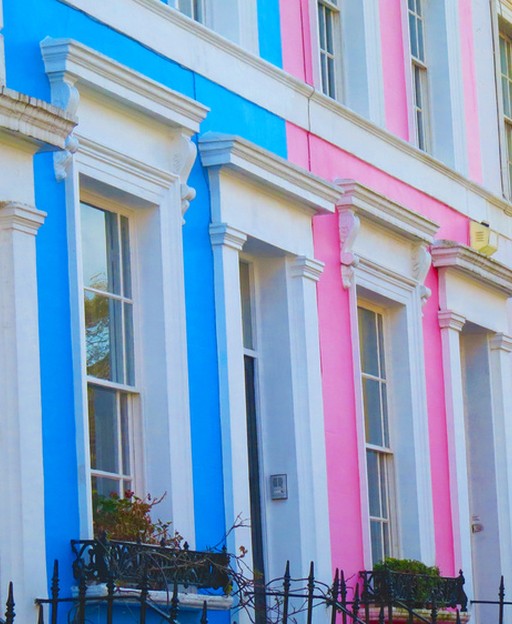
Portobello Road Market in Notting Hill runs every Saturday and draws thousands of visitors to its antique stalls, food vendors, and vintage clothing rails. The colourful terraced houses nearby make it one of the most photographed streets in London.
Notting Hill and Kensington
This corner of West London rewards solo exploration on foot. Walk from Notting Hill Gate tube station down to Portobello Road, then across to Kensington Gardens and Hyde Park. Stop at the Victoria and Albert Museum or the Natural History Museum in South Kensington. This loop takes half a day and gives you a completely different side of London from the tourist-heavy centre.
Pub Culture
One of the best things about London for solo travellers is the pub. British pub culture welcomes people drinking alone. You sit at the bar, talk to whoever is there, or simply watch the room. There is no pressure to be in a group. Some of London’s best historic pubs — the Lamb and Flag in Covent Garden, the Ten Bells in Spitalfields, the George Inn on Borough High Street — are wonderful places to spend an evening alone.
How to Structure Your Solo London Trip
One of the great advantages of solo travel is flexibility. You do not need to agree anything with anyone. Here is a simple framework for building your itinerary.
Start with the areas you most want to see. Most first-time solo visitors to London prioritise Westminster (Big Ben, Parliament, Westminster Abbey, Buckingham Palace), South Bank (Tate Modern, Borough Market, Thames walk), and at least one East London neighbourhood like Shoreditch or Spitalfields.
Add one day trip outside the city — Windsor, Bath, Cambridge, and Brighton are all easy on the train. Solo day trips are especially rewarding because you make all the decisions yourself. For day trip ideas, see our guide to the best day trips from London.
Leave unscheduled time. The best discoveries in London happen when you wander without a plan — turning down a side street, following a canal towpath, stumbling into a neighbourhood you did not know existed. Solo travel gives you the freedom to chase those moments.
A Sample 5-Day Solo London Itinerary
For a detailed day-by-day plan, our 5-day London itinerary is a great starting point. You can adapt it for solo travel by removing any shared-experience activities and adding more time in museums and markets.
Day 1: Heathrow arrival, check in, South Bank walk (Tate Modern, Borough Market, Thames path to Tower Bridge). Evening: dinner in Bermondsey.
Day 2: Westminster in the morning (Westminster Abbey, Parliament Square, St James’s Park). Afternoon: National Gallery (free). Evening: free walking tour of Soho and Covent Garden.
Day 3: East London — Brick Lane, Spitalfields Market, Shoreditch street art. Afternoon: Columbia Road (if Sunday) or Victoria Park.
Day 4: Day trip — Windsor, Cambridge, or Brighton by train.
Day 5: Notting Hill, Portobello Road, Kensington Gardens, V&A Museum. Evening: dinner in Chelsea.
Practical Tips for US Solo Travellers in London
Arriving from the US
Most flights from New York, Boston, and Chicago land at Heathrow. The fastest way into central London is the Heathrow Express, which takes 15 minutes to Paddington Station and costs around £25. The Elizabeth line is slower (about 50 minutes to central London) but costs roughly £12 with an Oyster card. For a full breakdown of your options, see our guide to getting from Heathrow to London.
Phone and Data
Get a UK SIM card or check that your US carrier offers international data plans. EE, O2, and Vodafone all sell pay-as-you-go SIMs at Heathrow arrivals. Google Maps, Citymapper, and TfL Go are all essential apps for navigating the city.
Health and Safety
London has excellent public healthcare under the NHS. In an emergency, call 999. For non-emergency medical care, NHS Urgent Treatment Centres are located across the city. Travel insurance is strongly recommended — check that your policy covers medical treatment in the UK.
Power and Currency
The UK uses Type G plugs (three rectangular pins). Bring a travel adaptor. The currency is the pound sterling (GBP). Contactless payment works almost everywhere in London, so you will rarely need cash. Avoid airport currency exchange desks — use a Wise card or withdraw from a bank ATM for better rates.
Frequently Asked Questions About Solo Travel in London
Is London safe for solo travellers?
Yes, London is one of the safest major cities in the world for solo travellers. Central areas like Westminster, Covent Garden, South Bank, and Shoreditch are busy day and night. Use standard urban common sense — keep your bag secure, stay aware of your surroundings — and you will have no issues.
How much money do I need for a week of solo travel in London?
A budget solo traveller can manage London on around £80–100 per day, including a hostel dorm, transport, and meals. A mid-range solo trip — with a private hotel room and a mix of dining out — typically costs £180–250 per day. London’s many free world-class museums significantly reduce entertainment costs.
What is the best neighbourhood to stay in for solo travel in London?
Shoreditch is the top choice for solo travellers who want a social scene and a creative atmosphere. Covent Garden is best for first-timers who want to walk to the major sights. South Bank works well for culture-focused visitors. All three have excellent transport connections and plenty of restaurants, cafés, and bars within walking distance.
Is London a good city to visit alone as a first-time solo traveller?
London is widely considered one of the best cities in the world to begin solo travel. The language barrier is zero, the public transport is excellent, and the city is welcoming to independent visitors. Many people choose London as their first solo destination precisely because it feels manageable — and end up falling completely in love with it.
🇬🇧 25 London Places Most Visitors Miss
From secret riverside walks to hidden Victorian tunnels, centuries-old pubs to rooftop gardens with skyline views — our free guide reveals the London most visitors never discover. Join 3,000+ London lovers who get it free.
Get Your Free 25-Places Guide →Love more? Join 64,000 Ireland lovers → · Join 43,000 Scotland lovers → · Join 30,000 Italy lovers →
Free forever · One email per week · Unsubscribe anytime