
Tower Bridge: History, Facts and How to Visit

Sharing is caring!

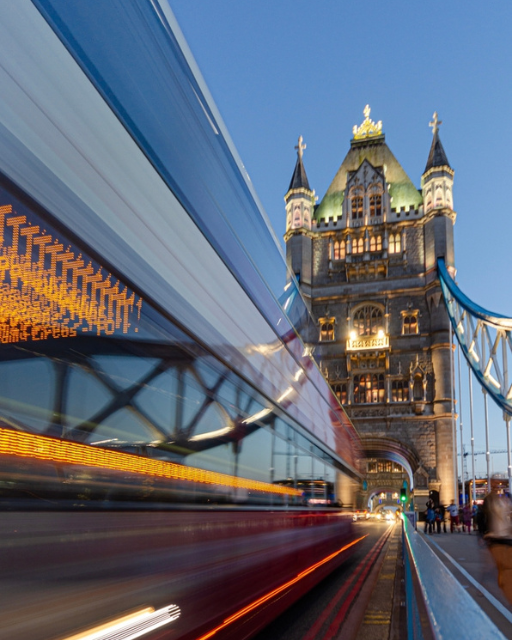
Tower Bridge lit up at night with light trails from passing traffic on the River Thames

Tower Bridge is one of the most recognised structures in the world. It spans the River Thames between the London Borough of Tower Hamlets on the north bank and Southwark on the south. Every year, millions of visitors stop to photograph it, walk across it, and look out from its high-level walkways. But most people know surprisingly little about how it was built, how it works, or what there is to do there beyond taking a photo from the riverbank.

This guide covers the facts, the history, the visitor experience, and the best ways to make the most of a trip to Tower Bridge — whether you are visiting London for the first time or have lived here for years.

Love London?

Get the best of London — history, hidden gems, things to do and places to eat — delivered to your inbox every week. Subscribe to our free newsletter →

The History of Tower Bridge

Tower Bridge was completed in 1894 after eight years of construction. Before it was built, the only road crossing east of London Bridge was by ferry. As the East End grew throughout the 19th century, the need for a new crossing became urgent. The City of London Corporation launched a competition in 1876. They received more than 50 designs before selecting the proposal from Sir Horace Jones, the City Architect, working alongside engineer Sir John Wolfe Barry.

The brief was strict: any bridge at this location had to allow tall ships to pass through, because the Pool of London — the stretch of the Thames between London Bridge and Tower Bridge — was still a working port. The solution was a bascule bridge, a type of drawbridge where two large sections (called leaves) can be raised to let vessels through. The bascules are counterbalanced so they can be lifted and lowered with relatively little energy.

The Gothic towers were not just for show, though many people assume they are purely decorative. They house the machinery that drives the bridge and provide structural support for the high-level walkways. The Victorian-era design was chosen deliberately to complement the Tower of London next door, which dates back to 1078.

When Tower Bridge opened on 30 June 1894, it was powered by hydraulic machinery driven by steam. The original engines used water pressurised to 750 pounds per square inch, stored in six accumulators. In 1976 the hydraulic system was replaced with an electro-hydraulic system that is still in use today. The original Victorian engines are preserved inside the bridge and form part of the visitor experience.

How the Bridge Opens and Closes

Tower Bridge still opens for river traffic, though far less often than it did during the height of the Port of London. In the late 19th century it opened around 50 times per day. Today it opens roughly 800 times per year — an average of about two or three times per day, though this varies considerably.

The bridge raises its bascules to allow tall vessels through. These include sailing boats, tall ships visiting for festivals, private yachts, and occasionally unusual cargo. Any vessel over 8.9 metres (29 feet) in height needs to request an opening in advance through the Port of London Authority. Watching a lift is free — you simply need to be on or near the bridge at the right time.

Tower Bridge publishes a schedule of upcoming openings on its official website, usually several days in advance. If seeing the bridge open is on your list, check the schedule before you visit. Lifts typically take around five minutes from closed to fully raised and back down again.

What to See Inside Tower Bridge

Tower Bridge is open to visitors as a paid attraction. The experience includes the high-level walkways, 42 metres above the Thames, and access to the Victorian Engine Rooms on the south bank.

The walkways connect the two towers and offer clear views up and down the river. On the floor of the walkways there are sections of glass that allow you to look straight down at the road and river below. Some visitors find this unsettling; others think it is the best part of the visit. Either way, it is a striking perspective on the bridge from the inside.

The exhibition inside the towers tells the story of the bridge’s construction, the engineers behind it, and how the bascule mechanism works. It uses archive photographs, models, and interactive displays. The Victorian Engine Rooms contain the original steam engines, boilers, and hydraulic accumulators. These have been carefully preserved and are well worth seeing if you have any interest in engineering or industrial history.

Tickets for Tower Bridge cost around £12.30 for adults and £5.60 for children (prices as of 2026; check the official site for current rates). Booking in advance online is recommended, particularly during school holidays and summer months.

Never miss a London story

From iconic landmarks to hidden streets, our weekly newsletter covers London the way locals see it. Join thousands of readers — it’s free →

Getting to Tower Bridge

Tower Bridge is straightforward to reach by public transport. The nearest Underground stations are Tower Hill (District and Circle lines) and London Bridge (Jubilee and Northern lines). Both are a short walk from the bridge. If you are arriving by bus, several routes stop nearby including the 15, 42, 78, and 100.

The nearest Overground station is Wapping, which is slightly further away. Thames Clipper river buses stop at Tower Pier, directly beside the bridge, which makes for a pleasant approach from the water — particularly if you are coming from Greenwich or Canary Wharf.

Cycling is a good option. There are Boris Bike docking stations nearby and the south bank has dedicated cycle paths. Driving is not recommended — parking in this part of central London is expensive and limited, and the bridge itself has no parking provision.

What Else Is Nearby

Tower Bridge sits in one of London’s most historically dense areas. The Tower of London is immediately next to the north end of the bridge. It houses the Crown Jewels, the Royal Armouries, and a 900-year history that includes use as a royal residence, prison, and place of execution. A combined visit to Tower Bridge and the Tower of London makes for a full day out.

Southwark, on the south side of the bridge, has its own set of attractions. Borough Market is one of London’s oldest food markets and is a short walk away. HMS Belfast, a Second World War light cruiser moored on the Thames, is visible from the bridge’s walkways. Further along the south bank you will find Tate Modern, Shakespeare’s Globe Theatre, and the Tate Modern Turbine Hall.

Shad Thames, the street immediately south of Tower Bridge, is worth exploring on foot. The ironwork bridges connecting the upper floors of the old warehouse buildings are a distinctive feature of this Victorian dockside area. Many of the warehouses have been converted to flats, restaurants, and shops, but the architecture remains largely intact.

The Best Times and Spots to See Tower Bridge

Tower Bridge looks different depending on the time of day and the weather. Early morning, before the crowds arrive, is often the clearest time to photograph it from the riverbank. The light at sunrise can be particularly good, especially in winter when the sun rises over the south-east and catches the towers directly.

At night the bridge is lit up and reflects in the Thames. This is probably the most dramatic way to see it. The best vantage points for night photography include Potters Fields Park on the south bank, the north bank promenade near City Hall (now Southwark Council offices), and from the river itself on a Thames Clipper.

If you want to avoid the largest crowds, Tuesday to Thursday mornings are generally quieter than weekends. Summer (June to August) is the busiest period. January and February are significantly quieter, though the weather is less predictable.

Practical Information for Visitors

Tower Bridge is open daily. Opening hours vary by season — typically 09:30 to 18:00 in summer and 09:30 to 17:30 in winter, with last entry one hour before closing. It is closed on Christmas Day and 26 December.

The bridge is fully accessible, with lifts in both towers for visitors who cannot use stairs. The glass floor walkways and engine rooms are all reachable without steps. If you have specific accessibility requirements it is worth contacting the bridge directly before visiting.

There is a gift shop at the exit and a café in the engine rooms area. Neither is compulsory — you can visit the main attraction without spending anything beyond the entry fee. Photographing the bridge from outside costs nothing at all, and many visitors find that the view from the riverbanks, from Potters Fields Park, or from the Thames itself is entirely satisfying without going inside.

Planning a trip to London?

Our weekly newsletter covers the best things to see, do and eat across the city — written by people who love London. Subscribe free and never miss a thing →

A Few Things Most Visitors Do Not Know

Tower Bridge is often mistaken for London Bridge. The two are entirely different structures. London Bridge is the plain concrete crossing upstream — the one that was famously sold to an American businessman in 1968 and rebuilt in Lake Havasu City, Arizona. Tower Bridge is the Gothic Victorian one with the towers.

The bridge’s blue and white colour scheme is relatively recent. When it was built in 1894 it was painted chocolate brown. It was repainted red, white, and blue for the Silver Jubilee of Queen Elizabeth II in 1977, and has remained in that scheme since.

In 1952, a double-decker bus had to jump the gap when the bridge began to open while it was still crossing. The bus driver, Albert Gunter, managed to accelerate across the widening gap and land safely on the far bascule. He was awarded £10 by London Transport for his actions.

Tower Bridge was also the scene of a memorable RAF stunt in 1968, when a Hawker Hunter jet flown by Squadron Leader John de Salis flew through the arches of the bridge at low level. It was officially unauthorised and earned the pilot a severe reprimand — but has since become a well-documented piece of London aviation history.

Whether you are visiting for the first time or returning after years away, Tower Bridge repays attention. It is not just a backdrop for photographs — it is a fully functional Victorian engineering structure that has been in continuous use for over 130 years. That is worth knowing a little more about.

Sharing is caring!

Other newsletters you might like

My Local Dublin

The Dublin you don't see from a tour bus — local stories, hidden gems, food, events and the best of the city, by locals for locals.

Subscribe

Love Italy

Love Italy is a comprehensive online platform and Newsletter that is devoted to showcasing the beauty, charm, and allure of Italy as a premier travel destination.

Subscribe

Local Edinburgh

Local Edinburgh is a website that is dedicated to the promotion of Edinburgh as a travel destination. Edinburgh is Scotland’s capital city renowned for its heritage culture and festivals.

Subscribe

Love New York

Love New York is a website and newsletter that is dedicated to the promotion of New York as a travel destination. Everything great about the big apple.

Subscribe

Newsletters via the One Two Three Send network.  ·  Want your newsletter featured here? Click here

Leave a Comment

Your email address will not be published. Required fields are marked *

🎁 Free Guide

The London Most Visitors Never Find

Get Hidden Gems of London sent straight to your inbox

↓ Enter your email to get it free ↓

Trusted by 3,000+ London fans • Every Wednesday

Scroll to Top