
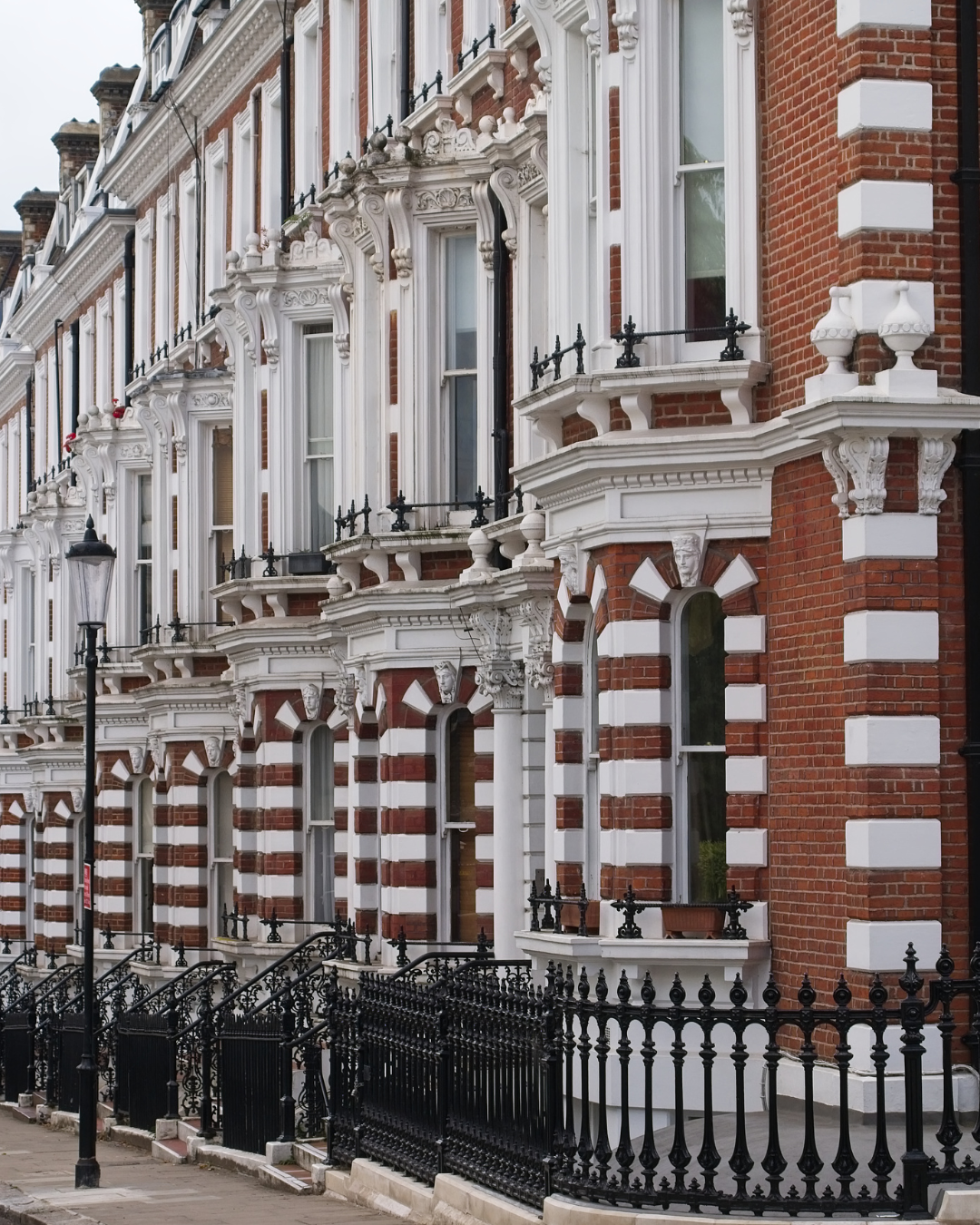
Walk down Fournier Street in Spitalfields on a quiet morning and you will feel it — that sense that the street has been here far longer than you. The Georgian terraced houses rise three and four storeys, their red brick and white-trimmed windows as elegant now as they were when silk weavers lived and worked behind them. Canary Wharf glitters to the east. The City’s glass towers loom to the west. Yet Fournier Street feels apart from all of it, locked in another century.
That century was the late 1600s, and the people who built these streets were refugees. French Protestants — the Huguenots — who had fled their homeland after the king of France stripped them of their rights, their churches, and their safety. They came to London with their skills, their faith, and very little else. They remade Spitalfields in the process, and left a mark on this city that three hundred years have not erased.
Who Were the Huguenots?
The Huguenots were French Protestants who followed the Reformed tradition of Christianity, rooted in the teachings of John Calvin. In 1598, the Edict of Nantes gave them legal protection in Catholic France — the right to worship, to hold public office, and to maintain their own churches and schools. For nearly a century, an uneasy peace held.
Then, in 1685, King Louis XIV revoked the Edict of Fontainebleau. The Edict of Nantes was cancelled. Protestant churches were demolished. Pastors were expelled. Soldiers were quartered in Huguenot homes, and families who refused to convert to Catholicism faced imprisonment or forced labour in the galleys. Within months, the exodus began.
Around 200,000 Huguenots left France in the years that followed. They went to England, the Dutch Republic, Prussia, Switzerland, and as far as the Cape Colony in South Africa. Approximately 50,000 settled in England, with the largest community taking root in London. Many arrived with nothing but the skills in their hands.
🏛️ Free Guide: How to Trace Your English & British Ancestry
Step-by-step: GRO records, census 1841–1921, parish registers, the National Archives (Kew), London Metropolitan Archives, and planning a heritage trip. Completely free.
Get the Free Guide → Subscribe free at the guide page to receive weekly London heritage storiesWhy They Fled — and Why England Welcomed Them
The Revocation of the Edict of Nantes did not just end religious tolerance in France. It ended lives. Dragoons — mounted soldiers known as dragons — were billeted in Huguenot homes with orders to make their hosts’ lives unbearable until they converted. The tactic was called the dragonnades. Children were taken and placed in Catholic institutions. Men who refused to renounce their faith were sent to work as galley slaves.
England, then under the Protestant King William III after 1689, was glad to receive them. The Crown issued a Declaration of Indulgence welcoming the refugees, and Parliament offered naturalisation to those who swore loyalty to the Crown. More practically, the Huguenots brought extraordinary skills: silk weaving, watchmaking, silversmithing, glassblowing, papermaking. France’s loss was England’s immediate gain.
They were not the only refugees London had absorbed. The city had already taken in Flemish weavers fleeing Spanish persecution in the sixteenth century. The same streets, the same trades, the same logic of flight and survival. But the Huguenots came in greater numbers and with sharper organisation, and their imprint on London would be deeper than any who came before them.
🏙️ Enjoying this? 3,000 London lovers get stories like this every week. Subscribe free →
Spitalfields — Where the Refugees Rebuilt Their Lives
The Huguenots settled in the area just outside the old walls of the City of London — in Spitalfields, Shoreditch, and Soho, where rents were lower and regulations on trade were less strict. Spitalfields became the heart of the community. The name comes from the medieval priory of St Mary Spital that once stood nearby; by the 1690s, it was filling with the sound of looms.
Silk weaving required light. The weavers built their homes with large windows on the upper floors — you can still see them today on Fournier Street and Elder Street, those wide, multi-paned windows set into the brick facades, filling the rooms above with the diffuse northern light that silk work demanded. The looms were up there, in rooms that now serve as bedrooms or studies. Downstairs, the families lived, ate, and prayed.
The Spitalfields silk became celebrated throughout England. Huguenot weavers introduced new techniques — Jacquard patterns, rich brocades, damasks woven in gold and silver thread. Their cloth was worn at the English court. They supplied the gowns of aristocratic ladies and the waistcoats of gentlemen. At the peak of the trade in the mid-eighteenth century, Spitalfields employed tens of thousands of workers, and the names above the doorways on the finest streets were French: Ogier, Vansomeren, Lemaitre.
Christ Church Spitalfields — Heart of the Community
At the top of Commercial Street, at the edge of what was once the Huguenot quarter, stands Christ Church Spitalfields. Designed by Nicholas Hawksmoor, one of the great architects of the English Baroque, it was completed in 1729. Its white Portland stone tower can be seen from a considerable distance — an anchor point in a landscape of rooftops and cranes.
The church was built partly to serve the growing Huguenot community, and for several decades French Protestant services were held within it. Many of the names in its burial registers are French: Beaumont, Duval, Chabot, Bonnet. The church has been restored in recent years and now holds concerts, exhibitions, and regular services. It is open to visitors, and worth stepping inside for the scale and light of the interior alone.
The churchyard outside still holds some of the earliest graves, weathered now but legible if you look closely. The surnames on the stones are a quiet register of the community that once surrounded them.
The Building That Changed Its Faith Four Times
At the corner of Fournier Street and Brick Lane stands a building that tells the entire history of East London immigration in a single structure. In 1743, it was built as La Neuve Eglise — the New Church — for the Huguenot community. By the early nineteenth century, the Huguenots had largely integrated into English society, and the building passed to a Methodist congregation.
Then came the Jewish immigrants, fleeing persecution in Russia and Eastern Europe. In 1897, the building became the Machzike Hadath — “Upholders of the Faith” — one of the principal synagogues of a community that would make Brick Lane synonymous with Jewish East London for much of the twentieth century. The Hebrew inscription remains above the door to this day.
Since 1976, the building has been the Jamme Masjid — a mosque serving the Bangladeshi community that transformed Brick Lane again in the latter decades of the century. One building. Four faiths. Nearly three centuries of migration, survival, and reinvention. If there is a single physical object in London that captures the city’s identity as a place of refuge, it may be this.
Huguenot Surnames — Could You Have French Refugee Ancestry?
Historians estimate that as many as one in six British people with English-speaking ancestry may have at least one Huguenot ancestor. The figure is impossible to verify precisely, but it speaks to how thoroughly the refugees integrated. Within two or three generations, most Huguenot families had converted entirely to English ways. Many anglicised their surnames: the French Beauchamp became Beacham; Corbeau became Corbett.
If your family tree includes any of the following surnames, Huguenot ancestry is worth investigating: Bosanquet, Courtauld, De la Rue, DuBois, Garrick, Layard, Lemaitre, Ligonier, Papillon, Romilly, Riou, Sibley, Tyssen, or Vansittart. David Garrick, the celebrated eighteenth-century actor, was of Huguenot descent. The Courtauld family — whose legacy lives on in the Courtauld Gallery in London — built one of England’s great textile dynasties from Huguenot origins. De La Rue, the company that still prints banknotes for countries around the world, was founded by a man of Huguenot ancestry.
Not all Huguenot names remained obviously French. Many were translated directly: a family called Lefebvre (the smith) might become simply Smith. Some changed just the spelling. Others added an English-sounding suffix over generations. The only reliable way to know is to search the records.
How to Trace Your Huguenot Heritage
The Huguenot Society of Great Britain and Ireland (huguenot-society.org.uk) is the starting point for anyone researching Huguenot ancestry. The Society holds an extensive archive of records, publishes the Proceedings of the Huguenot Society, and maintains lists of known Huguenot families and their documented histories. Membership gives access to considerable research resources.
The National Archives at Kew holds the registers of the foreign Protestant churches in England — the records of births, marriages, and deaths kept by the Huguenot congregations themselves. These registers have been microfilmed and many are now digitised. Ancestry.com includes a collection of Huguenot church records within its database. The London Metropolitan Archives also holds relevant collections, particularly for the Spitalfields and Soho communities.
If you plan to visit London and want to bring your research to life, begin with the Dennis Severs’ House at 18 Folgate Street, Spitalfields. This preserved eighteenth-century silk weaver’s house has been kept — almost frozen — as it might have appeared when a Huguenot family lived and worked in it. The experience is unlike any museum. You move through rooms as though the family has just stepped out; a half-eaten meal on the table, a coat thrown over a chair, candles burning. It is open on selected evenings and Sunday mornings, and advance booking is strongly recommended.
Visiting Huguenot London Today
The best way to experience Huguenot London is on foot. Begin at Liverpool Street station and walk east into Spitalfields. The market at the centre of the area is a good orientation point, surrounded by cafés and independent stalls. From there, turn towards Fournier Street and walk its length slowly. The houses on either side date largely from the 1720s and 1730s — the Huguenots built them, and the proportions are elegant even now.
Elder Street and Princelet Street are equally worth exploring. Number 19 Princelet Street is another preserved Huguenot house, now a museum of immigration that is open on occasional weekends — check the website before you visit, as opening times are limited. At the end of Fournier Street, the four-faith building at the corner of Brick Lane is always visible and always striking, its layered history written in the architectural palimpsest of its walls.
Christ Church Spitalfields is a short walk away and worth entering if it is open. The interior is light and spare, classical in the best English tradition, and the history it carries is tangible. If you are there on a market day, the surrounding streets will be busy; come on a weekday morning for something closer to quiet.
Further west, the area around Soho also has Huguenot connections — the French Protestant church on Soho Square was a significant centre of the community in the eighteenth century. The church that now stands there is a later building, but the congregation is continuous, and services in French are still held. Threadneedle Street in the City of London takes its name from the French Protestant Church that stood there for centuries, a reminder that the Huguenot presence was felt across the whole of London, not just in the East End.
Frequently Asked Questions
Where did the Huguenots settle in London?
The largest Huguenot community in London settled in Spitalfields and Shoreditch, just outside the old City walls, where they worked as silk weavers. A second significant community established itself in Soho, where many worked in the luxury trades. Smaller communities settled in Greenwich, Wandsworth, and along the Thames.
How do I know if I have Huguenot ancestry?
If your family name is of French origin, or if your English ancestors came from families that arrived in England in the late seventeenth or early eighteenth century, Huguenot ancestry is possible. The Huguenot Society of Great Britain and Ireland holds extensive records and can help you search. The National Archives at Kew also holds the registers of the foreign Protestant churches, which record Huguenot baptisms, marriages, and burials in England.
What is the Huguenot Society?
The Huguenot Society of Great Britain and Ireland was founded in 1885 to preserve and promote the history of the Huguenot refugees and their descendants in the British Isles. It publishes research, maintains archives, and supports members in tracing their Huguenot ancestry. Their website at huguenot-society.org.uk is the best starting point for anyone beginning Huguenot genealogy research.
A City Built by Strangers
London has always been a city shaped by people who arrived from elsewhere. The Huguenots were not the first to remake a corner of it, and they were not the last. But they left something particular behind — not just the streets and the buildings, but the silk that clothed Georgian England, the watches that kept its time, the silver that sat on its tables, and the names, tucked into family trees across Britain and America and the wider world, waiting to be found.
If you walk down Fournier Street and look up at those wide weaving-room windows, you are looking at what survival can build. Three hundred years on, the evidence is still there in the brick.
Join 3,000+ London Lovers
Every week, get London’s hidden history, heritage walks, and stories from the city’s remarkable past — straight to your inbox.
Subscribe free — enter your email:
Already subscribed? Download your free London guide (PDF)
Love more? Join 64,000 Ireland lovers → · Join 43,000 Scotland lovers → · Join 30,000 Italy lovers →
Free forever · One email per week · Unsubscribe anytime
