
Choosing where to stay in London is one of the most important decisions you’ll make for your US trip. London is vast — more than 600 square miles and 270 Underground stations. The area you choose as your base shapes everything. It affects your travel times, your budget, and the kind of city you experience. This guide covers the best areas to stay in London for US visitors, with honest pros and cons for each.
How to Choose Where to Stay in London
Before you pick a neighbourhood, think about what kind of trip you want. Do you want to tick off the main sights — Big Ben, the Tower of London, Buckingham Palace? Or do you want local cafés, street markets, and a neighbourhood that feels lived-in? London suits both approaches, but they suit different areas.
Transport matters too. The London Underground (the Tube) is excellent. But Zone 1 — the central area — has the most expensive hotels. Staying in Zone 2 can save you a lot per night. You’ll add just 10 to 20 minutes to your journey times. For many travellers, that’s a good trade.
Westminster and Victoria — Best for First-Time Visitors
If this is your first trip to London, Westminster and Victoria are worth considering. You can walk to the Houses of Parliament, Westminster Abbey, and Buckingham Palace. The South Bank is a short walk across Waterloo Bridge.
The downside is cost. This is one of the most expensive parts of London for hotels. It’s also busy. You’ll find tourist buses, large crowds, and very few restaurants that feel genuinely local. Most places here cater to visitors rather than residents. But for a short trip, the location is hard to beat.
Best for: First-timers, short trips of two to three days, families who want to be close to the sights.
Covent Garden and Soho — Best for Culture and Nightlife
Covent Garden sits at the heart of London’s West End. It’s surrounded by theatres, restaurants, street performers, and independent shops. Soho is right next door to the west. It’s a compact grid of streets with some of the city’s best restaurants, cocktail bars, and late-night venues. Together, these two areas form the cultural centre of London.
Staying here puts you close to the National Gallery, the British Museum, and the West End theatres. Seven Dials, just to the north, has excellent independent shops. The area is lively until late. That makes it ideal if you want to be in the thick of things. Bear in mind that street-facing rooms can be noisy.
Hotels here tend to be expensive. But you’ll spend less on Tube fares, which balances things out over a full week.
Best for: Theatre-goers, food lovers, travellers who want to walk everywhere.
Notting Hill and Kensington — Best for Character and Charm
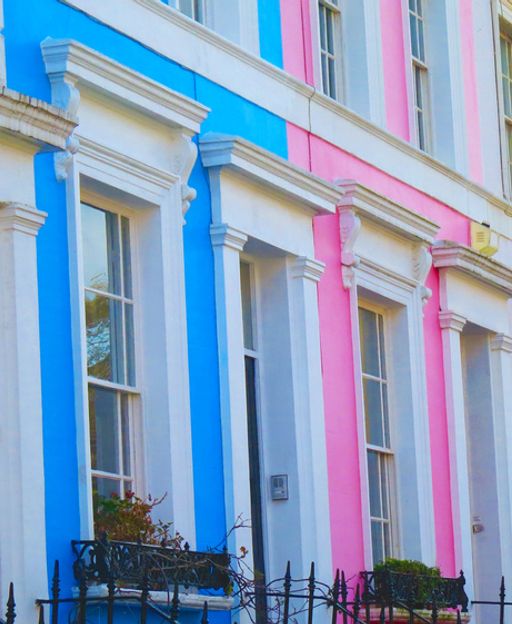
Notting Hill is one of London’s most photogenic neighbourhoods. The colourful painted terraces, Portobello Road Market, and independent boutiques give it real character. It’s also a genuinely residential area. People live here. That means proper local pubs, good coffee shops, and a very different energy from the tourist zones.
Our full Notting Hill guide covers what to see and where to eat. For accommodation, you’ll find Victorian bed and breakfasts alongside boutique hotels. Kensington, immediately to the south, is more formal and elegant. It has wide streets, grand white stucco houses, and Hyde Park on its doorstep.
South Kensington is worth special mention for families. The Natural History Museum, the Victoria and Albert Museum, and the Science Museum are all free. All three are within a five-minute walk of each other. If you’re travelling with children, basing yourself here is a very sensible choice.
Best for: Couples, families with children, visitors who want a residential feel rather than tourist London.
Shoreditch and East London — Best for Independent Travellers
Shoreditch is London’s creative quarter. It has street art, independent coffee shops, vintage clothing markets, and some of the city’s most exciting restaurants. Our full Shoreditch guide explains what makes this area worth your time.
Brick Lane is just to the east. It’s famous for its curry houses and its Sunday morning market. Spitalfields Market is one of the best covered markets in the city. Columbia Road Flower Market opens on Sunday mornings and is one of the most photogenic spots in London. It’s completely free to wander.
The downside is distance. Shoreditch sits on the eastern edge of Zones 1 and 2. Most central London sights are 20 to 30 minutes away by Tube or bus. That’s manageable, but it’s worth knowing before you book.
Best for: Repeat visitors, younger travellers, anyone who values local London over tourist London.
South Bank and Southwark — Best Value in Central London
The South Bank runs along the Thames south of the river, from Waterloo to Tower Bridge. It’s home to the Tate Modern, Shakespeare’s Globe, Borough Market, and the Southbank Centre. The riverside walk is one of the best free experiences in London.
Hotels here tend to be slightly cheaper than in Mayfair or Covent Garden. That’s partly because many visitors still think of the South Bank as being south of London rather than in the centre. In practice, it’s central. Waterloo and London Bridge stations both offer fast links to the rest of the city. Both have direct trains to the airports.
Borough Market is a short walk from London Bridge. It’s one of the oldest and most celebrated food markets in the city. If you’re planning a food-focused trip, Southwark puts you right at the heart of it.
Best for: Budget-conscious travellers who don’t want to sacrifice location, food lovers, museum-goers.
Greenwich — Best for Space and Riverside Calm
Greenwich is about 30 minutes from central London by Tube or river clipper. It feels like a proper town. It has a market, a park, a university, the Cutty Sark, and the Royal Observatory where you can stand on the Prime Meridian. Our Greenwich guide covers it in full.
Accommodation in Greenwich is generally cheaper than central London. The area is much quieter at night. The downside is the commute into the centre. For visitors who want a calmer base and don’t mind travelling in, Greenwich is a genuinely lovely choice.
Best for: Visitors who want a quieter, more residential feel and are happy with a 30-minute commute to the centre.
Practical Tips for Booking Your London Hotel
Book as early as you can. London hotel prices rise sharply as availability falls. This is especially true for summer (June to August) and around major events. Waiting until the last minute doesn’t pay off here.
Check whether your hotel includes breakfast. London café prices are high. A full English breakfast can cost £12 to £18 per person. Many mid-range hotels include breakfast in the room rate, which can noticeably cut your daily spending.
Check which Zone your hotel is in before you book. Zone 1 is the most central and the most expensive. Zone 2 usually adds only 10 to 15 minutes to your journeys but can save you £30 to £60 per night on the room.
Think about your itinerary too. If you’re planning day trips to Oxford or Bath, Paddington and Victoria have fast direct rail connections. If you’re mostly exploring the city, position yourself between the areas you most want to visit. Our 3-day London itinerary for US visitors is a good starting point for planning which parts of the city to prioritise.
Frequently Asked Questions About Where to Stay in London
What is the best area to stay in London for first-time visitors?
Westminster, Covent Garden, and South Bank are the best areas to stay in London for first-time visitors. Westminster puts you near the main landmarks. Covent Garden gives you great dining and theatre options. South Bank offers good value with a central riverside location near the Tate Modern and Borough Market.
How far in advance should I book a hotel in London?
Book at least two to three months ahead for summer trips. Book four to six months ahead during school holidays or around major events. London hotels fill up fast, and prices climb quickly as availability drops — especially in well-located mid-range properties in Zones 1 and 2.
Is it worth staying outside Zone 1 to save money in London?
Yes. Staying in Zone 2 can save you £30 to £80 per night while adding just 10 to 20 minutes to your journey times. Areas like Shoreditch, Greenwich, and parts of Notting Hill are in Zone 2. They also offer a more local, less touristy experience alongside the cost saving.
Which London neighbourhood is best for families?
South Kensington is the best London neighbourhood for families visiting from the US. Three world-class free museums are all within a five-minute walk of each other — the Natural History Museum, the Science Museum, and the Victoria and Albert Museum. The area has good restaurants and easy Tube connections into the rest of the city.
Join 3,000+ London Lovers
Every week, get London’s hidden gems, local secrets, and travel inspiration — the kind you won’t find in any guidebook.
Subscribe free — enter your email:
Love more? Join 64,000 Ireland lovers → · Join 43,000 Scotland lovers → · Join 30,000 Italy lovers →
Free forever · One email per week · Unsubscribe anytime