
South Kensington is one of the most rewarding parts of London for American visitors. This neighbourhood in the Royal Borough of Kensington and Chelsea holds three of the world’s greatest museums — all free to enter. Add Kensington Palace, the Royal Albert Hall, and some of the city’s finest streets, and you have enough to fill two full days without leaving a one-mile radius.
This guide covers everything you need to know to plan a visit to South Kensington London — the museums, the palace, where to eat, and how to get there.
What Makes South Kensington London Worth a Full Day
South Kensington sits in west London, roughly a mile south of Hyde Park. The neighbourhood grew rapidly in the 1860s, funded by profits from the Great Exhibition of 1851. Prince Albert championed the idea of a great cultural quarter — and that is exactly what was built.
Today, Exhibition Road runs through the heart of the area. Walk along it and you will find the Natural History Museum, the Science Museum, and the Victoria and Albert Museum all within a few minutes of each other. This stretch of institutions is sometimes called Albertopolis, in honour of the prince who made it possible.
If you are planning how to spend your time in London, South Kensington is one of the easiest decisions you will make. For help planning the wider trip, see our guide to London’s best neighbourhoods for US visitors.
The Natural History Museum
The Natural History Museum is the most-visited attraction in South Kensington. Alfred Waterhouse designed it in the Romanesque style, and the terracotta facade is unlike anything else in London. The building itself stops people in the street.
Inside, the first thing you see is Hintze Hall. A 25-metre blue whale skeleton hangs from the ceiling. It is called Hope. The effect is dramatic — most visitors look up and catch their breath immediately.
The museum holds around 80 million specimens, but you do not need to see them all. Here are the collections worth prioritising:
- Dinosaurs — the upper galleries hold one of the best dinosaur exhibitions in Europe. The Tyrannosaurus rex animatronic still draws crowds, even after all these years.
- The Vault — a small display of gems and minerals, including meteorites and a stone from Mars. It is easy to miss, but worth finding.
- The Wildlife Garden — a working meadow in the museum’s grounds. Open in spring and summer only, it is a peaceful spot between galleries.
Admission to the permanent galleries is free. Most special exhibitions charge a fee — budget around £20–25 per person if you want to see everything. Arrive early. The museum opens at 10:00 and the queues build fast.
For a broader look at what is free in the city, see our complete guide to free museums in London for US visitors.
The Victoria and Albert Museum
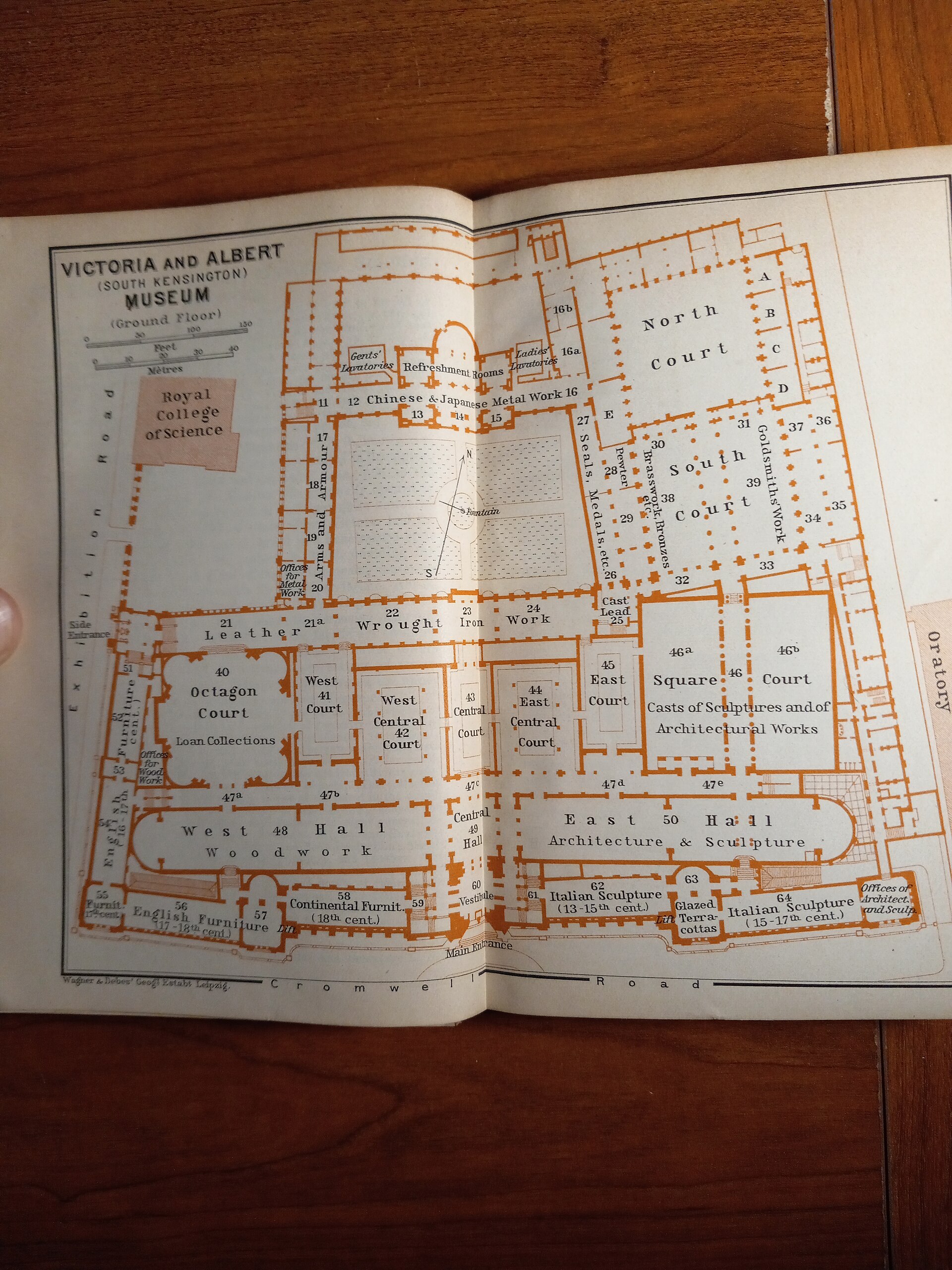
The Victoria and Albert Museum — known as the V&A — is the world’s largest museum of art and design. It holds more than 2.3 million objects spanning 5,000 years of human creativity. The collection covers ceramics, textiles, fashion, jewellery, furniture, glass, photography, and sculpture.
Start at the main entrance on Cromwell Road. Pick up a map from the information desk. The V&A is a labyrinth, and it is easy to spend an hour going in circles.
The Cast Courts
Two vast rooms hold plaster casts of some of the world’s greatest sculptures. Michelangelo’s David stands here in full scale. Trajan’s Column fills one entire hall. These rooms have been here since 1873 and feel genuinely extraordinary. Nothing quite prepares you for them.
The British Galleries
Four centuries of British art and design appear here, arranged chronologically. The Raphael Cartoons are here too: seven enormous tapestry designs by Raphael himself, commissioned by Pope Leo X in 1515. They are among the most important Renaissance works outside Italy.
The Fashion Gallery
The V&A holds one of the finest fashion archives in the world. The permanent gallery traces clothing from the 18th century to the present day. It rewards visitors who are not especially interested in fashion — the history it reveals is fascinating.
Admission to the permanent collection is free. Temporary exhibitions cost extra. The courtyard café is excellent for lunch. For more on London’s art world, see our guide to the best art galleries in London for US visitors.
The Science Museum
The Science Museum stands directly next door to the Natural History Museum. It was founded in 1857 as part of the South Kensington Museum, then became independent in 1909.
The ground floor is the most dramatic. The Making the Modern World gallery displays real objects — not replicas. Stephenson’s Rocket locomotive stands here. So does an Apollo 10 command module and Crick and Watson’s original DNA model. You stand next to the actual things. The scale of human achievement becomes very real, very quickly.
Other highlights include:
- Exploring Space — rockets, satellites, and space suits from the early space race, including real artefacts flown in orbit.
- Medicine: The Wellcome Galleries — five floors covering the history of medicine, human health, and modern treatments.
- The IMAX Cinema — science and space documentaries on an eight-storey screen. Tickets cost around £18 for adults.
Admission to the museum is free. The interactive exhibits work well for visitors of all ages, though teenagers and young adults tend to find the hands-on sections particularly engaging.
Kensington Palace and Kensington Gardens
Kensington Palace sits at the western edge of Hyde Park, about a 10-minute walk from Exhibition Road. It has been a royal residence since 1689, when William III bought it to escape the damp air near the Thames.
Several members of the royal family live here today. The State Rooms are open to visitors. Recent exhibitions have covered Queen Victoria’s childhood, Princess Diana’s fashion, and the long history of the palace itself.
Admission to the State Rooms costs around £18 for adults in 2026. Book in advance — popular time slots sell out, particularly in summer and at weekends.
The gardens around the palace form part of Kensington Gardens, which connect directly to Hyde Park. The Round Pond, the Serpentine Gallery, and the Diana Memorial Fountain are all within easy walking distance. For more on the wider parkland, see our guide to Hyde Park for US visitors.
The Royal Albert Hall
The Royal Albert Hall stands on the northern edge of South Kensington, opposite the Albert Memorial in Kensington Gardens. It opened in 1871. Queen Victoria attended the opening ceremony herself.
The hall holds around 5,000 people and hosts more than 370 events a year. If you want to attend a concert or performance, book well in advance. The BBC Proms run here every summer, with standing tickets starting from around £6 in the Arena.
Even if you do not attend an event, the exterior is worth seeing. The terracotta frieze running around the building depicts the Triumph of Arts and Sciences and took three years to complete.
Where to Eat in South Kensington
South Kensington has solid options at every point of the day.
Breakfast and Coffee
Aubaine on Fulham Road is a French-style bakery and café. The croissants and pastries are good, and it opens early enough for a visit before the museums open. Bumpkin on Sydney Street is a better choice if you want a fuller cooked breakfast before a long day on your feet.
Lunch
The Café at the V&A serves lunch in the original Victorian dining rooms. The setting alone makes it worth visiting. Prices are fair for a museum café, and the soup is consistently good. For something more substantial, Tendido Cero on Old Brompton Road offers Spanish tapas that locals return to regularly.
Dinner
The Anglesea Arms on Selwood Terrace is a traditional pub with a menu that punches well above the usual pub food standard. Bibendum on Fulham Road occupies the old Michelin building and offers a menu of classic French cooking in genuinely beautiful surroundings.
Getting to South Kensington London
South Kensington tube station is on the Piccadilly, Circle, and District lines. From central London, the journey takes around 10–15 minutes. The station exits directly onto Exhibition Road and Cromwell Road — you are outside the Natural History Museum within two minutes of leaving the train.
From Heathrow Airport, take the Piccadilly line directly to South Kensington. The journey takes around 45 minutes and costs around £5.60–£6.50 with an Oyster card or contactless payment.
South Kensington is also walkable from Knightsbridge (10 minutes) and Chelsea (15 minutes). For a full overview of transport options across the city, see our guide to getting around London for US visitors.
Tips for Visiting South Kensington
- Arrive early. The Natural History Museum and the V&A both open at 10:00. Arriving at opening time means smaller crowds and a clearer run at the best exhibits.
- Allow two days if possible. Trying to see all three museums in a single day is exhausting. Spread the visit across two days to do it justice.
- Book paid exhibitions in advance. General admission is free, but popular ticketed shows sell out. Book online before you travel.
- Eat outside the museums at lunch. Museum cafés are convenient but can be pricey. Supermarkets on Old Brompton Road offer cheaper options for eating in the museum gardens.
- Download the museum apps. The Natural History Museum and the V&A both have apps that work as guided tours. Download them before you arrive — the museums’ Wi-Fi can be slow during busy periods.
Frequently Asked Questions About South Kensington London
Is South Kensington London free to visit?
The three main museums in South Kensington — the Natural History Museum, the Victoria and Albert Museum, and the Science Museum — are all free to enter for their permanent collections. Some temporary exhibitions charge admission fees. Kensington Palace State Rooms cost around £18 per adult in 2026, and you can book tickets online in advance.
How much time do you need for South Kensington London?
Most visitors need at least a full day to see South Kensington properly. If you plan to visit all three museums and Kensington Palace, budget two days. Each museum is large enough to occupy several hours on its own — the V&A alone has more than seven miles of gallery space.
What is the best way to get to South Kensington London from central London?
The easiest route is the Underground. South Kensington station sits on the Piccadilly, Circle, and District lines. From central London, the journey takes around 10–15 minutes. Pay with a contactless card or Oyster card — this is significantly cheaper than buying a paper ticket at the station.
Where should I start my visit to South Kensington London?
Start with the Natural History Museum. It is the most visually impressive building in the area, and Hintze Hall with the blue whale skeleton makes an unforgettable opening to the day. The V&A and Science Museum are both within a five-minute walk. Visit Kensington Palace in the afternoon when the museum crowds have thinned.
🇬🇧 25 London Places Most Visitors Miss
From secret riverside walks to hidden Victorian tunnels, centuries-old pubs to rooftop gardens with skyline views — our free guide reveals the London most visitors never discover. Join 3,000+ London lovers who get it free.
Get Your Free 25-Places Guide →Free forever · One email per week · Unsubscribe anytime