
London Neighbourhoods Guide: The Best Areas to Explore as a US Visitor
This London neighbourhoods guide covers the 10 areas every US visitor should know before they arrive. London is vast — 32 boroughs, 9 million people, and hundreds of distinct communities. But you don’t need to see all of it. You need to know which neighbourhoods suit your travel style, what each one offers, and how to move between them. This guide gives you exactly that, area by area.
How to Use This London Neighbourhoods Guide
London doesn’t have a single centre the way many American cities do. It has dozens of them. Each neighbourhood has its own personality, its own history, and its own reasons to visit. Some are famous. Some are overlooked. All of them are worth understanding before you book.
This guide focuses on neighbourhoods worth exploring during the day, not just sleeping in. For tips on moving between areas, read our complete guide to getting around London.
Westminster: The London Neighbourhoods Guide Starts Here
Westminster is where London shows its official face. The Houses of Parliament, Westminster Abbey, Buckingham Palace, and Trafalgar Square all sit within walking distance of each other. Most US visitors spend at least half a day here, and rightly so.
But Westminster is more than its monuments. St James’s Park is one of the best royal parks in the city — free to enter, easy to walk, and genuinely beautiful at any time of year. The area around Whitehall tells 1,000 years of British political history in a single street.
What to Do in Westminster
Walk along the Embankment from Westminster Bridge to Blackfriars. Cross Westminster Bridge on foot for the best view of the Houses of Parliament. Visit Westminster Abbey early — it opens at 9:30am and queues build fast. If you’re on a budget, note that entry costs around £28 for adults, but the exterior and surrounding streets are free.
Westminster suits first-time visitors who want to tick the iconic sights early and then explore elsewhere. Once you’ve seen the landmarks, the rest of London opens up.
Soho: London’s Most Energetic Neighbourhood
Soho sits at the heart of London’s West End, and it never really sleeps. During the day, it’s a maze of cafés, independent restaurants, record shops, and film industry offices. At night, it becomes one of the city’s most vibrant dining and nightlife areas.
Carnaby Street is here — less edgy than its 1960s heyday, but still worth a look. Berwick Street Market sells fresh produce on weekday mornings. The area around Old Compton Street is the heart of London’s LGBTQ+ community, welcoming and lively year-round.
Best Streets in Soho
Dean Street is quieter than the main drag and home to some of London’s best independent restaurants. Frith Street has historical connections to Mozart (who performed here as a child) and Ronnie Scott’s Jazz Club, which has been running since 1959. Greek Street and Frith Street intersect at Soho Square, a small green patch ideal for a lunch break.
Soho connects easily to Covent Garden to the east and Oxford Street to the north. It’s compact — you can walk across it in 15 minutes — but dense enough to fill an afternoon.
🇬🇧 25 London Places Most Visitors Miss
From secret riverside walks to hidden Victorian tunnels, centuries-old pubs to rooftop gardens with skyline views — our free guide reveals the London most visitors never discover. Join 3,000+ London lovers who get it free.
Get Your Free 25-Places Guide →Shoreditch: East London’s Creative Hub
Shoreditch is where London’s creative industries — tech, fashion, art, and food — cluster together. It’s a completely different energy from Westminster or Kensington. The streets are covered in street art. The coffee shops open early and stay open late. The restaurants range from Bangladeshi curry houses on Brick Lane to tasting menus in converted warehouses.
Brick Lane Market runs every Sunday and pulls in thousands of visitors. Columbia Road Flower Market runs Sunday mornings and is one of London’s most photogenic experiences. Get there before 10am — it gets very crowded.
What Makes Shoreditch Different
Shoreditch is genuinely diverse in ways that many London neighbourhoods are not. The area around Banglatown (the eastern end of Brick Lane) is one of the oldest Bangladeshi communities in Europe. The street art on Shoreditch High Street changes regularly — artists include international names alongside local talent.
Shoreditch is about 25 minutes by Overground from central London. It’s not on the Tube’s main lines, which puts some visitors off. Don’t let it. The journey is straightforward and the area rewards the effort.
South Bank: London’s Cultural Riverside Strip
The South Bank runs along the southern edge of the Thames from Westminster Bridge to Tower Bridge. It’s almost entirely car-free along the riverside path, which makes it one of the best walks in the city. On a clear day, the views across to St Paul’s Cathedral and the Shard are outstanding.
The cultural institutions here are world-class. Tate Modern is one of the best modern art galleries anywhere — and entry to the permanent collection is free. The Southbank Centre hosts concerts, exhibitions, and events year-round. The National Theatre sits alongside it. The BFI (British Film Institute) runs screenings every day.
For a deeper dive into this area, read our complete South Bank guide for US visitors.
The South Bank Walk
Start at Westminster Bridge and walk east. You’ll pass the London Eye, then the Southbank Centre, then Tate Modern (cross the Millennium Bridge to see St Paul’s up close), then Borough Market, then The Shard, then Tower Bridge. The whole walk takes about 90 minutes without stopping. With stops, plan for a full day.
Borough Market is one of London’s best food destinations. It’s open Monday to Saturday. Go hungry. The London food markets guide covers it in full alongside other markets across the city.
Camden: Markets, Music, and Counterculture
Camden has been London’s counterculture heartland since the 1970s. The market is enormous — one of the largest in Europe — and sells everything from vintage clothing to street food from around the world. The canal basin at Camden Lock is photogenic and has good cafés alongside it.
Camden is loud, colourful, and very different from the polished areas around Kensington and Chelsea. It’s not to everyone’s taste, but it’s authentically itself. If you want to see a part of London that hasn’t been entirely smoothed out for tourists, Camden delivers.
Camden Beyond the Market
Primrose Hill is a 10-minute walk from Camden Market and offers one of the best panoramic views of London from an elevated position. The hill is a proper green space — bring a blanket if the weather allows. Regent’s Canal runs through both areas and you can walk the towpath in either direction without crossing a road.
Notting Hill: More Than a Film Location
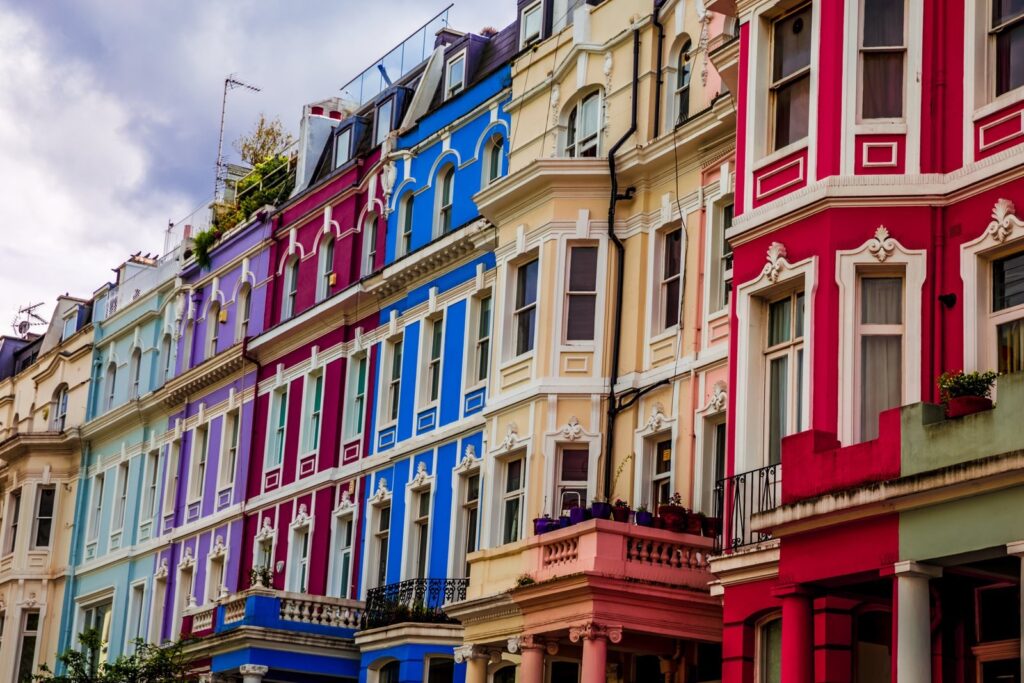
Notting Hill became world-famous after the 1999 film, but the area was already one of London’s most desirable long before that. The streets around Portobello Road are lined with pastel-painted Victorian terraces. The antiques market on Portobello Road runs Saturday mornings and is one of the best in London.
Notting Hill Carnival happens every August Bank Holiday weekend and is Europe’s largest street festival — around 2.5 million people attend over two days. Outside of carnival time, the area is quieter, more residential, and excellent for a morning of exploring followed by lunch.
Where to Go in Notting Hill
The Electric Cinema on Portobello Road is one of London’s oldest cinemas (opened 1910) and still runs films daily. The Ledbury Road area has high-end independent shops and good cafés. Golborne Road, just north of Portobello, is less touristy and more neighbourhood-feeling — a good place for lunch away from the crowds.
Covent Garden: Tourist-Friendly Without the Traps
Covent Garden has a reputation as a tourist area, and it is — but that doesn’t make it bad. The covered market building is genuinely beautiful, dating from 1830. The street performers in the central piazza are often very good. The area around Neal’s Yard is one of the most colourful corners in London.
The real reason to go to Covent Garden is its position. It sits between Soho to the west and the City to the east, making it a natural hub. The Strand runs along its southern edge and connects Westminster to the City in a single straight line.
Greenwich: History, Science, and the Best Park in London
Greenwich is technically in southeast London, about 30 minutes from central London by DLR or river boat. It earns its place in any London neighbourhoods guide because it offers a completely different experience from the rest of the city.
Greenwich Park is the oldest enclosed royal park in London (established 1433) and the views from the top of the hill — across the Old Royal Naval College to Canary Wharf and the City — are among the best in the capital. The Royal Observatory sits at the top. You can stand on the Prime Meridian line (longitude 0°) for free in the courtyard.
What to See in Greenwich
The Cutty Sark is a Victorian clipper ship, now a museum. The National Maritime Museum has free entry. The Old Royal Naval College is free to walk around and its Painted Hall is one of the most impressive rooms in Britain. The market at Greenwich runs Thursday to Sunday and has food, antiques, and crafts.
Greenwich makes an excellent half-day or full-day trip from central London. The river boat from Westminster Pier is the most scenic way to get there — around 50 minutes each way.
Chelsea and Kensington: London’s Museum Mile
Chelsea and Kensington sit side by side in west London and together they contain the highest concentration of world-class free museums in London. The Natural History Museum, the Victoria and Albert Museum, and the Science Museum all sit within a five-minute walk of each other. Entry to all three is free.
The area itself is one of the wealthiest in London. The streets around Sloane Square and King’s Road have high-end shops and excellent restaurants. Hyde Park and Kensington Gardens border the area to the north — together they form a 350-acre green space ideal for a morning walk or afternoon picnic.
Planning a Museum Day in Kensington
The Natural History Museum gets very busy at weekends with families. Arrive before 10am to beat the queues. The V&A is less crowded and has permanent collections covering fashion, furniture, jewellery, ceramics, and photography from across 2,000 years of world history. Budget at least two hours for either museum.
If you’re visiting with children, the Science Museum is usually the favourite — especially the interactive galleries on the upper floors. Read our guide to London with kids for more on family-friendly areas and attractions.
Practical Tips for Exploring London’s Neighbourhoods
London’s neighbourhoods are best explored on foot, but the distances between them mean you’ll need the Tube or bus for longer stretches. An Oyster card or contactless payment card works on all public transport and is capped daily so you never overpay.
Most neighbourhoods in this guide are genuinely safe during the day. Use common sense in crowded areas like markets, keep your phone in your pocket rather than out on the street, and you’ll have no issues.
If budget is a concern, note that most of London’s best experiences — its parks, markets, riverside walks, street art, and free museums — cost nothing. The London travel budget guide breaks down what a trip actually costs in 2026.
Frequently Asked Questions
What are the best London neighbourhoods for first-time US visitors?
Westminster, South Bank, and Covent Garden are the easiest starting points. They’re well-connected, walkable, and cover the most famous sights. Once you’ve got your bearings, Shoreditch, Camden, and Greenwich offer a more local feel. Most first-time visitors benefit from basing themselves centrally and taking day trips to outer areas like Greenwich.
How many neighbourhoods can I visit in one week in London?
Realistically, four to six neighbourhoods in depth — or eight to ten if you’re moving fast and happy with shorter visits. A week is enough to cover Westminster, Soho, South Bank, Shoreditch, Camden, and Kensington properly. Greenwich and Notting Hill can each be done in a half day. Don’t try to tick every area — pick the ones that match your interests and go deep.
Is it safe to walk between London neighbourhoods at night?
The areas covered in this guide — Westminster, Soho, South Bank, Covent Garden, Kensington — are all very safe at night. Shoreditch and Camden are lively after dark and well-policed. As with any major city, stay aware of your surroundings, keep valuables out of sight, and stick to well-lit streets. The Tube runs until around midnight on most lines, with Night Tube services on Fridays and Saturdays.
Which London neighbourhood has the best food scene?
Soho and Shoreditch both have outstanding, diverse restaurant options. Borough Market on the South Bank is the best food market in the city. Notting Hill has excellent independent restaurants on Ledbury Road and Westbourne Grove. If you want one neighbourhood for food alone, Shoreditch covers the most ground — from Brick Lane curry houses to innovative modern restaurants.
When is the best time to visit London’s outdoor markets?
Saturday mornings are the best time for Portobello Road (Notting Hill) and Columbia Road Flower Market (Shoreditch). Sunday mornings work well for Brick Lane Market. Borough Market is open Monday to Saturday — weekdays are less crowded than weekends. Arrive early at any market to avoid the crowds and get first choice of produce and stalls.
Join 3,000+ London Lovers
Every week, get London’s local secrets, little-known places and travel inspiration — the kind you won’t find in any guidebook.
Subscribe free — enter your email:
Free forever · One email per week · Unsubscribe anytime
Ready to explore London?
Get weekly London travel inspiration, hidden gems, and local secrets — free.
Subscribe Free →