
Planning a Cotswolds day trip from London is one of the best decisions you can make on a visit to England. Just 90 minutes from London Paddington by train, the Cotswolds is a world of golden stone villages, flower-lined lanes and rolling hills. This guide covers everything US visitors need to know — how to get there, which villages to visit and what to realistically fit into one day.
Why the Cotswolds Belongs on Your London Trip
Most US visitors spend their entire trip in London. That is understandable — London is enormous and endlessly interesting. But if you have even one free day, the Cotswolds will show you a side of England that London simply cannot offer.
The Cotswolds covers roughly 800 square miles across six English counties, including Gloucestershire, Oxfordshire and Worcestershire. Its villages are built almost entirely from honey-coloured local limestone that turns golden in afternoon light. The houses here have not changed much since the 17th century. There are no motorways cutting through. No shopping centres or fast food chains cluttering the high streets. It is, genuinely, a different England.
The area holds official designation as one of England’s Areas of Outstanding Natural Beauty. Around 100,000 people live here, spread across dozens of small market towns and villages. Tourism is significant, but the Cotswolds has been protected from overdevelopment for decades. The villages feel lived-in, not staged for visitors.
For US visitors — especially those with English or Irish ancestry — the landscape often feels deeply familiar yet completely foreign at the same time. Many visitors describe it as the England they always imagined. If that sounds like you, make time for it.
How to Get from London to the Cotswolds
Three main options exist for a Cotswolds day trip from London: by train, by hire car, or by guided day tour. Each has genuine advantages and real limitations for a single day.
By Train
Trains run from London Paddington to Moreton-in-Marsh, Kingham and Charlbury — all in the heart of the Cotswolds — and typically take 90 minutes to just over two hours. Moreton-in-Marsh is the most useful arrival point for a day trip.
From Moreton, you can take a taxi to Bourton-on-the-Water (20 minutes), Chipping Campden (10 minutes) or Stow-on-the-Wold (15 minutes). Book train tickets in advance through National Rail or Trainline. Standard return fares typically cost £20 to £45 depending on travel time. The earlier you book, the more you save.
By Hire Car
Driving is the best way to explore the Cotswolds, provided you are comfortable driving on the left. With a car, you can visit multiple villages in a day and reach places that have no public transport — like Snowshill or Duntisbourne Abbots.
The drive from central London takes around two hours using the M40 motorway. Allow extra time on summer weekends, when traffic on the A44 and A429 through the villages slows significantly. Parking in most villages costs between £3 and £6 for a full day. UK hire cars almost always have manual gearboxes — if you need an automatic, request one specifically when booking.
By Guided Day Tour
Dozens of companies run guided day tours from London to the Cotswolds, stopping at three or four villages in a single day. These typically depart from central London around 8am and return by 7pm. Tours cost between £50 and £120 per person depending on group size. They suit travellers who prefer not to navigate independently, though you are working to someone else’s timetable.
The Best Cotswolds Villages to Visit
With dozens of villages to choose from, picking where to go is the hardest part of planning. Here are the five most rewarding stops for first-time visitors on a Cotswolds day trip from London.
Bourton-on-the-Water
Often called the Venice of the Cotswolds — though it is far more understated than that nickname suggests — Bourton-on-the-Water draws visitors for good reason. The River Windrush flows through the village centre beneath a series of low stone bridges. The main street is wide, pleasant and perfect for a slow walk. Arrive before 11am or after 3pm on summer weekends if you want space to move.
Burford
Burford has one of the most photogenic high streets in England. The town’s main street slopes downhill from a Norman church at the top to a medieval bridge over the River Windrush at the bottom, flanked on both sides by honey-coloured stone shops, tea rooms and antique dealers. Burford still has an authentic market-town feel. The church of St John the Baptist is worth 20 minutes of your time, and entry is free.
Chipping Campden
Chipping Campden is widely considered the finest Cotswolds market town. Its High Street — a gentle curve of largely unaltered 17th-century buildings — is exceptional. The town’s wealth came from the medieval wool trade, and the grand church of St James reflects what that wealth could buy. Chipping Campden feels less touristy than Bourton and more authentic than many alternatives. It is a real working town that happens to be extraordinary.
Bibury
William Morris, the Victorian designer, called Bibury the most beautiful village in England. The particular draw is Arlington Row — a terrace of 14th-century weavers’ cottages that face a water meadow where ducks and trout move through clear streams. The scene is one of the most photographed in England. Bibury is small enough to cover in an hour, but that hour is very well spent. Visit on a weekday morning before tour groups arrive.
Castle Combe
Castle Combe sits in a wooded valley in Wiltshire, just south of the main Cotswolds area. The village has a perfect medieval market cross, a 14th-century church and a stream running beside stone cottages that have changed barely at all in 400 years. Several films have been shot here. It is smaller and quieter than other Cotswolds villages, which makes it an excellent late-afternoon stop after the main crowds have left elsewhere.
A Suggested One-Day Itinerary
If you are driving, this route covers the highlights efficiently without feeling rushed. Train travellers should focus on Moreton-in-Marsh, Chipping Campden and one other village.
8:30am — Leave London. Take the M40 motorway towards Oxford, then the A44 into the Cotswolds. Aim to reach Chipping Campden by around 10:30am before the day visitors arrive.
10:30am to 12:30pm — Chipping Campden. Walk the High Street, step into St James’ Church and have a morning coffee at one of the town’s small cafés.
12:30pm to 2:30pm — Bourton-on-the-Water for lunch. Several pubs serve food here. After lunch, walk the riverside path and explore the side streets.
2:30pm to 3:30pm — Bibury. A short drive from Bourton, Bibury catches afternoon light well on Arlington Row. Spend an hour and leave before the late coach tours arrive.
3:30pm to 5:00pm — Burford. Drive to Burford for a late-afternoon wander down the high street and a cream tea before heading back to London. Friday evenings and summer weekends see slow return traffic from around 5pm.
🗺️ Free Guide: The Best Day Trips from London (2026)
Top day trips by train, by car, and hidden gems most visitors never find — with travel times, insider tips, and the best time to visit each. Free when you subscribe to Love London.
Get the Free Day Trips Guide → Subscribe free at the guide page to receive weekly London travel storiesBest Time to Visit the Cotswolds from London
The Cotswolds rewards visiting at any time of year, but each season brings something different. Spring (April to May) brings wildflowers, lambs in the fields and cool, clear days. Summer (June to August) is peak season — the villages look their finest but attract the largest crowds. Arrive early on summer weekdays to get ahead of the tour buses.
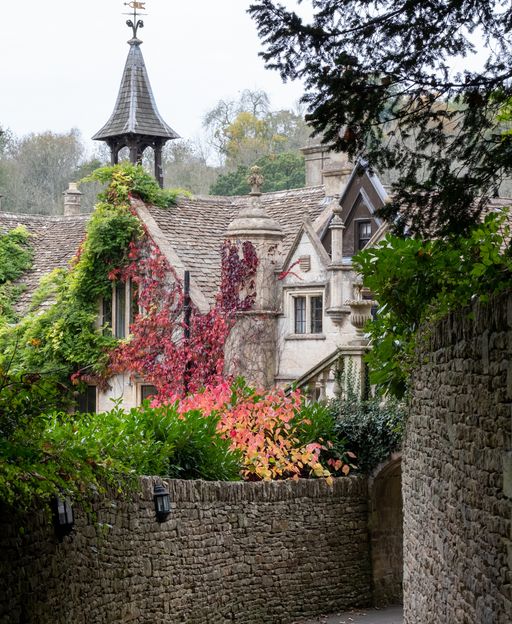
Autumn (September to October) is widely considered the best time to visit. Crowds thin out, the light turns golden, and the stone buildings glow in a way that summer rarely achieves. The image at the top of this article — Castle Combe in autumn — shows exactly what to expect.
Winter (November to February) sees far fewer visitors, and some smaller tearooms and attractions reduce their hours. A quiet Cotswolds village in December frost is genuinely beautiful, and accommodation prices drop noticeably. Our complete seasonal guide for London visitors covers timing in detail, including when to book and what to expect each month.
Practical Tips for US Visitors
Carry cash. Most Cotswolds pubs and cafés accept cards, but smaller establishments — farm shops, market stalls, village churches — sometimes require cash. Keep £30 to £50 in notes for the day.
Book lunch in advance. Popular Cotswolds pubs fill up fast in summer, especially on Saturdays. Book a table at your preferred lunch stop before you leave London. Plan to eat before noon or after 2pm to avoid queues at walk-in establishments.
Wear comfortable shoes. Cotswolds village streets are often uneven, cobbled or steeply sloped. Trainers or walking shoes suit the terrain far better than sandals or flat-soled shoes. If you plan to walk between villages on footpaths, bring waterproof footwear — paths can be muddy even in summer.
Do not try to do too much. Six or seven villages in a single day means more time in the car than out of it. Two or three villages, done well and with a proper lunch, makes a far better day than rushing through five.
Download offline maps. Mobile signal and 4G coverage can be unreliable in rural Cotswolds areas. Download your Google Maps route offline before you leave London so navigation still works when signal drops.
For more day trip options, our Bath day trip guide and Oxford day trip guide cover two other excellent options accessible by train, each with a very different atmosphere to the Cotswolds. For a full London itinerary that includes a day trip slot, see our 5-day London itinerary for US visitors.
Frequently Asked Questions
How long does it take to get from London to the Cotswolds?
By train, the fastest services from London Paddington reach Moreton-in-Marsh in around 90 minutes. By car, expect approximately two hours from central London, with longer journey times on Friday evenings and summer weekends.
Do I need a car to visit the Cotswolds from London?
Not necessarily, but a car makes the experience significantly better. The train gets you to Moreton-in-Marsh, but you will need taxis or local buses to reach individual villages. Several of the most beautiful villages — including Bibury and Castle Combe — are difficult to reach without a car.
Which Cotswolds village is best for a day trip from London?
Chipping Campden offers the best balance of authenticity, beauty and ease of access. It is less overrun than Bourton-on-the-Water and more substantial than Bibury. For first-time visitors, Chipping Campden combined with Burford makes an excellent pairing for a single day.
Is the Cotswolds expensive to visit?
Most Cotswolds villages are free to walk around — there is no entry fee for the villages themselves. Budget around £15 to £25 per person for lunch, £5 to £10 for coffee and snacks, and £3 to £6 for parking. Return train tickets from London add £20 to £45 per person.
When is the Cotswolds least crowded?
Weekday mornings in spring (April to May) and autumn (September to October) see the fewest visitors. Avoid summer Saturdays and bank holidays, when popular villages like Bourton-on-the-Water and Bibury become very busy by mid-morning.
Join 3,000+ London Lovers
Every week, get London’s hidden gems, local secrets, and travel inspiration — the kind you won’t find in any guidebook.
Subscribe free — enter your email:
Love more? Join 64,000 Ireland lovers → · Join 43,000 Scotland lovers → · Join 30,000 Italy lovers →
Free forever · One email per week · Unsubscribe anytime