
Spending 5 days in London gives you enough time to experience the city properly — the iconic landmarks, the hidden side streets, the world-class museums, the brilliant food markets, and the neighbourhoods that most visitors never reach. This itinerary is built specifically for US visitors flying in from cities like New York, Los Angeles, Chicago, and Boston, and it balances the must-see sights with plenty of space to breathe.
London rewards visitors who slow down. Five days is the sweet spot — long enough to explore several neighbourhoods, take a day trip, and still have time to sit in a pub or wander through a market without rushing. Here is how to make every one of those days count.
Before You Arrive: A Few Practical Notes
Get your Oyster card sorted at the airport the moment you land. The card works on the Tube, buses, the DLR, the Overground, and most National Rail services in London. You tap in and tap out, and the system caps your daily spending automatically — so you never pay more than a set maximum per day. This makes getting around both simple and affordable. Read our full guide to getting around London as a US visitor for everything you need to know before you travel.
Most flights from the US arrive at Heathrow or Gatwick. Both have excellent rail links into central London. From Heathrow, the Elizabeth line takes around 35 minutes to Tottenham Court Road. From Gatwick, the Gatwick Express reaches London Victoria in 30 minutes. Plan to arrive, drop your bags at your accommodation, and give yourself the afternoon to adjust to the time zone gently on Day 1.
Day 1 — Westminster and the South Bank
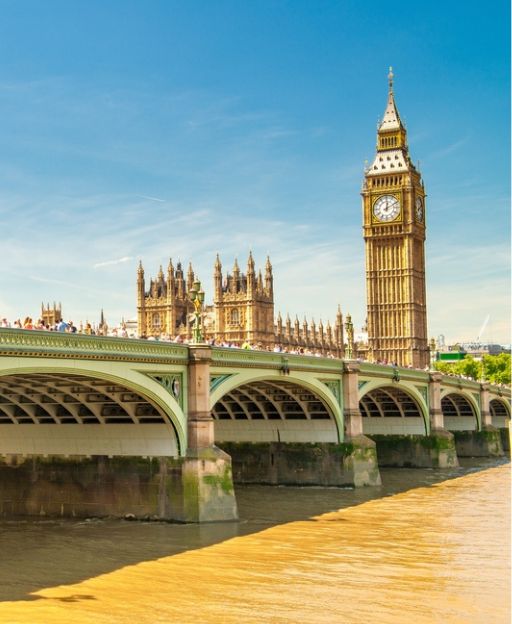
Start where London starts. Walk across Westminster Bridge in the morning and you will immediately understand why this city has such a hold on visitors. Big Ben rises to your left, the Houses of Parliament stretch along the river, and the Thames rolls beneath you with all the authority of a city that has been doing this for two thousand years.
Spend your morning in Westminster. Walk past the Houses of Parliament, turn up Whitehall to see Downing Street and the Cenotaph, then head to St James’s Park. The park connects Westminster to Buckingham Palace — a lovely walk along the lake that most visitors rush past in a taxi.
After lunch, cross the river to the South Bank. This stretch of the Thames from Westminster Bridge to London Bridge is one of the great urban walks in the world. The Tate Modern, the Globe Theatre, Borough Market, the Millennium Bridge — they are all here, connected by a riverside promenade that faces the City of London across the water.
Borough Market runs Thursday to Saturday and sells everything from British cheeses and charcuterie to fresh pasta and African street food. Even if you buy nothing, walking through it at midday is worth the visit. Have dinner somewhere along the South Bank and watch the Thames light up as evening arrives. The views of St Paul’s from the Tate Modern terrace are exceptional at dusk.
Day 2 — The Tower of London, Tower Bridge and the City
The Tower of London is one of the most extraordinary buildings in Britain. It has served as a royal palace, a prison, a treasury, and a place of execution over nearly a thousand years. The Crown Jewels are held here, and the Beefeaters who guard them give outstanding guided tours that bring the stories to life. Budget at least two hours. Read our complete guide to the Tower of London before you go — the history alone will make your visit far richer.
Walk across Tower Bridge afterwards. It is free to cross on foot, and the views up and down the Thames are superb. You can also pay to enter the Tower Bridge Exhibition and walk the glass floor suspended between the two towers — genuinely spectacular on a clear day.
The afternoon takes you into the City of London — the original square mile the Romans founded around 43 AD. Walk through the narrow lanes around Leadenhall Market, which looks like a Victorian greenhouse filled with wine bars and restaurants. Find St Dunstan in the East, a medieval church destroyed in the Blitz and now a free public garden growing through the ruins of its walls. It is one of London’s most serene hidden corners.
Head west along the Thames path to St Paul’s Cathedral for the evening. The dome looks best from the Millennium Bridge as the sun goes down. Dinner in the Bankside area keeps the river views going through the evening.
Day 3 — Museums, Hyde Park and Kensington
London’s museums are extraordinary — and most of them are completely free. This surprises many US visitors who expect to pay for major cultural institutions. The British Museum, the Victoria and Albert Museum, the Natural History Museum, the Science Museum, the National Gallery — all free, all within walking distance of the centre.
Start your morning at the British Museum in Bloomsbury. The Rosetta Stone, the Elgin Marbles, the Sutton Hoo helmet — these are objects that shaped how we understand human history. The collection spans two million years and covers every continent. Give yourself a solid two hours and pick three or four rooms rather than trying to see everything. Our complete British Museum guide will help you plan your visit.
Walk or take the Tube south to Kensington in the afternoon. Hyde Park is the great green space at the centre of London — 350 acres of open ground with the Serpentine lake at its heart. Hire a rowing boat, walk past the Albert Memorial, or sit on the grass and watch the rest of London go by.
The Victoria and Albert Museum sits just south of the park on Exhibition Road. The V&A holds the world’s greatest collection of decorative arts and design — fashion, ceramics, sculpture, jewellery, photography, and architecture across 145 galleries. It is another free entry museum that could easily fill an entire day on its own.
Walk up to Notting Hill for the evening. The streets become quieter as you move north through Kensington, the houses more colourful, the shops more independent. Portobello Road is the famous antiques market — busiest on Saturdays — but the streets around it are worth exploring any day of the week. Our Notting Hill guide covers the neighbourhood in full.
📬 Planning a trip to London?
Join 3,000+ London lovers who get weekly tips, hidden gems, and local secrets — the kind that never appear in a guidebook. Free, every week.
Subscribe Free to Love London → Unsubscribe anytime · No spamDay 4 — Camden Town and Shoreditch
North London and East London show you a completely different city to the one most tourists see. Both Camden and Shoreditch are full of energy, independent businesses, street food, and a creative spirit that has defined London’s cultural life for decades.
Start in Camden Town. The market spreads across a vast network of stables, warehouses, and canal-side venues around Camden Lock. It sells everything from vintage clothing and hand-made jewellery to global street food from dozens of different cuisines. Camden is busiest at weekends, but the atmosphere on a weekday is actually better — less crowded, easier to browse, and the food stalls have more room. Read our complete Camden Town guide for the full picture of what to see and where to eat.
From Camden, walk or cycle along the Regent’s Canal towpath heading east. This 30-minute walk takes you through the back of Islington, past narrowboats moored along the canal, and through some of the quieter parts of north London that visitors rarely reach. It deposits you near Angel, which has good cafés and independent shops.
Head east to Shoreditch in the afternoon. This is the heartland of London’s creative industries — tech companies, independent galleries, street art, fashion studios, and coffee shops that take their craft very seriously. Brick Lane cuts through the area and is famous for its curry houses, bagel bakeries, and vintage clothing warehouses. The street art around Shoreditch is genuinely world-class: artists from around the globe have left their work on the walls here. Read our Shoreditch guide for US visitors to make the most of the area.
Evening in Shoreditch is excellent. Boxpark Shoreditch is a shipping container food market that fills up from 5pm and stays busy into the night. The surrounding streets have some of London’s best cocktail bars and independent restaurants at prices that feel reasonable by central London standards.
Day 5 — Greenwich or a Day Trip Beyond London
Your final full day offers two options: explore Greenwich — one of London’s most underrated destinations — or take a short train journey somewhere beyond the city entirely.
Greenwich sits about 20 minutes from central London by DLR or river boat. The Royal Observatory stands on a hill above the town, and you can stand on the Prime Meridian — the line at zero degrees longitude from which all global time is measured. The Cutty Sark clipper ship is here too, fully restored and open to visitors. The National Maritime Museum and the Queen’s House are both free and both excellent. The park sweeping down from the Observatory gives some of the finest panoramic views of the London skyline you will find anywhere. Read our full Greenwich guide for everything worth seeing.
Alternatively, use Day 5 for a day trip. Bath is 90 minutes by direct train from Paddington. Windsor is 40 minutes from Waterloo. Oxford is 55 minutes from Paddington. Cambridge is 50 minutes from King’s Cross. All four make excellent day trips and give you a very different picture of England beyond the capital. Our guide to the best day trips from London covers all the options with travel times and practical details.
Practical Tips for US Visitors on a 5-Day London Trip
A few things that will make your trip significantly smoother:
- Book the Tower of London and Churchill War Rooms in advance. Both sell out in peak season. The Tower especially — queuing on the day can mean a 90-minute wait before you get inside.
- Use contactless payment. Your US bank card works on London transport if it has a contactless symbol. Tap it the same way you would an Oyster card. No need to buy a separate card.
- Tipping in London is different. In pubs, you pay at the bar and no tip is expected. In restaurants, 10–12.5% is typical if service is not already included. Nobody expects American-style 20% tips.
- Opening hours differ from the US. Many smaller shops close by 6pm. Pubs close at 11pm in most areas. Plan meals earlier than you might at home.
- Carry a light waterproof jacket every day. London sunshine can turn to rain inside 20 minutes and back again. The good news: London in the rain is still excellent.
For a detailed breakdown of what five days in London will cost, our 2026 London budget guide covers accommodation, food, transport, and entrance fees in full.
Where to Stay for 5 Days in London
Your neighbourhood choice makes a significant difference to how you experience London. For a five-day trip, somewhere central — Covent Garden, South Bank, Clerkenwell, or King’s Cross — puts you within walking distance of many sights and keeps Tube costs low. If you prefer a quieter base, South Kensington works extremely well: close to the museums and parks, excellently connected, and pleasant to walk around in the evenings. Our guide to the best areas to stay in London covers every neighbourhood with honest recommendations across different budgets.
What is the best time to visit London for US travellers?
May, June, and September offer the best combination of weather, long daylight hours, and manageable crowds. July and August are busy and prices peak, but the city stays open late and outdoor events are excellent. April is great for blossom in the parks and shorter queues at the main attractions.
Is 5 days in London enough to see the main sights?
Five days gives you a thorough introduction to London — the iconic landmarks, several distinct neighbourhoods, the major free museums, and at least one day trip or deeper local experience. It is enough to feel you have genuinely explored the city rather than simply passed through it.
How much does a 5-day trip to London cost from the US?
Budget roughly £100–£150 per person per day for a comfortable mid-range trip, covering accommodation, food, transport, and a few paid attractions. London’s many free museums and parks reduce costs considerably. Booking accommodation and key attractions well in advance saves significant money compared to last-minute decisions.
Do I need to tip in London the same way I do in the US?
Tipping norms are more relaxed in London than in the US. In restaurants, 10–12.5% is standard and service is often added automatically. In pubs you order and pay at the bar — no tipping expected. Taxi drivers appreciate you rounding up the fare to the nearest pound.
Join 3,000+ London Lovers
Every week, get London’s hidden gems, local secrets, and travel inspiration — the kind you won’t find in any guidebook.
Subscribe free — enter your email:
Love more? Join 64,000 Ireland lovers → · Join 43,000 Scotland lovers → · Join 30,000 Italy lovers →
Free forever · One email per week · Unsubscribe anytime