
Camden Town London: The Complete Guide for US Visitors (2026)
Camden Town London sits just two miles north of the city centre, yet it feels like a world apart. This is one of London’s most energetic and original neighbourhoods. Markets spill onto canal towpaths. Live music echoes from Victorian venues. Street food arrives from every corner of the world. If you want to see a side of London the typical tourist trail skips, Camden Town delivers every time.
For US visitors planning a London trip, Camden is often mentioned but rarely explored in depth. This guide covers everything you need: what to do, where to eat, how to get there, and how to make the most of your time in one of London’s most distinctive areas.
What Makes Camden Town Worth Visiting
Camden Town is a neighbourhood in the London Borough of Camden. It grew rapidly during the Victorian era, when the Regent’s Canal brought trade and industry to the area. Today it is best known for its markets, music history, and alternative culture.
The area draws visitors for several reasons. Camden Market is one of the largest and most varied markets in London. The Regent’s Canal runs through the area and offers pleasant walking. The music history is deep and genuine. Camden’s character — loud, colourful, and unpredictable — stands in sharp contrast to the quieter, more polished parts of the city.
Camden isn’t for everyone. If you prefer grand architecture and formal museums, you’ll find better options elsewhere. But if you want energy, atmosphere, and a sense that anything might happen on the next street corner, Camden provides it reliably.
Camden Market London: Your Complete Guide
Camden Market is not one market but several connected areas. Most visitors walk between all of them naturally, without realising where one ends and another begins. Plan at least two to three hours to explore properly.
The Stables Market
The Stables Market occupies the old horse hospital buildings beside the canal. This is the largest section and the most atmospheric. The space runs through vaulted brick tunnels, cobbled courtyards, and converted Victorian stables. You’ll find vintage clothing, antique furniture, handmade jewellery, art prints, and craft goods here. Spend an hour exploring and you’ll still find corners you haven’t reached.
The bronze statue of Amy Winehouse stands outside the Stables Market entrance. It marks Camden’s long association with one of Britain’s most celebrated musicians and makes a natural stop for photographs.
Camden Lock Market
Camden Lock sits directly on the Regent’s Canal. Open-air food stalls surround the waterway. You can eat Thai noodles, jerk chicken, Ethiopian stew, falafel wraps, and Spanish tapas, all within a few minutes’ walk of each other.
Find a spot along the canal railing and eat while narrowboats pass beneath you. On sunny days, this is one of the most pleasant eating spots in North London. Most dishes cost between £7 and £14.
What to Buy at Camden Market
Camden Market is best for: vintage and second-hand clothing, leather goods, handmade jewellery, alternative fashion, art prints, and street food. Quality varies between stalls. Walk the whole area before committing to anything. Better pieces sit deeper inside the market, away from the main entrance near the station.
Skip the souvenir shops on the high street. The generic London merchandise there is expensive and poor quality. Head inside the market buildings instead. For a broader look at shopping across the city, our London shopping guide covers the best options by neighbourhood.
Best Things to Do in Camden Town
The market is the centrepiece, but Camden has more to offer beyond it.
Walk the Regent’s Canal Towpath
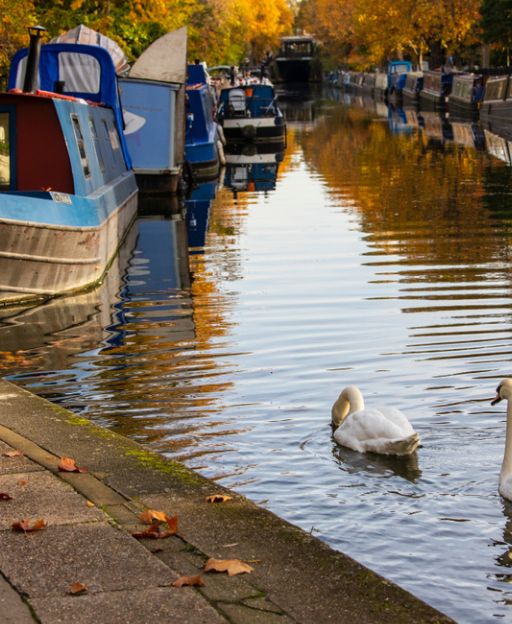
The Regent’s Canal runs through Camden and continues in both directions. Walk east towards Angel and Islington, or west towards Little Venice. The towpath is flat, traffic-free, and lined with narrowboats and houseboats moored along the banks. It’s a relaxing way to see a quieter side of London. Walk for 45 minutes in either direction and take the Tube home from a nearby station.
Climb Primrose Hill
Primrose Hill is a short walk north of Camden Town station. The summit gives you a wide, clear view across the London skyline. The park is far less crowded than the better-known viewpoints in the city. Locals come here in the evenings to watch the sunset over the buildings. Take food from the market and eat it on the hillside for a simple, satisfying afternoon.
Catch Live Music in Camden
Camden has hosted live music since the 1970s. Punk, indie rock, and Britpop all have roots here. Several venues still operate and put on acts most evenings:
- The Roundhouse — A converted Victorian railway shed in nearby Chalk Farm. It has hosted artists from The Doors to Radiohead. Check the listings before your visit.
- KOKO — Formerly the Camden Palace, KOKO has an ornate Victorian interior and a long history of hosting major acts. Recently refurbished.
- The Dublin Castle — A small, no-frills pub venue where Madness played regularly before they became famous. It still hosts emerging bands most nights.
- Electric Ballroom — One of Camden’s largest venues, in operation since 1938, hosting club nights and gigs throughout the week.
Food and Drink in Camden Town
Camden feeds people informally. The street food culture here is genuine, not manufactured for tourists.
The best eating happens in and around the market. Camden Lock’s food stalls offer remarkable variety. The indoor Stables Market area has further options. Many stalls change seasonally, so each visit often brings something different.
For pubs, Camden covers a range of price points. The World’s End on the high street is reliable for a straightforward pint. The Engineer in Primrose Hill is more refined and suits lunch well. The Hawley Arms near the market has a long association with Camden’s music history. For a full rundown of London’s best pubs by area, see our London pubs guide.
Cafés line the streets off the main market area. They’re quieter than the market and make a good stop for a mid-morning coffee before the crowds build. The streets around Chalk Farm Road have several independent options that locals use regularly.
Camden is one of the strongest areas in London for international food. The food market section alone covers dozens of cuisines. For a broader guide to eating well as a US visitor, our guide to what to eat in London covers the essentials.
How to Get to Camden Town London
Camden Town is straightforward to reach on public transport from anywhere in central London.
By Underground
Take the Northern Line (the black line on the Tube map) to Camden Town station. The journey takes around five minutes from King’s Cross and around ten minutes from Leicester Square. Most central London stations connect to the Northern Line with at most one change.
By Bus
Several bus routes stop on or near Camden High Street, including the 24, 27, 29, 88, 134, and 168. Buses work well if you’re travelling from Kentish Town, Chalk Farm, or other parts of North London.
By Canal Boat
The London Waterbus runs trips between Camden and Little Venice along the Regent’s Canal. This is a scenic journey rather than a practical transport option, but it’s a pleasant way to arrive or depart once. Book ahead during summer months. For a full breakdown of transport options across London, our getting around London guide covers everything from the Tube to river buses.
Avoid driving to Camden. Parking near the market is almost non-existent, and traffic backs up significantly on weekends.
When to Visit Camden Town
Timing your visit matters more in Camden than in most other London areas.
Weekdays are quieter than weekends. Saturday and Sunday afternoons see very large crowds inside the market. If you want space to browse properly, visit on a Thursday or Friday morning.
Morning visits work best. The market opens from around 10am and most stalls are set up by 11am. Arrive before noon and you’ll have a calmer, more enjoyable experience. By early afternoon on weekends, the main areas become very congested.
Summer brings the biggest crowds. July and August see the highest visitor numbers. Go early in the day if you visit in summer. Spring and autumn offer good weather with noticeably smaller crowds. For a month-by-month guide to planning your trip, our best time to visit London guide covers every season in detail.
Camden Town with Families
Camden works well for families with older children and teenagers. The visual spectacle of the market — street performers, elaborate costumes, and unusual shops — holds attention effectively. The Regent’s Canal towpath gives children space to walk without traffic.
Primrose Hill has open space and a playground. The hillside gives children room to run while adults enjoy the view. The street food stalls cover a wide range of tastes, so even picky eaters usually find something they’ll eat.
Keep children close in the busiest market sections. Weekend crowds are dense and it’s easy to lose track of small children in the narrow lanes. Our London with kids guide has more suggestions for family-friendly areas and attractions across the city.
Camden Town vs Other London Neighbourhoods
Camden is distinctive, but it isn’t right for every visitor. Here’s how it compares to other popular areas:
Camden vs Notting Hill: Notting Hill is more photogenic, with its famous pastel-coloured houses and Portobello Road Market. Camden is grittier and more energetic. Notting Hill suits visitors who want boutique shopping and quiet cafés. Camden suits visitors who want loud markets, live music, and street food from around the world.
Camden vs Borough Market: Borough Market near London Bridge focuses entirely on premium food. Camden Market covers food, clothing, music, crafts, and much more. Borough Market is the better choice for a focused food experience. Camden gives you a longer, more varied day out.
For a full overview of London’s neighbourhoods and how to choose the right ones for your trip, our London neighbourhoods guide breaks down every major area by atmosphere, cost, and visitor type.
Frequently Asked Questions: Camden Town London
What is Camden Town London famous for?
Camden Town is famous for its markets — particularly the Stables Market and Camden Lock — which sell vintage clothing, street food, handmade crafts, and alternative fashion. The area is also known for its deep music history. Camden has strong connections to punk, Britpop, and indie rock, and was closely associated with Amy Winehouse, whose bronze statue stands outside the Stables Market.
How do I get to Camden Town from central London?
Take the Northern Line (black line) on the London Underground to Camden Town station. From King’s Cross the journey takes around five minutes. From Leicester Square it takes around ten minutes. You can also reach Camden by bus on several routes including the 24, 27, 29, and 88.
Is Camden Market worth visiting?
Yes, Camden Market is worth visiting for most visitors to London. It offers a genuine mix of food, fashion, crafts, and atmosphere that you won’t find in the city’s more commercial shopping areas. Visit on a weekday morning to avoid the largest weekend crowds and get the most out of the experience.
How long should I spend in Camden Town?
Allow at least three to four hours to explore Camden Town properly. Two hours covers the main market areas. Add an hour for lunch by the canal and another for a walk to Primrose Hill or along the Regent’s Canal towpath. A full half-day gives you time to enjoy Camden without rushing.
Join 3,000+ London Lovers
Every week, get London’s hidden gems, local secrets, and travel inspiration — the kind you won’t find in any guidebook.
Subscribe free — enter your email:
Love more? Join 64,000 Ireland lovers → · Join 43,000 Scotland lovers → · Join 30,000 Italy lovers →
Free forever · One email per week · Unsubscribe anytime