
Somewhere in the United States, Canada, or Australia, around 30 million people carry an English surname. Many of them know almost nothing about where that name came from — or what it might tell them about the family who left England generations ago.
But your surname is not just a label. It is a compressed history. A single word that has survived centuries, sometimes a thousand years or more, carrying within it the story of a medieval craftsman, a Norman knight, a London merchant, or a farmer from a county you have never visited.
This guide explores the origins of the most common English surnames — many of them rooted in London and its surrounding counties — and shows you exactly how to use that name to begin tracing your ancestors in the historic records that still survive today.
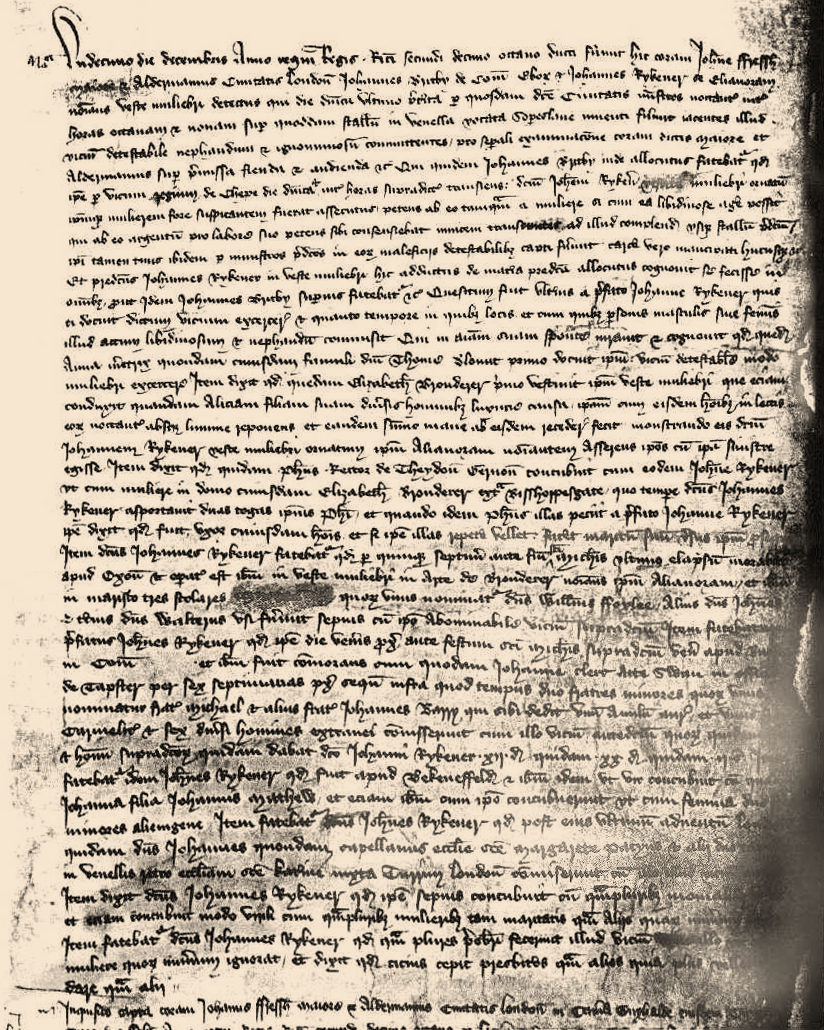
How English Surnames Came to Be
Before the Norman Conquest of 1066, most people in England had a single name. A man might be known as Aethelred or Godwin. A woman as Edith or Aelgifu. That was enough in a small village where everyone knew everyone else.
But after the Normans arrived, England changed rapidly. Towns grew. Trade expanded. The population increased. And suddenly, there were too many men called John or William to tell them apart without a second name.
Over the next two centuries, English surnames developed through four main routes. Some people took the name of their occupation — Smith, Cooper, Fletcher. Some took the name of the place where they lived — Atwood, Brook, Hill. Some took their father’s first name — Johnson (son of John), Harrison (son of Harry), Williamson. And some, particularly among the nobility, took Norman French surnames that had come across the Channel with William the Conqueror’s army.
By around 1400, most English families had settled into hereditary surnames — names that passed from father to child, generation after generation. The surname you carry today may have been fixed in place more than 600 years ago.
🏛️ Free Guide: How to Trace Your English & British Ancestry
Step-by-step: GRO records, census 1841–1921, parish registers, the National Archives (Kew), London Metropolitan Archives, and planning a heritage trip. Completely free.
Get the Free Guide → Subscribe free at the guide page to receive weekly London heritage storiesOccupational Surnames — When Your Name Was Your Job
The largest single group of English surnames comes from medieval occupations. If your ancestor’s family name is in this list, the original bearer of that name was almost certainly a craftsman, tradesman, or labourer in a medieval English town.
Smith is the most common surname in England and one of the most common in the United States. Every medieval village needed a blacksmith — the man who made tools, horseshoes, nails, and weapons. The word “smith” comes from the Old English smitan, meaning to strike or smite. Your ancestor who first took this surname was almost certainly standing over an anvil somewhere in England around 800 years ago.
Cooper was the barrel maker — an absolutely essential trade in an age before tins or plastic. Everything from wine to salted fish to gunpowder was stored in barrels. A skilled cooper was well-paid and well-respected. Fletcher made arrows. Mason shaped stone. Thatcher put roofs on houses. Walker — one of the more surprising ones — was a cloth worker who literally walked on wet wool to felt it. Turner worked a lathe, shaping wood or metal.
Other occupational names to look for in your family tree: Archer, Baker, Barker (a tanner), Chapman (a travelling merchant), Collier (a coal miner or charcoal burner), Dyer, Farmer, Fuller (another cloth worker), Glover, Hunter, Marshall, Miller, Shepherd, Taylor, Weaver.
If your surname appears in this list, your family likely lived in a town or city — occupational surnames are far more common in urban areas where the trades were concentrated. London, as medieval England’s largest city, produced a particularly high concentration of these names.
Place-Name Surnames — When London’s Streets Shaped Your Family Name
The second great category of English surnames comes from geography. These names tell you where your ancestor lived, or where they had come from — a village, a county, a natural feature of the landscape.
Some of these surnames are immediately recognisable as London place names. Fleet takes its name from the River Fleet, the stream that once ran through central London (now buried underground beneath Farringdon Street). Cornhill comes from one of London’s oldest streets, running through the heart of the medieval city. Aldgate preserves the name of one of the Roman gates that once stood in London’s city wall.
Other place-name surnames come from geographical features: Hill, Brook, Wood, Moor, Heath, Ford. These names are so common because they describe the physical landscape where a family lived — next to a hill, beside a stream, at the edge of a wood. In flat Essex and the Thames estuary, names like Marsh and Fen were common. In the hilly counties of the north, Ridge and Cliff.
London itself is a surname — though a relatively uncommon one. It was typically given to someone who had come from London to a smaller town or village, marking them out as a city person. Similarly, Kent, Essex, Norfolk, Suffolk and other county names appear as surnames, often indicating a family that had migrated from one region to another.
🏙️ Enjoying this? 3,000 London lovers get stories like this every week. Subscribe free →
Norman Surnames — The French Invasion That Changed English Names Forever
When William the Conqueror defeated King Harold at the Battle of Hastings in 1066, he did not just change who ruled England. He fundamentally altered the English language — and with it, the surnames that English people would carry for the next thousand years.
The Norman barons who came with William brought French names from their home villages in Normandy. These names became attached to the great estates they were granted, and over generations they became hereditary surnames. Many of the most aristocratic-sounding English surnames are, in fact, French place names.
Percy comes from Percy-en-Auge in Normandy. The Percy family became one of the most powerful dynasties in medieval England, giving their name to a dukedom that still exists today. Warren comes from Varenne in Normandy. Beaumont — meaning “beautiful hill” in French — comes from Beaumont-le-Roger. Neville comes from Neuville, meaning “new town.” Clare comes from Clères in the Seine-Maritime region. Mortimer comes from Mortemer in Normandy.
If you carry one of these Norman surnames, your earliest traceable English ancestor was almost certainly a landowner or nobleman who arrived in England within a generation or two of 1066. These names are rare in English records before the Conquest and common in Norman records before it — a pattern that is itself a form of evidence.
By the 13th and 14th centuries, many Norman surnames had been absorbed by ordinary English families who worked on Norman-owned estates, adopted the name of the local lord, or simply anglicised a French name they had borrowed. So a Norman surname today does not necessarily mean noble descent — but it does mean a strong connection to the post-Conquest period of English history.
How to Trace Your English Surname in London Records
Once you know the likely origin of your surname, the next step is to trace your family back through the records that survive in London’s archives.
The General Register Office (GRO) holds civil registration records — births, marriages, and deaths — from 1837 onwards. These are the starting point for most English family history research. You can search the GRO index online and order certificates that will tell you your ancestor’s full name, parents’ names, address, and the name of the person who registered the event.
Before 1837, you need parish registers. The Church of England began keeping records of baptisms, marriages, and burials in 1538, by order of Thomas Cromwell. The London Metropolitan Archives holds the largest collection of London parish records in the world — more than 10,000 volumes covering every borough of Greater London. If your ancestor lived anywhere near London, their baptism record very likely sits in a folder in Clerkenwell.
The National Archives at Kew holds census records from 1841 to 1921, as well as military records, probate records, and court documents going back to the medieval period. The 1911 census, now fully available online, is particularly valuable — it lists every member of a household, including ages, birthplaces, and occupations, and was the last census before the First World War reshaped English society.
For surname-specific research, the Guild of One-Name Studies maintains registers of researchers working on specific English surnames — if someone has already spent decades tracing your family name, they may have done much of the work for you.
Frequently Asked Questions
What are the most common English surnames that originate from London?
Surnames like Fleet (from the River Fleet), Cornhill (from the historic street), and Aldgate (from the Roman city gate) are directly tied to London geography. More broadly, occupational surnames such as Smith, Cooper, and Fletcher were particularly common in London because of its large concentration of trades and crafts. Many families carrying these names can trace a London connection to the medieval period.
How do I find out the origin of my English surname?
The best starting points are the Oxford Dictionary of Family Names in Britain and Ireland, Reaney and Wilson’s Dictionary of English Surnames, and the Guild of One-Name Studies website. For Norman surnames, Domesday Book records (1086) and the Battle Abbey Roll offer early evidence. For occupational and place-name surnames, medieval poll tax records from 1377–1381 are among the earliest comprehensive sources.
Where can I access London parish records to trace my English ancestry?
The London Metropolitan Archives (194 Northampton Road, Clerkenwell, London EC1R 0HB) holds records for most London parishes going back to the 1500s. Their online catalogue lets you search by parish name before visiting. The Findmypast and Ancestry genealogy platforms have also digitised large portions of the London Metropolitan Archives collection, allowing you to search from home.
Join 3,000+ London Lovers
Every week, get London’s hidden history, heritage walks, and stories from the city’s remarkable past — straight to your inbox.
Subscribe free — enter your email:
Already subscribed? Download your free London guide (PDF)
Love more? Join 64,000 Ireland lovers → · Join 43,000 Scotland lovers → · Join 30,000 Italy lovers →
Free forever · One email per week · Unsubscribe anytime