
Something shifts the moment you come back to London after time away. It doesn’t matter whether you’ve been gone for two weeks or two years — the city has a way of announcing itself before you’ve even properly arrived. People who have lived here will know exactly what we mean. Those who visit often will, too.
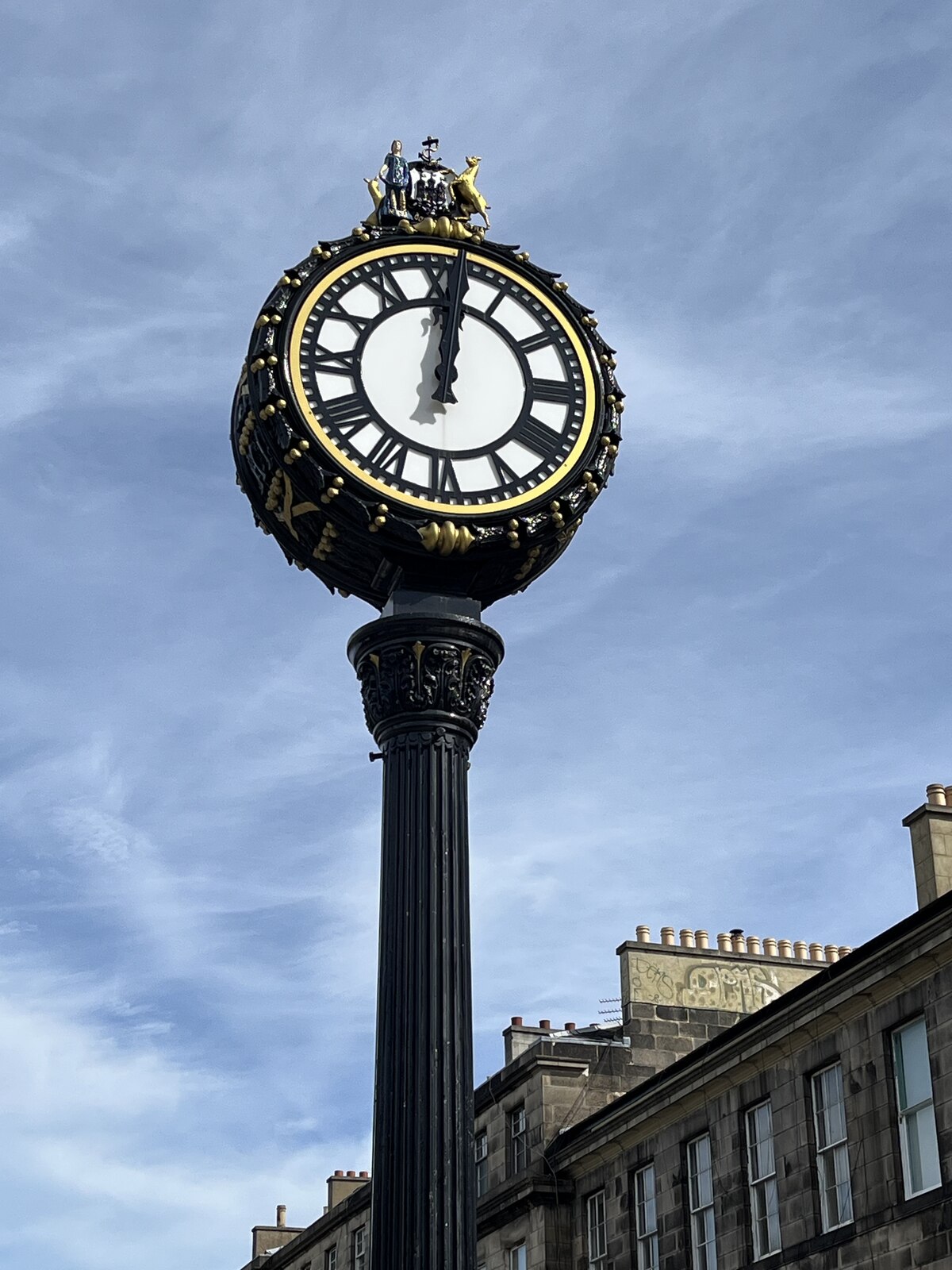
We asked our readers what they notice first when they return. The answers were specific, honest, and remarkably consistent. Here’s what comes up again and again.
Love London? Get our free weekly newsletter — local tips, hidden spots, and the best of the city delivered to your inbox. Subscribe here →
The Underground Smell Hits You Immediately
This one comes up more than almost anything else. Before you’ve seen a single landmark, before you’ve heard the familiar bustle of the city, the London Underground has already welcomed you back.
It’s a specific smell — warm, metallic, slightly dusty — that’s hard to describe to someone who hasn’t experienced it. Commuters barely notice it. But return after time away and it lands like a signal. You’re back. The deep-level Tube lines, particularly the Northern and Central lines, carry it most strongly. Step off an escalator at King’s Cross or Bank and the scent alone can feel like a homecoming.
Transport for London has never officially confirmed what causes it — it’s a combination of brake dust, warm air from deep-level tunnels, and decades of accumulated atmosphere. Whatever the chemistry, it’s unmistakably London.
The Scale Takes a Moment to Readjust To
London is enormous. Not just in population — around 9 million people across Greater London — but in the physical sense of it. Streets that seem familiar from memory turn out to be longer and more complex than you remembered. Journeys that felt quick now feel substantial.
This is especially true if you’ve been somewhere smaller or quieter. Even other large European cities feel more contained by comparison. Paris has its arrondissements. Rome has its hills. London sprawls in a way that feels slightly ungovernable, stitched together from dozens of villages and boroughs that each retain their own character.
Coming back after time away, that scale reasserts itself quickly. The view from London Bridge, looking east toward Canary Wharf and west toward St Paul’s, is one of the quickest reminders. This is a city that takes up serious space.
The Pace of People Is Unlike Anywhere Else
Stand at the top of the escalators at Victoria or Waterloo during rush hour and you’ll see it immediately. Londoners walk with purpose. There’s an efficiency to the movement of people in this city that’s genuinely distinctive — keep left on escalators, don’t stop at the top, don’t look lost in the middle of the pavement.
After time spent somewhere slower-paced, this can feel like a mild culture shock. The pace isn’t unfriendly — it’s just that everyone has somewhere to be, and the city has quietly trained its residents to move accordingly. Within a day or two, you adjust. Your stride lengthens. You stop hesitating.
Visitors often find this slightly intimidating at first. Returning Londoners, by contrast, find it oddly reassuring. The pace of the city means it’s working, which means it’s alive.
Love London? Get our free weekly newsletter — local tips, hidden spots, and the best of the city delivered to your inbox. Subscribe here →
The Sound of London Is Specific and Layered
London has a soundtrack. The diesel engine of a double-decker bus. The recorded voice on the Tube — “Mind the gap.” Pigeons. Black cabs ticking over at traffic lights. Somewhere in the distance, probably scaffolding being put up or taken down. A siren somewhere, always a siren somewhere.
None of these sounds are remarkable on their own. Together, layered at almost any point in the city, they form something that’s immediately recognisable. Recordings of London street sound have a distinctive quality that audio engineers working on films deliberately try to capture. It’s the acoustic signature of a city built up over centuries, with no single plan behind it.
Many returning visitors and residents mention hearing it as the thing that first tells them they’re really back. Not seeing something — hearing it. The brain has apparently catalogued it and stored it precisely, ready to match it on return.
The Mix of Old and New Is More Noticeable After Time Away
When you live in London, you stop noticing that a Roman wall is built into the corner of a Pret a Manger, or that a medieval church sits directly opposite a glass-and-steel office block. It becomes normal. Return after a gap and the juxtapositions suddenly become visible again.
London has been continuously rebuilt, bombed, redeveloped, and expanded for two thousand years. The result is an architectural mix that’s genuinely unusual — layers of history sitting side by side without much curation. The City of London is probably the most compressed version of this: a Roman fort became a medieval city became a Victorian financial district became a modern glass canyon, and traces of all of it are still present.
Returning visitors often report spending the first day noticing things they’d previously walked past without registering. A blue plaque on a wall. A Victorian drinking fountain. A stretch of original Roman road under a glass panel in a pavement. The city rewards this kind of attention when you’re fresh to it again.
The Grey Sky Feels Right
Not everyone admits this, but it comes up consistently. After time in sunnier places — the south of France, the Mediterranean, anywhere with reliable summer light — London’s sky can feel like a mild shock. Grey, low-hanging cloud that flattens the light and makes everything slightly muted.
And yet, for people who have a genuine connection to London, this often feels correct. The grey sky fits the city’s colour palette — the pale stone of the older buildings, the redbrick terraces, the dark ironwork. London doesn’t look right in blazing sunshine. It looks right in this. There’s a reason so much London photography favours overcast skies: the city is designed for them, even if inadvertently.
It also means that when London does get genuine sunshine, it’s startling and welcome in a way it isn’t in cities that expect it as standard.
The Coffee Has Got Better (and Londoners Know It)
This is a more recent observation, but it comes up frequently enough to be worth noting. London’s coffee culture has improved significantly over the past decade. The independent cafe scene — concentrated in areas like Shoreditch, Bermondsey, Stoke Newington, and Peckham, but now spread across almost every borough — now genuinely competes with the best in the world.
For returning visitors who haven’t been to London in five or ten years, this can be a genuine surprise. The city that once seemed to produce uniformly poor espresso now has baristas and roasters who are taken seriously internationally. Third-wave coffee shops sit alongside the traditional greasy spoon cafes that have been serving builder’s tea since the 1970s — another example of the city’s particular habit of layering rather than replacing.
Love London? Get our free weekly newsletter — local tips, hidden spots, and the best of the city delivered to your inbox. Subscribe here →
What It Tells You About the City
The fact that London announces itself so clearly — through smell, sound, scale, pace, and visual texture — says something about what kind of city it is. It’s not subtle. It doesn’t ease you in gently. It presents itself at full volume and expects you to keep up.
That’s not to everyone’s taste, and London would be the first city to acknowledge that. It’s famously demanding — expensive, crowded, noisy, relentlessly busy. But for the people who are drawn to it, the version of London that hits you when you come back after time away is often the clearest reminder of why they keep returning.
What do you notice first? The answers are often the most personal thing you can say about your relationship with the city.