
Choosing the best areas to stay in London for US visitors is one of the first decisions you need to make — and one of the most important. London covers more than 600 square miles. Where you sleep shapes everything: how far you walk to the sights, which Tube line you take, how much you spend, and what the city feels like after dark. This guide breaks down the top London neighbourhoods so you can pick the right base before you book.
There is no single best neighbourhood for every visitor. The right area depends on your budget, what you want to see, and whether you prefer a buzzing city centre or a quieter residential feel. Below you will find honest descriptions of each area, who it suits, and what to expect from the walk outside your hotel door.
How to Choose Where to Stay in London
Most first-time visitors to London make the same mistake. They book the cheapest hotel they can find without checking where it sits on the map. London’s Tube network is excellent, but a hotel in the far east with a 45-minute commute to Westminster is not a bargain if you spend half your day travelling.
Before you look at prices, decide what matters most to you:
- Sightseeing convenience — Stay in Westminster or South Bank to walk to Big Ben, the Tate Modern, and Borough Market without using the Tube.
- Budget — Central London costs more per night, but you save on transport and time. Zones 2 and 3 can work out cheaper overall if your hotel sits close to a good Tube line.
- Atmosphere — Notting Hill feels like a village. Shoreditch feels like a creative quarter. Covent Garden feels like a stage set. Pick the London that matches your travel style.
- Group size — Families often do better in Kensington or South Bank, where museums, parks, and wide pavements make travelling with children easier.
Once you sort your priorities, the choice becomes much clearer. The sections below cover the areas most popular with visitors from the US, along with who each one suits best.
Best Areas to Stay in London for US Visitors
Westminster and St James’s — Best for First-Timers
Westminster is as central as London gets. Big Ben, the Houses of Parliament, Buckingham Palace, Westminster Abbey, and St James’s Park all sit within walking distance. If this is your first visit and you want to cover the iconic sights without planning complex routes, Westminster is the logical base.
Hotels here rarely come cheap. You pay for location above everything else. Budget options are few, but mid-range and boutique hotels exist throughout the area — particularly around Victoria station. Victoria also has direct Gatwick Express trains, which makes it practical if you fly into Gatwick.
The neighbourhood gets busy and tourist-heavy during the day, though it quietens significantly in the evenings. Restaurants and bars are plentiful here, but this is not the area you come to for hidden gems or local atmosphere. Westminster rewards early mornings — the Palace of Westminster from the bridge at dawn, before the tour groups arrive, is one of the finest sights in the city.
South Bank and Southwark — Best for Culture
The South Bank has changed dramatically since the 1990s and now ranks among the most enjoyable parts of London to walk through. The Tate Modern, Shakespeare’s Globe, the BFI, and the Thames Path from London Bridge to Tower Bridge all run through this stretch. Southwark Cathedral is one of the oldest buildings in the city, and Borough Market — one of London’s best food markets — stands just steps away.
Hotels on the South Bank tend to be modern and well-designed, with many offering Thames views that nothing else in the city matches. The area stays lively without feeling overwhelming, and the Jubilee and Northern line stations keep you well connected to Westminster and the City.
Our full South Bank guide for US visitors covers everything to see, eat, and do on this side of the river.
Notting Hill and Kensington — Best for a Residential Feel
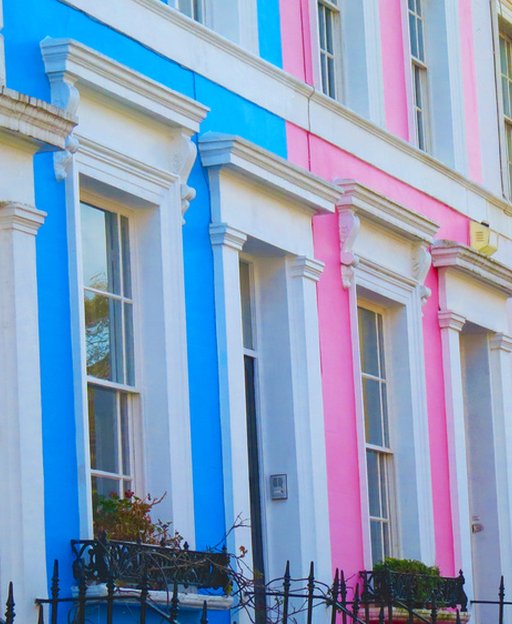
Notting Hill is a beautiful area to base yourself if you want to see a different side of London from the tourist trail. Colourful terraced houses line the streets around Portobello Road, and the market running through Portobello on Saturdays is one of the best in the country. This is the London of film posters and daydreams — and it really does look like that in real life.
Kensington, immediately to the east, gives you easy access to some of London’s finest free museums. The Victoria and Albert Museum, the Natural History Museum, and the Science Museum all sit within a ten-minute walk of each other — a genuinely excellent afternoon for families. Hyde Park lies right on your doorstep.
The trade-off is a few stops west of central London on the Tube. That is not a serious inconvenience, but it means a short journey to reach Westminster or the City. Hotels in this area are comfortable and span most price ranges, with a concentration of boutique options in the streets behind Kensington High Street. Our Kensington guide for US visitors has more detail.
Covent Garden and Soho — Best for Theatre and Nightlife
Covent Garden and its neighbouring streets sit in the geographical heart of London, and they feel it. The West End theatres, the Opera House, dozens of restaurants, street performers, and the concentrated energy of a neighbourhood that never completely sleeps make this one of the most exciting places in the city to use as a base.
If you plan to see shows, eat well, and stay up late, Covent Garden makes more practical sense than almost anywhere else. Walking distances to Trafalgar Square, the National Gallery, and the Strand are short. The Tube connections — Charing Cross, Leicester Square, Holborn — are excellent.
Hotels here are well-located but often expensive. Soho, immediately north and west, has slightly more affordable options tucked between the bars and restaurants of Old Compton Street. Read our Covent Garden guide for the full picture of what this part of London offers.
Shoreditch and East London — Best for Independent Travellers
Shoreditch is the creative heart of East London and one of the most consistently interesting parts of the city. The street art, the independent restaurants, the vintage shops, the bars in converted railway arches, and the genuine mix of communities make it feel entirely different from tourist-focused central London.
Hotels in Shoreditch range from budget hostels to well-designed boutique properties, and the area offers good value compared to Zone 1. The Central line at Liverpool Street and the overground network keep you connected to the rest of the city. From here, Brick Lane and Spitalfields Market are on your doorstep.
This area suits travellers who have already seen the standard London sights and want to explore something more local. Our Shoreditch guide goes deeper into everything this corner of the East End offers.
Camden — Best for Atmosphere on a Budget
Camden draws visitors from across the world and earns the attention. The market, the canal, the live music venues, and the sheer density of good food from all over the world make it genuinely enjoyable. Camden Market stays open every day and draws a varied crowd that gives the whole neighbourhood a real energy.
Hotels in Camden tend to be more affordable than those in Zones 1 and 2, while still offering good Tube access via the Northern line. The journey to Westminster takes around fifteen to twenty minutes. Regent’s Park lies nearby, and you are close enough to Hampstead Heath for an easy trip out when the weather holds.
Our full Camden guide for US visitors covers the market, the music scene, and how to get the most from the canal walks.
Getting Around Between Areas
London’s Tube map looks complicated at first glance but becomes straightforward after a day or two. The key thing to know is that zones matter. Zone 1 covers central London and costs more per journey. Zones 2 and 3 are cheaper and cover areas like Camden, Shoreditch, and Kensington.
An Oyster card or a contactless bank card works best for paying. American cards with chip-and-pin work fine on all readers. The daily cap means you stop paying once you hit a set amount, regardless of how many journeys you take. This makes it easy to move between areas throughout the day without watching individual fares.
Black cabs are plentiful across London and easy to use — wave one down or book via the Bolt or Gett apps. Buses cover routes the Tube does not reach, and route maps now work excellently on Google Maps. Our full London transport guide for US visitors covers Oyster cards, buses, the Elizabeth line, and everything else you need to know before you arrive.
Tips for Booking Your London Hotel from the US
Book early, particularly for summer visits between June and August and for any dates around major events. Wimbledon, the London Marathon, Notting Hill Carnival, and the State Opening of Parliament all fill hotels quickly. Christmas and New Year bookings go fast too.
Read the cancellation policy carefully. Many London hotels offer fully flexible rates that allow cancellation up to 24 or 48 hours before arrival. If your plans are not set, a flexible rate is worth the small premium over a non-refundable booking.
Check what the price covers. Some London hotels quote room-only rates that exclude breakfast or service charges. Breakfast at a London hotel can add £15 to £25 per person per day. Knowing whether it comes with the room before you compare prices avoids any nasty surprises.
Staying slightly outside Zone 1 often delivers better value without a significant travel penalty. A hotel in South Kensington, Islington, or Bermondsey will typically cost less than an equivalent property in Westminster or Mayfair, while keeping you well connected to everything.
Frequently Asked Questions
What is the best area to stay in London for first-time visitors from the US?
Westminster and the South Bank are the strongest choices for first-time visitors. Both areas put you within walking distance of the most famous sights, with excellent Tube connections for longer journeys. Westminster sits closer to Buckingham Palace and Parliament, while the South Bank offers Thames views and a slightly more relaxed atmosphere.
How far in advance should I book a hotel in London?
For summer visits or dates around major events, book at least two to three months in advance. London hotels fill quickly during Wimbledon, the London Marathon, and the August bank holiday weekend. Outside peak season, six to eight weeks usually gives you a good selection at reasonable prices.
Is it better to stay in Zone 1 or Zone 2 in London?
Zone 1 puts you closest to the main sights and saves time on the Tube, but hotels cost more. Zone 2 areas like Camden, Shoreditch, and South Kensington offer strong connections with lower hotel prices and a more local character. For short trips of three days or fewer, Zone 1 is usually worth the premium. For a week or longer, Zone 2 can work out better value overall.
Which London neighbourhood has the best atmosphere for a first visit?
Covent Garden and South Bank both deliver a strong sense of London’s energy without feeling overwhelming. Covent Garden suits visitors who want to be in the thick of the West End theatre district, while South Bank offers a more open, riverside feel with some of the city’s best cultural venues grouped together. Both work well as bases for first-time visitors.
Join 3,000+ London Lovers
Every week, get London’s hidden gems, local secrets, and travel inspiration — the kind you won’t find in any guidebook.
Subscribe free — enter your email:
Love more? Join 64,000 Ireland lovers → · Join 43,000 Scotland lovers → · Join 30,000 Italy lovers →
Free forever · One email per week · Unsubscribe anytime
