
London Neighbourhoods Guide: The Best Areas to Explore in 2026
London neighbourhoods guide: if you want to understand London, you have to walk its streets. Each area tells a different story. Soho smells of coffee and old posters. Bermondsey feels like a village that got absorbed by a city. Mayfair looks like money, because it is. This guide takes you through the best London neighbourhoods for first-timers and repeat visitors alike — what each one is good for, how to get there, and what you might miss if you only stick to the tourist map.
Here is a shareable fact: London is made up of more than 30 distinct neighbourhoods, each with its own history, personality, and postcode. Some Londoners spend entire lifetimes in just one or two of them. The city rewards those who leave the tube and walk.
How to Use This London Neighbourhoods Guide
This guide is organised by character, not by geography. That means you can pick the kind of experience you want — a lazy morning by a canal, a deep dive into art and history, or a proper local lunch — and find the right part of the city for it. Each neighbourhood entry includes what to do, where to eat, and how long to spend there.
Before you start exploring, it helps to know how to get around. London’s public transport network covers almost everything on this list. You can read more in our complete guide to getting around London. If budget is on your mind, check our London travel budget guide for 2026 before you book.
Central London Neighbourhoods
Soho: The Heart of After-Dark London
Soho is a square mile of restaurants, late bars, neon signs, and hidden courtyards. It has been the city’s entertainment district for 300 years. During the day it is all independent coffee shops and media offices. At night it shifts into something louder.
What to do: Walk Berwick Street Market in the morning. Browse the independent record shops on Denmark Street. Eat well in Chinatown, which sits on the eastern edge of Soho and is outstanding value for money.
How long to spend: Half a day for wandering, longer if you stay for dinner.
Covent Garden: More Than Just the Opera House
Most visitors head straight for the piazza and the street performers. That is fine. But Covent Garden has more layers than the surface suggests. The Seven Dials area to the northwest is a cluster of narrow streets lined with independent shops and food stalls. The London Transport Museum sits in the old flower market building and is genuinely one of the best free-entry options in the city — though note it has a small admission fee.
What to do: Walk to Seven Dials, visit the Transport Museum, have coffee at one of the roasting-focused cafés on Neal Street. If you are interested in markets, you are well placed for a visit to Borough Market — a short walk over Waterloo Bridge.
How long to spend: Two to three hours.
Bloomsbury: Literary London
Bloomsbury is where the British Museum lives, along with the headquarters of the University of London and a dense cluster of Georgian terraced houses. It is quieter than Soho and Covent Garden, which is exactly the point. This is a neighbourhood for people who like bookshops, quiet squares, and good coffee.
The area has strong literary history. The Bloomsbury Group — the circle of writers and thinkers that included Virginia Woolf — met and lived here in the early 20th century. You can walk past most of their houses in under an hour.
What to do: Visit the British Museum (free entry), walk through Russell Square, browse Judd Books on Marchmont Street. The area around Gordon Square has several blue plaques worth reading.
How long to spend: A full morning or afternoon, more if you plan to spend time in the museum.
East London Neighbourhoods
Shoreditch: Street Art, Coffee, and Night Life
Shoreditch is where London’s creative energy tends to concentrate. Brick Lane is the main artery — famous for its bagel shops, curry houses, and Sunday market. The streets off it are covered in murals, many by well-known artists. The area around Spitalfields is worth exploring on foot, with a historic market hall at its centre that operates every day of the week.
Shoreditch has gentrified heavily over the past two decades, but it retains a distinctly independent character. You will find small galleries, vintage clothing shops, and coffee roasters alongside tech company offices and cocktail bars.
What to do: Walk the Brick Lane murals, visit Spitalfields Market, explore the Boxpark container mall. For history in the area, the story of London’s Huguenot refugee community begins here — the neighbourhood was transformed by over 50,000 French Protestant refugees in the 17th century.
How long to spend: Half a day minimum. If you visit on a Sunday, the market is at its busiest and best.
Bermondsey: London’s Foodie Village
Bermondsey sits just south of London Bridge. It has the feel of a small town that happened to end up inside a major city. The main draw for most visitors is Bermondsey Street — a stretch of restaurants, galleries, and specialist food shops that feels unhurried and real.
The Fashion and Textile Museum is here, as is the White Cube gallery. On Saturday mornings, the Bermondsey Antique Market sets up on the street from early morning — it is one of the most interesting markets in London if you like old things.
What to do: Walk Bermondsey Street end to end, visit the Fashion and Textile Museum, stop at the antique market on a Saturday. Borough Market is a ten-minute walk north, so combining the two makes for a strong half-day.
How long to spend: Two to three hours, longer on Saturday.
West London Neighbourhoods
Notting Hill: More Than a Film Set
Notting Hill is known for its film, its annual carnival, and its pastel-painted townhouses. All three things are real. Portobello Road Market runs through the centre of the neighbourhood on Saturdays, selling antiques, fresh produce, and street food. The side streets are worth exploring — you will find independent bookshops, jewellers, and cafés that have been there for decades.
The neighbourhood is expensive by London standards, but that does not mean it is only for high spenders. You can spend a morning there without spending much at all. The Electric Cinema on Portobello Road is one of the most atmospheric film venues in the city, if you want an evening activity.
How long to spend: A Saturday morning for the market, two hours on any other day.
Little Venice: Canals and Calm
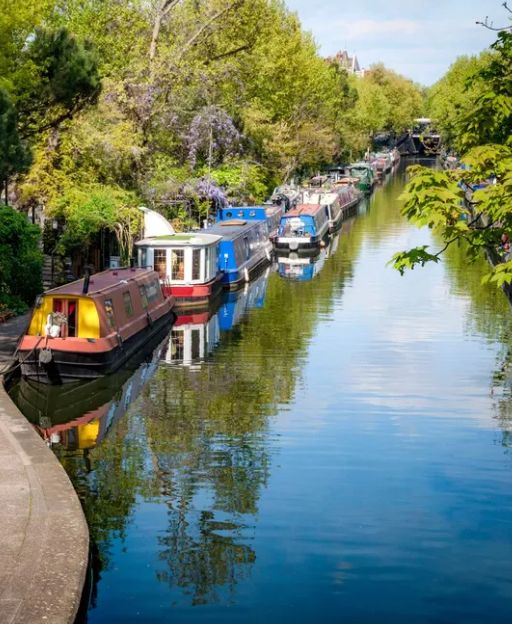
Little Venice is one of London’s least-visited neighbourhoods and one of its most pleasant. It sits at the junction of the Grand Union Canal and the Regent’s Canal, a short walk from Paddington station. The canal-side paths are lined with moored narrowboats, weeping willows, and good pubs.
This is not a neighbourhood built around attractions. It is built around the pleasure of walking slowly. You can follow the canal towpath east from here all the way to Camden — about 45 minutes on foot — passing through Regent’s Park along the way.
What to do: Walk the towpath to Camden, stop at a canal-side pub, visit the Puppet Theatre Barge (a working theatre on a narrowboat). This is also a good starting point for a day trip — King’s Cross is close, and from there you can reach Oxford or Bath within 90 minutes.
How long to spend: Two hours for a walk, more if you follow the canal into Camden.
South London Neighbourhoods
Greenwich: History on a Hill
Greenwich deserves a full day. It sits on a bend of the Thames to the east of central London, and it packs in more history per square mile than almost anywhere else in the city. The Royal Observatory sits on the hill above Greenwich Park. You can stand on the Prime Meridian, which marks 0° longitude, and have one foot technically in each hemisphere.
Below the park, the National Maritime Museum and the Cutty Sark clipper ship are both within a short walk of the river. The covered market is good for food and crafts. The view from the top of the hill, back across the Thames towards the City of London, is one of the best in the capital.
How long to spend: A full day. Take the clipper boat from central London — it is a good introduction to the Thames.
Brixton: Music, Food, and Market Culture
Brixton has one of the most culturally distinct characters of any London neighbourhood. It has been a centre of London’s Caribbean community since the 1950s, and that history is visible in its food, its music scene, and its market. Brixton Market runs through the covered arcades off Atlantic Road — the kind of place where you can buy jerk chicken, vintage vinyl, and fresh produce all within 50 metres of each other.
What to do: Walk the market on a Saturday morning, eat lunch at one of the restaurants in the Brixton Village arcade, visit the David Bowie mural on Tunstall Road (Bowie grew up nearby). The Ritzy cinema, in the town centre, is a good option for an evening.
How long to spend: Half a day, ideally including lunch.
North London Neighbourhoods
Camden: Markets and Music History
Camden is a lot. It is loud, crowded, and commercially busy in a way that puts some visitors off. But it earns its place on this list because the market is genuinely impressive in scale and variety, and the area around the canal has a different, calmer atmosphere than the main streets.
Camden has been associated with the British music industry for decades. The Electric Ballroom has hosted major acts since the 1970s. The Roundhouse, a few minutes north, is one of the best mid-size live music venues in the country.
What to do: Walk through the market, follow the canal path south towards Little Venice, visit the Roundhouse if there is a performance on. A visit to Camden pairs well with a stop at Primrose Hill to the west, which has a famous viewpoint over central London.
How long to spend: Half a day, more if you plan an evening out.
Islington: The Angel and Arnold Circus
Islington sits just north of the City of London. The Angel is its main hub — a junction of shops, bars, and restaurants built around the Angel tube station. Upper Street is the main street, lined with independent restaurants and pubs for the full length of its walk from Angel to Highbury.
The neighbourhood has strong literary and political history. George Orwell lived on Canonbury Square. The Marx Memorial Library is close by in Clerkenwell, technically a separate district but walkable from here.
What to do: Walk Upper Street, have lunch at one of the many restaurants, visit Chapel Market for fresh food. The Almeida Theatre on Almeida Street is a serious venue with an excellent reputation for new writing.
How long to spend: Two to three hours for a daytime visit.
Tips for Exploring London by Neighbourhood
A few practical things to know before you start walking:
- Get an Oyster card or use contactless. It is the cheapest way to travel. The same card works on buses, tubes, and overground trains.
- Walk between areas where possible. Many of London’s best discoveries happen between neighbourhoods, not inside them. The walk from Covent Garden to Bermondsey via Waterloo Bridge is about 30 minutes and passes through some of the city’s best river views.
- Mornings are better for markets. Most of London’s street markets are at their freshest and least crowded before 11am.
- Check what is free. Many of London’s best museums are free to enter. Our guide to free things to do in London covers over 40 options across the city.
- Plan around your travel style. If you are travelling with children, areas like Greenwich and Covent Garden tend to work well. If you prefer quieter streets, Bermondsey and Little Venice offer that. For more help planning with children, see our London with kids guide.
FAQ: London Neighbourhoods
What is the best neighbourhood to stay in for first-time visitors to London?
For a first visit, the areas around King’s Cross, Covent Garden, or South Bank give you the best balance of access and atmosphere. All are close to major attractions and well-connected by public transport.
How many London neighbourhoods can I visit in one day?
Realistically, two or three neighbourhoods in one day works well — more than that and you spend most of your time on the tube. A sensible combination is: morning in Shoreditch, lunch in Bermondsey, afternoon in Greenwich.
Which London neighbourhoods are best for food?
Bermondsey, Brixton, and Borough Market (Southwark) are consistently rated the best areas for eating. Soho’s Chinatown and Covent Garden also have strong options across a range of price points.
Is it safe to walk between London neighbourhoods at night?
Most central London neighbourhoods are safe to walk at night. Stick to main streets, keep your phone out of sight, and use the same judgement you would in any major city. The night bus network is reliable and cheap if you want to avoid walking long distances after dark.
Join 3,000+ London Lovers
Every week, get London’s hidden gems, local secrets, and travel inspiration — the kind you won’t find in any guidebook.
Subscribe free — enter your email:
Love more? Join 64,000 Ireland lovers → · Join 43,000 Scotland lovers → · Join 30,000 Italy lovers →
Free forever · One email per week · Unsubscribe anytime