
Beneath the grey pavements of Westminster, tucked under the Treasury building on King Charles Street, there is a door that was never meant to be found. In 1938, a small group of civil servants quietly converted a basement into what would become Britain’s most important room of the twentieth century. They worked in secret. They told almost nobody. And on 27 August 1939 — five days before war was declared — they opened the bunker for business.
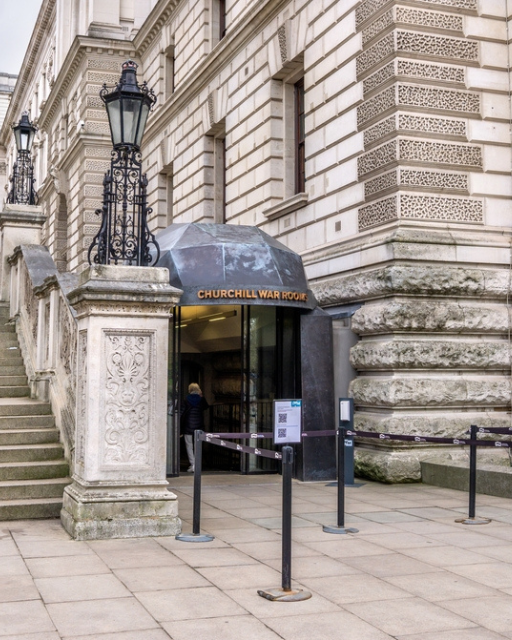
Today, you can walk into that same room.
The Churchill War Rooms are one of the most extraordinary heritage experiences in London. This is not a replica. It is not a reconstruction. The Cabinet War Rooms — the underground complex where Winston Churchill and his inner circle directed the Second World War — have been preserved almost exactly as they were left in 1945. The maps still hang on the walls. The phones still sit in their cradles. The ashtray on the Cabinet table is in the same position it was placed the last time someone sat there.
For American visitors, this is the place where the alliance that changed the course of the twentieth century was forged. Churchill made dozens of calls to President Roosevelt from a room just off the main corridor. The decisions made here shaped the world your grandparents — and great-grandparents — were born into.
What the Churchill War Rooms Actually Are
The bunker runs beneath King Charles Street in Westminster, directly behind Downing Street. It was built in secret as a protected command centre for the British government in the event — and then the reality — of the Luftwaffe bombing London.
The complex has two wings: the original Cabinet War Rooms, preserved in near-perfect condition, and the Churchill Museum, an extensive exhibition dedicated to the man himself. Together they tell the story of how Britain — and her allies — held on during the darkest years of the war.
When the war ended in 1945, the staff simply got up from their desks, turned off the lights, and walked out. The rooms were sealed. When they were finally opened to the public in 1984, the maps were still pinned exactly where they had been left. Four decades of stillness had preserved everything perfectly.
Room by Room: What You’ll See
The Map Room is the heart of the bunker. This is where the war was tracked in real time — a vast array of maps covered with pins, flags, and coloured strings showing the position of every ship, every convoy, every front line. Officers worked here twenty-four hours a day, seven days a week, for six years. The room was never dark. When victory in Europe came in 1945, the lights were turned off for the first time since 1939.
Churchill’s bedroom is surprisingly modest. A single bed. A microphone. A small table where he could dictate memos in the middle of the night. He slept here only a handful of times — he disliked confined underground spaces — but he used the room frequently for broadcasts and for telephone calls to President Roosevelt.
The Transatlantic Telephone Room is one of the most remarkable spaces in the complex. It looks like a toilet cubicle — because that is exactly what most people were told it was. In reality, it housed the most secure telephone line in the world: a scrambled direct connection to the White House. Churchill and Roosevelt spoke regularly from this room. The scrambler technology was so new and so classified that almost nobody in the bunker was told what it actually was.
The Cabinet Room is where the formal decisions were made. The oval table. The chairs arranged around it. The single ashtray. Churchill presided over more than a hundred Cabinet meetings here during the war. Every major decision — the bombing campaign, the North Africa landings, the preparations for D-Day — was discussed around this table.
The Churchill Museum
The Churchill Museum occupies a separate wing of the complex. It covers Churchill’s entire life — not just the war years. His childhood, his time as a soldier in India and South Africa, his early political career, his years in the political wilderness during the 1930s, and the extraordinary final chapters of his long life.
🏙️ Enjoying this? 3,000 London lovers get stories like this every week. Subscribe free →
The centrepiece of the museum is an interactive timeline table: a long digital display running the length of the room, covering Churchill’s life year by year. Visitors can touch any point on the timeline to bring up photographs, documents, and recordings from that period. It is one of the best museum interactives in London.
For American visitors, one section stands out in particular: the story of Churchill’s mother, Jennie Jerome, who was born in Brooklyn, New York. Churchill was half-American. His mother was the daughter of a New York financier. The man who stood in the House of Commons and declared that Britain would “never surrender” was as American as he was British.
Why This Matters for American Visitors
The story of the Churchill War Rooms is, in a real sense, an American story as much as a British one. The Anglo-American alliance — forged in part through those scrambled telephone calls from the cubicle off the main corridor — was the decisive factor in the outcome of the war in Europe.
The letters and telegrams on display show, in extraordinary detail, the relationship between Churchill and Roosevelt: the careful diplomacy, the frank exchanges, the genuine personal warmth between two very different men who understood that the fate of the free world depended on their ability to work together.
If your family has any connection to the American war effort — a grandfather who served in the European Theatre, an uncle who was part of the Normandy landings, a grandmother who worked in a factory producing aircraft or ammunition — the decisions that shaped their experience were made in these rooms.
Standing in the Cabinet Room, you are standing in the space where the course of your family’s history was changed.
Planning Your Visit: Practical Guide
The Churchill War Rooms are managed by the Imperial War Museum and located on King Charles Street, Westminster — a short walk from Westminster Underground station (District and Circle lines) or St James’s Park station (District and Circle lines). The site is well signed from both.
The site is open daily. Check the IWM website for current opening hours and admission prices before you visit, as these are updated regularly. Tickets can be booked online in advance, which is strongly recommended, particularly in summer. The War Rooms attract visitors from around the world and queues at the entrance can be considerable without a pre-booked ticket.
The full visit typically takes between ninety minutes and two and a half hours, depending on how long you spend in the Churchill Museum. Audio guides are available and are worth taking — they add considerable depth to the experience, particularly in the Cabinet War Rooms, where the context behind each room is not always apparent from the displays alone.
Photography is permitted throughout the complex, which is unusual for a heritage site of this significance.
Tips for Getting the Most from Your Visit
Book in advance. The Churchill War Rooms are one of the most visited heritage sites in London, and capacity is managed carefully. Online booking guarantees entry and often works out slightly cheaper than buying at the door.
Go early or late in the day. The rooms are small and can feel very crowded in the middle of the day, particularly in summer. The opening hour or the final hour before closing are noticeably quieter.
Take the audio guide. The rooms themselves contain relatively little signage — the original wartime environment has been preserved rather than converted into a conventional museum — and the audio guide provides the context that makes each space come alive.
Allow time for the Churchill Museum. Many visitors underestimate how long this wing takes. The interactive timeline alone can absorb an hour if you follow the threads that interest you most.
Combine it with nearby sites. The Cabinet War Rooms sit within walking distance of Westminster Abbey, the Houses of Parliament, Horse Guards Parade, and St James’s Park. A full day in this part of Westminster is one of the best days you can spend in London.
Frequently Asked Questions
Where exactly are the Churchill War Rooms?
The Churchill War Rooms are located at Clive Steps, King Charles Street, Westminster, London, SW1A 2AQ. They are managed by the Imperial War Museum and sit directly beneath the Treasury building, just behind Downing Street. The nearest Underground stations are Westminster (District and Circle lines) and St James’s Park (District and Circle lines), both a short walk away.
How long should I allow for the Churchill War Rooms?
Most visitors spend between one and a half and two and a half hours at the Churchill War Rooms. The Cabinet War Rooms themselves take around forty-five minutes to an hour to explore at a comfortable pace. The Churchill Museum — which covers his full life — can take anywhere from thirty minutes to ninety minutes depending on how deeply you engage with the interactive displays. Adding an audio guide adds depth but also time.
Is the Churchill War Rooms visit suitable for children?
Yes, the Churchill War Rooms work well for children aged ten and above who have some background knowledge of the Second World War. The underground spaces are atmospheric and engaging, and the interactive Churchill Museum has elements that appeal to younger visitors. The site provides activity sheets for children, and there are family audio guide options. Very young children may find the dimly lit rooms and the solemnity of the preserved spaces less engaging.
Join 3,000+ London Lovers
Every week, get London’s hidden history, heritage walks, and stories from the city’s remarkable past — straight to your inbox.
Subscribe free — enter your email:
Already subscribed? Download your free London guide (PDF)
Love more? Join 64,000 Ireland lovers → · Join 43,000 Scotland lovers → · Join 30,000 Italy lovers →
Free forever · One email per week · Unsubscribe anytime