
A warm scone, split by hand and piled with clotted cream and strawberry jam, is the heart of every English cream tea. The good news: plain scones are one of the quickest things you can bake. You need six everyday ingredients, about 15 minutes of work and 15 minutes in a hot oven. Here is how we make them, with weights, US cups and oven settings in both °C and °F.

English Scones at a Glance
- Makes: 8 scones, using a 5cm (2in) round cutter
- Prep time: 15 minutes
- Bake time: 12 to 15 minutes
- Oven: 220°C (200°C fan) / 425°F / gas mark 7
Ingredients
- 350g (2¾ cups) self-raising flour (self-rising flour in the US), plus a little extra for dusting
- 1 tsp baking powder
- ¼ tsp salt
- 85g (6 tbsp, or ¾ stick) cold butter, cut into small cubes
- 40g (3 tbsp) caster sugar (superfine sugar in the US)
- 180ml (¾ cup) milk, plus a splash more if the dough is dry
- 1 egg, beaten, to glaze
To serve: clotted cream and strawberry jam.
Weighing gives the best result. Our cup measures assume you spoon the flour into the cup and level it off; a packed cup holds more flour and makes a heavier scone.
How To Make English Scones, Step by Step
- Heat the oven to 220°C (200°C fan) / 425°F / gas mark 7. Line a baking tray with baking paper.
- Mix the dry ingredients. Put the flour, baking powder and salt in a large bowl and stir them together.
- Rub in the butter. Add the cold butter cubes and rub them into the flour with your fingertips, lifting the mix as you go, until no lumps of butter remain and it looks like fine breadcrumbs. Stir in the sugar.
- Add the milk. Make a well in the middle, pour in most of the milk and mix with a table knife until it comes together as a soft, slightly sticky dough. If dry crumbs are left in the bowl, add the rest of the milk a splash at a time. Stop as soon as it holds together: the less you handle it, the lighter the scones.
- Shape the dough. Tip it onto a floured worktop and fold it over on itself two or three times, just until the surface is smooth. Pat it out with your hands into a round about 3cm (1¼in) thick. You don’t need a rolling pin.
- Cut the scones. Dip a 5cm (2in) cutter in flour, press it straight down and lift it straight up. Don’t twist it, because twisting pinches the edges shut and the scone rises lopsided. Set the scones on the tray, press the trimmings together lightly and cut again until you have eight.
- Glaze the tops. Brush the tops with beaten egg. Keep the egg off the sides: if it runs down, it glues the edges and stops an even rise.
- Bake for 12 to 15 minutes, until the scones are well risen and golden brown on top.
- Cool a little on a wire rack for about 10 minutes, then serve while still warm. Scones are best on the day you bake them.
🫖 Enjoying this? 3,000 London lovers get stories like this every week. Subscribe free →
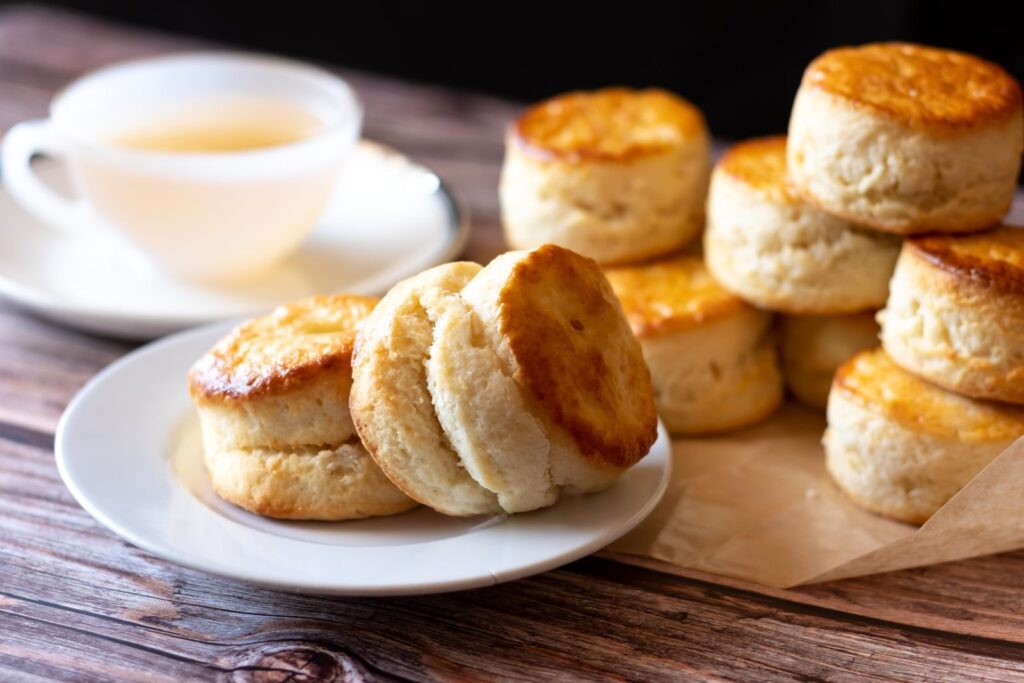
How To Serve Scones With Jam and Clotted Cream
Pull each scone apart with your fingers instead of cutting it with a knife; it keeps the soft, layered inside. Then add a thick spoonful of clotted cream and a spoonful of strawberry jam to each half. Clotted cream is thick enough to sit on top of a scone without sliding off, which is why it beats whipped cream here. A pot of tea on the side turns it into a proper cream tea.
Cream First or Jam First? Devon vs Cornwall
This is the friendliest argument in England. In Devon, you spread the clotted cream first, then add the jam on top. In Cornwall, the jam goes on first and the cream is spooned over it. Both counties claim the cream tea as their own. In London, most tea rooms leave it up to you, so pick a side and defend it.
Tips for Tall, Light Scones
- Keep everything cold. Cold butter makes a lighter scone, so cut it straight from the fridge.
- Don’t overwork the dough. Mixing and kneading too much makes scones tough and flat. A rough, slightly sticky dough is right.
- Use fresh baking powder. An old tub loses its lift.
- Make sure the oven is fully hot before the tray goes in. A hot oven gives the quick rise that splits a scone’s sides.
- Freezing: freeze the baked scones once they are cold. Thaw them, then warm them in a low oven, 160°C (140°C fan) / 320°F, for a few minutes.
Where To Eat Scones in London
If you’d rather someone else did the baking, London is full of places that serve warm scones with clotted cream, from grand hotel tea lounges to small tea rooms. Our complete guide to afternoon tea in London covers what to expect, how to book and how a cream tea differs from a full afternoon tea. For the story behind the tradition, read how the Duchess of Bedford started afternoon tea, and for more of the city’s food, see what to eat in London.
English Scones: Questions We Get Asked
What is the difference between a scone and an American biscuit?
They are close cousins: both are quick breads raised with baking powder and made by rubbing fat into flour. English scones usually have a little sugar and an egg glaze and are eaten with jam and cream at tea time, while American biscuits are usually savoury and served with a meal.
Can I make the dough ahead?
Baking powder starts to work as soon as it meets the milk, so bake the scones as soon as they are cut. To get ahead, bake them and freeze them, then warm them through before serving.
Why didn’t my scones rise?
The usual causes are dough that was handled too much, a cutter that was twisted, old baking powder, or an oven that wasn’t hot enough yet.
How do you say “scone”?
Both are heard in Britain: some people rhyme it with “gone”, others with “bone”. Nobody will stop serving you either way.
Checked October 2026. We checked our quantities, oven settings and timings against published recipes from BBC Good Food and BBC Food.
Join 3,000+ London Lovers
Every week, get London’s history, food, heritage walks and stories from the city’s past, straight to your inbox.
Subscribe free — enter your email:
Free forever · One email per week · Unsubscribe anytime