
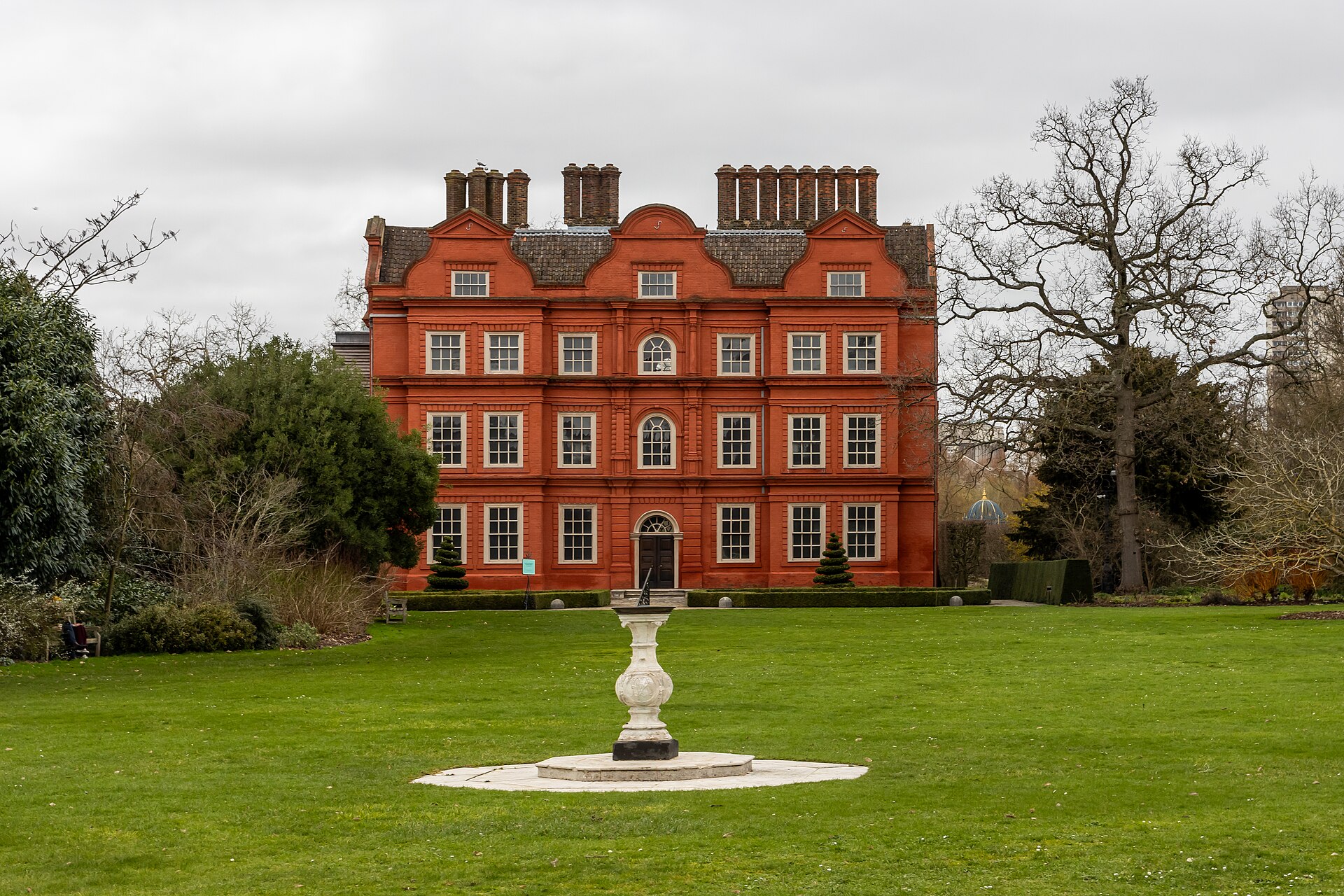
There are six official royal palaces in London that most visitors never see. Kew Palace is the smallest of them all — a three-storey Dutch-style house in deep red brick, tucked behind the trees of the Royal Botanic Gardens. For the royal family, it was a country retreat. For one king, it became something closer to a prison.
The Palace That Most Londoners Don’t Know Exists
Kew Palace was not built as a royal residence. It started life in 1631 as the home of Samuel Fortrey, a wealthy Dutch merchant who gave it the distinctive Flemish-bond brickwork that sets it apart from every other royal building in Britain.
George III leased it as a family home from 1728, and it became the private retreat he preferred above almost all others. No grand state rooms. No formal court. Just a red-brick house near the river, a walled kitchen garden, and fifteen children running through the grounds.
That simplicity was exactly what George wanted. And then, in 1788, everything changed.
The King Who Screamed Through the Walls
In the autumn of 1788, George III began behaving in ways his household could not explain. He talked without stopping, sometimes for hours. He grew agitated, then violent. He failed to recognise family members he had known all his life. His sentences became incoherent. His eyes turned bloodshot from lack of sleep.
The royal doctors diagnosed “flying gout.” What it actually was — modern historians now believe porphyria, a blood disorder, or possibly a severe form of bipolar disorder — was entirely beyond the medicine of the age.
The treatments applied at Kew were brutal by any standard. Restraints. Purges. Blistering plasters applied to the skin to “draw out” the illness. A specially designed chair that held the king immobile while the doctors worked. His family, in rooms nearby, could hear him screaming.
George III eventually recovered from this first episode. But the illness returned — and returned again. By 1811, his son was made Prince Regent. George III would never rule again.
Enjoying this? 3,000+ London lovers get stories like this every week. Subscribe free →
A Marriage That Outlasted Everything
George III and Queen Charlotte married in 1761. They had fifteen children together and remained close for 57 years. By the standards of European monarchy, their marriage was considered remarkably genuine — not just a political arrangement, but a real partnership.
When George’s illness became permanent in 1811, Charlotte took over the management of the family’s affairs. She continued to use Kew Palace until the end of her life. It was here, in November 1818, that she died — in a chair by the window, holding the hand of her eldest son, the Prince Regent.
George, confined at Windsor by then and not well enough to travel, was never told in a way he could understand. He survived his wife by just eighteen months, dying at Windsor in January 1820 — deaf, blind, and largely absent from the world around him.
Their story sits quietly inside that little red house in Kew, visible in the worn floors and the preserved furniture, if you know where to look.
For another corner of London where royalty shaped — and were shaped by — the city’s history, the gardens at Hampton Court Palace offer a different kind of royal revelation just a few miles up the Thames.
What the Palace Looks Like Today
Kew Palace closed for decades after the Victorian era, too small and too intimate for a modern monarchy accustomed to grander spaces. A major restoration finished in 2006 brought it back to something close to its 18th century appearance.
The restoration was deliberate in what it preserved. The wallpaper was left faded in places. The floorboards were not replaced. The rooms feel like a home rather than a museum — which is unusual for a royal building and entirely intentional.
The king’s private apartments, the queen’s rooms, and the nursery have all been preserved. The Queen’s Garden behind the palace was designed in a deliberate 17th century style, with knot garden beds, herbs, and a sunken garden that feels entirely removed from the busy greenhouses further into the botanical gardens.
There are rarely crowds here. Even on busy weekends at Kew, most visitors head for the Palm House and the famous treetop walkway. The palace stands quiet at the far end of the gardens, waiting for people who take the time to walk past the lake and through the trees.
If you are visiting Kew alongside other London highlights, the Banqueting House in Whitehall is another small royal building with an outsized story — a painted ceiling overhead and the ghost of a king who never left.
How to Visit Kew Palace
Kew Palace is included in the entry ticket to the Royal Botanic Gardens, Kew. You do not need a separate palace ticket — once inside the gardens, walk to the far northern end and you will find it easily signposted.
From central London, take the District line to Kew Gardens station, or the London Overground to Kew Bridge. Both are roughly 30 minutes from central London. The palace is open from late spring through to early autumn each year — it does not open year-round, so check before you go.
Allow at least half a day if you want to do both the palace and the gardens properly. Autumn is particularly good — the arboretum section turns extraordinary colours, and the palace gardens are beautiful in the cooler, quieter light.
Our London planning guide covers everything you need to build your full itinerary — including which attractions work well together on the same day.
Frequently Asked Questions About Kew Palace
What is Kew Palace and why is it historically significant?
Kew Palace is a small Georgian royal palace inside Kew Gardens in west London. It was the private retreat of King George III and Queen Charlotte, and it is where George III was treated — often brutally — during his episodes of severe mental illness in the late 18th century. Charlotte died here in 1818, making it one of the most intimate and emotionally significant royal sites in Britain.
Is Kew Palace free to visit in London?
Kew Palace is included in the standard Kew Gardens admission ticket — no separate entry fee applies for the palace. Kew Gardens charges an admission fee, but members of the Royal Botanic Gardens enter free. Check the Historic Royal Palaces or Kew Gardens websites for current pricing before your visit.
How do I get to Kew Palace from central London?
Take the District line to Kew Gardens station (zone 3, roughly 30 minutes from central London), or the London Overground to Kew Bridge station. Both are a short walk from the main garden entrance. Once inside Kew Gardens, the palace is at the northern end of the site — it is clearly signposted throughout.
What happened to King George III at Kew Palace?
George III suffered several severe episodes of mental illness at Kew from 1788 onwards. His doctors treated him with the methods available at the time — including physical restraints and purges — which would be considered cruel by modern standards. His family heard his distress from neighbouring rooms. Modern historians believe he may have suffered from porphyria, a blood disorder, or a form of bipolar disorder. He never fully recovered, and from 1811 onwards his son ruled as Prince Regent in his place.
🇬🇧 25 Hidden Gems of London Most Tourists Never Find
From secret riverside walks to hidden Victorian tunnels, centuries-old pubs to rooftop gardens with skyline views — our free guide reveals the London most visitors never discover. Join 3,000+ London lovers who get it free.
Get Your Free London Hidden Gems Guide →📲 Know someone who’d love this? Share on WhatsApp →
Love more? Join 65,000 Ireland lovers → · Join 43,000 Scotland lovers → · Join 29,000+ Italy lovers →
Free forever · Unsubscribe anytime
Subscribe Free